
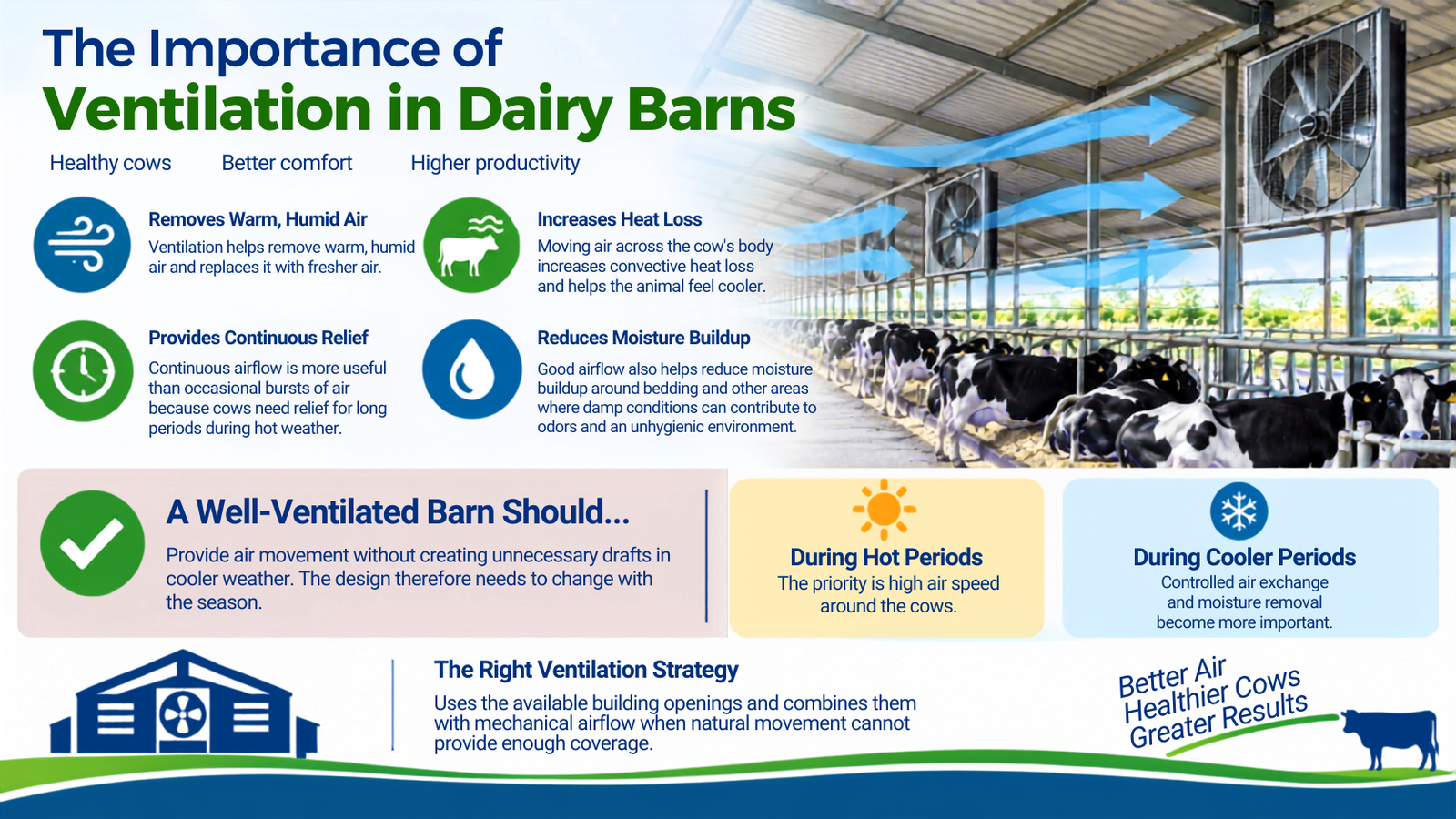
Introduction A comfortable, well ventilated dairy farm is critical to thriving cows, consistent milk production, and overall success of the farm. When the temperature and humidity rise cows can become very uncomfortable and experience heat stress. Efficient air movement can allow for the removal of unwanted heat, moisture, odors and stale air from the barn while bringing in fresh air. This is why choosing the right Dairy Farm Fans has become a priority to many modern day dairy farms. Fans are not just a piece of equipment, when properly selected, installed, positioned and maintained they can add value to the comfort of your cows and the ventilation of your barn. Proper ventilation can even impact feeding behavior, resting, milk production, and overall farm performance. Modern day farms use a variety of ventilation equipment based on their facility type and size, the number of cows, climate and other factors. Dairy Barn Fans, Cow Cooling and Farm Ventilation Fans, and complete Dairy Farm Ventilation strategies offer a variety of ventilation improvements for the modern day barn. This guide will discuss the importance of proper ventilation in the dairy, the benefits of fans, types of fans, and considerations for choosing ventilation equipment for your barn. Why Ventilation is Important on a Dairy Farm Cows constantly produce body heat, moisture from breathing and other processes, and manure, urine, feed, and bedding can add to the amount of moisture and odor in the barn. If the warm, moist air is not constantly moved away from the animals area it can often lead to an uncomfortable housing environment. On milder days, natural convection through sidelights, doors, curtains, and the ridge can be enough to ventilate a barn. But on hotter days, or when natural ventilation is minimal, mechanical ventilation becomes increasingly important. The goal is to remove stale indoor air and replace it with fresh air from outside, and on hot days fans are also needed to provide adequate air movement around the animals in order to remove body heat. This can often have a significant effect on the comfort of your herd as the moving air aids in evaporative cooling. Poor ventilation can lead to a variety of issues: cows are often less willing to rest, spend less time at the feed bunk, and heat stress can occur. High humidity can increase the effect of a hot day, and make natural cooling methods such as evaporative cooling inefficient. A proper ventilation system addresses both the exchange of indoor and outdoor air, and the cooling needs of the animals. Just installing larger fans is not a solution, proper installation and building design must take into account air inlets, exhaust locations, and the internal layout of the structure. Understanding Dairy Farm Fans Dairy Farm Fans are mechanical devices that move or exhaust air from a dairy facility or farm. Based on the fan type, they can offer general circulation, heat removal, fresh air exchange, or cooling functions. What works for one barn may not work for another. Large freestall barns, small dairy facilities, holding areas, and milking parlors all have different needs. Proper fan selection is based on several factors such as airflow capacity, diameter, motor efficiency, speed, noise, maintenance needs, and installation location. The amount of energy a fan uses is also an important factor as they may be required to run for long periods of time when the weather demands. The application should always be considered when purchasing equipment. If your goal is to cool cows at a feeding area, it may require a different set up than exhausting hot air away from the building. Proper fan design focuses on achieving useful air movement at cow level rather than pushing air around the top of the structure. Moving air at animal eye level can be much more beneficial to the comfort of a cow than trying to push large amounts of air around the ceiling. The Role of Dairy Barn Fans Dairy Barn Fans are commonly used in livestock facilities for increased air movement. They are an effective way to avoid heat buildup and stale air pockets in the barn. Even if a building has great natural ventilation through sidelights, areas of the barn can often have poor airflow. Air movement throughout the building can be very uneven with some areas experiencing little airflow while others have greater movement. Fans can help balance out the air movement throughout a structure. Horizontal circulation fans are often used to move greater distances of air horizontally across the animal area. They are commonly used in barns that keep cows in a freestall or along a feed aisle for large periods of time. Exhaust fans are another popular option for removing hot, stale air from a building. They are often used in conjunction with naturally ventilated structures that require additional cooling or power to increase air exchange rates. Installation location also has a significant impact on performance. Mounting a fan too high can cause it to push air around the top of the structure when what is needed is increased movement across the animals. Incorrect fan angles can result in airflow being pushed into a non-critical area of the building Building airflow balance is an important consideration in fan installation as the fan needs to achieve proper flow rates at a specific angle in order to impact the critical areas of a building such as feeding areas, crowding zones, or the freestall rest areas. Airflow entering the building through air inlets, or natural openings should ideally move across the animal area and then exit the structure via exhaust fans, or other natural openings. Cow Cooling Fans and Heat Stress One of the most important applications of modern day ventilation is combating heat stress. Cow Cooling Fans can help by providing a cooling airflow directly over the animals. They can be especially beneficial during hot and humid conditions. Cows are often negatively impacted by high temperatures due to their natural body heat production. High producing dairy cows can often be

Centrifugal Fan: 7 Powerful Ways to Improve Airflow
Centrifugal Fan: Complete Guide to Centrifugal Fans, Blowers & Applications Introduction to Centrifugal Fan A centrifugal fan is a crucial mechanical equipment for conveying air, gases or other air-borne materials. It is widely used in industrial ventilation, HVAC system, manufacturing plants, warehouses, agricultural system, cooling system etc. A centrifugal fan is different from an axial fan in that the direction of the wind changes as the air moves through a rotating impeller. The modern centrifugal fans are designed for providing the same air flow and air pressure under various ventilation needs. They can also manage high system resistance which is beneficial for heavy-duty industrial uses. Depending on the design, a centrifugal fan can provide high pressure, efficient airflow, reliable operation, and long service life. Basic design consists of an impeller, housing, shaft, motor, inlet and outlet openings. As the motor turns the impeller, air is drawn in to the inlet, and is carried outwards due to centrifugal force. The air is then directed into the housing to the discharge outlet. The working principle of centrifugal fan can give a better idea to the business people to choose the appropriate centrifugal fan for ventilation system of the business. It can also help users to understand the differences between different types of fan designs and working pressures and airflow capacities. What Is a Centrifugal Fan? Centrifugal Fan: A centrifugal fan is a type of rotating air moving machine that draws air in the middle of the impeller and sends it out at an angle. The rotating impeller increases the air’s velocity and pressure. This energy is then transformed and directed to the fan casing, which then becomes useful for air circulation. Unlike an axial fan. Air flow of an axial fan is primarily parallel to the axis of rotation. A centrifugal fan, on the other hand, sucks air into the center and expels it to the edge of the wheel. The design enables the centrifugal fans to operate effectively in the presence of higher resistance. These are, therefore, frequently used in ductwork, filters, dust collectors, exhaust and industrial ventilation. There are a few factors that determine the performance of a centrifugal fan. These include impeller design, speed of rotation, motor power, system resistance, air density and housing configuration. The proper selection of these factors is key to obtaining the desired airflow and pressure. How a centrifugal fan works to move air? Air first enters the fan through the inlet (1). Air is drawn into the rotating impeller and is pushed outwards. Air is pumped outwards from the hub to the rim of the wheel by centrifugal force. The air exits the impeller and goes into the fan housing. The housing is configured to provide a collection and directional function of the moving air towards the discharge outlet. This generates a controlled airflow that can be used for ventilation, cooling, exhaust or other industrial processes. There are several main components of a centrifugal fan. The centrifugal fan has a number of main components. There are several components of a typical centrifugal fan. The impeller is the part that rotates and which is responsible for increasing the speed of the air. The blade shape and configuration greatly affect the performance of the fan. The housing encloses the impeller and regulates the air flow. It also assists to change a portion of the velocity of the air into pressure. Mechanical power for rotating the impeller is provided by a motor. The shaft conveys rotational force of the motor to the impeller. Bearings are used to hold the rotating shaft in place and enable it to move smoothly. A fan may also contain belts, pulleys, dampers, vibration isolators and protective guards, depending on the application. How a Centrifugal Fan Functions? The principle of a centrifugal fan is quite simple. The rotating speed of the motor is fixed, causing the impeller to rotate at a certain speed. Air is sucked in the middle of the impeller and is pushed to the outer edge of the impeller. The rotating blades increase the velocity of the air. This high-speed air is then captured in the housing and channeled back to the outlet. In the process, some of the velocity energy is transformed into pressure. Final airflow is dependent on the fan and the system it is connected to. Long ducts, filters, bends, dampers, or other restrictions in a system will require extra pressure to be pumped by the fan. Air Intake Process Air is drawn through the inlet into the centrifugal fan. There are different types of inlets which are designed to control the air flow to the impeller. If the inlet is properly designed, the turbulence and overall efficiency of the fan can be decreased. The air is picked up by the impeller blades as it moves toward the middle of the rotating wheel. While the wheel is rotating, the air then expands outwards. Impeller Rotation The impeller is one of the vital parts of centrifugal fans. Its size, shape of blades, the number of blades and its rate of rotation all affect its airflow and pressure. Mechanical energy from the motor is transferred to the air when the impeller rotates. The air becomes faster and moves out towards the outer rim of the wheel. The performance characteristics of different impeller designs vary. For instance, forward curved, backward curved, and radial blade design are chosen based on the airflow and pressure specifications. Generates air pressure through the physical movement of the blades A centrifugal fan produces air flow by imparting more energy to the moving air. The impeller generates velocity and the housing assists in converting velocity to useful pressure. The dimensions that are used to measure airflow are generally cubic feet per minute (cfm) or cubic meters per hour (m3/h). The other major performance factor is static pressure, which is the amount of resistance the fan has to overcome. Airflow is not the only criterion for choosing a fan. The required pressure must be taken into
Best dairy farm fans and Ventilation Solutions in Pakistan
Heat, expensive electricity, and poor ventilation create several problems for dairy farmers in Pakistan as they try to expand their business despite increasing demand. During the hotter months, water buffalo and cattle suffer from heat stress. This affects their health and comfort, decreases their feed intake, and in turn, reduces milk yield. This problem can be solved by installing efficient and reliable cooling and ventilation systems on dairy farms. Khaleeq Engineering provides dairy farm fans for dairy farmers, livestock shed builders, and industrial modular builders with an engineering solution with practical cooling systems. The fans and ventilation systems, along with the solar and mechanical systems of Khaleeq Engineering, assist farmers by providing better air circulation and decreasing heat stress. Furthermore, they improve the overall farm environment and aid the farm’s energy efficiency. For a dairy farm owner, selecting the correct farm fan system means he has purchased the correct farm system. The correct dairy farm ventilation system provides comfortable cattle, better air circulation, and a reduction in humidity and foul odours in the dairy and on the farm. Furthermore, the right ventilation system can be serviceable for many years as long as it is installed and maintained properly. Why Dairy Farm Ventilation Is Important Controlling air quality and air circulation is vital for dairy farm ventilation. Poor air circulation in a dairy shed results in hot, humid, and uncomfortable conditions. This is especially true for dairy cattle and staff in the dairy shed during the summer months when there are air quality problems. Ideal ventilation systems maximise air quality via removal and filtration of hot and stagnant air, moisture, odours, and particulate matter. Good ventilation systems will also allow for the introduction of new air. Clean air and optimal ventilation result in an ideal environment for cattle and dairy buffalo in the shed. In addition to the ventilation and dairy shed quality, the presence of healthy and comfortable animals has a positive effect on milk production and the health of the herd, which may be highly beneficial to local farmers. This has encouraged farmers to shift from natural ventilation to dairy fans and better ventilation technology. How Dairy Fans Work in the Heat The Summers in Pakistan are almost always hot and lengthy, especially in Punjab and the surrounding areas. In this heat, the dairy animals can be easily stressed. Heat stress has a negative impact on the quantity of milk produced, the quality of milk, the feed intake, and the health of the animals. The dairy fans work by moving the air throughout the shed. This helps the animals to remove their body heat, and the environment remains cooler. Fans work best in the feeding areas, resting areas, and milking areas and in sheds that are closed or partially open. In case of having a small dairy shed or a large-scale commercial farm, the right fan setup can make a big difference. If you want to learn more about the different fan solutions, farmers can take a look at the Dairy Fan Catalogue. Dairy fans give local farmers many great benefits. First, dairy fans help with airflow inside the shed. Keeping air fresh helps everyone, including the animals, workers, and the farmers. Second, dairy fans help with heat stress. This is especially helpful during the hottest summer months. Third, dairy fans help with dampness and odour. A shed with bad ventilation will help air become damp and stinky. Fans ventilate and help air remain fresh. Fourth, fans help with productivity. Animals are generally a lot more comfortable and less stressed when dairy fans are present. Lastly, a good high-quality dairy fan is a good long-term investment. With proper maintenance, a strong and sturdy fan can last the test of time. Types of Dairy Fans for Farms Different farms require different fan systems. The best option is determined by the number of animals, the size of the shed, the height of the roof, the direction of airflow, and the prevailing weather conditions. 1. Exhaust Fans Exhaust fans take out hot, stale air. These fans are great for closed or semi-closed dairy systems. They help diminish heat and odour as well as keep humidity in check. 2. Circulation Fans These fans help keep air moving, yet they push air across the animals. These fans are great for feeding areas, resting areas, and open sheds. 3. Wall-mounted Dairy Farm Fans Installing wall-mounted fans on a dairy farm is also a great option. They provide directed airflow and are easier to install compared to some other solutions. They work best for small and medium farms. 4. Mist Fans Mist fans work by combining airflow and a fine mist of water. These types of fans are best for extremely hot regions where basic airflow is insufficient. Mist fans provide the best temperature and quick cooling solutions. For cooling support in a hot climate, especially to help with mist fans for dairy farms, contact the team. How to Pick the Right Dairy Farm Fan Picking out a dairy farm fan is a big decision. Price is often the main factor, but a fan’s performance, the volume of airflow, energy consumption, durability, and service support all need to be considered. These are the factors that need to be considered before purchasing a dairy farm fan: Shed Size As a shed gets larger, airflow from the fan needs to be stronger, or multiple fans need to be purchased. If a fan is too small, it will not be able to cover a wide enough area. Animal Count The larger the animal herd, the more body heat is generated, and the more ventilation is required. A dairy farm with a larger number of cows or buffalo will require much more planning for ventilation. Fan Direction This is one of the
Top 10 Powerful Dairy Farm Fan Price in Pakistan 2026
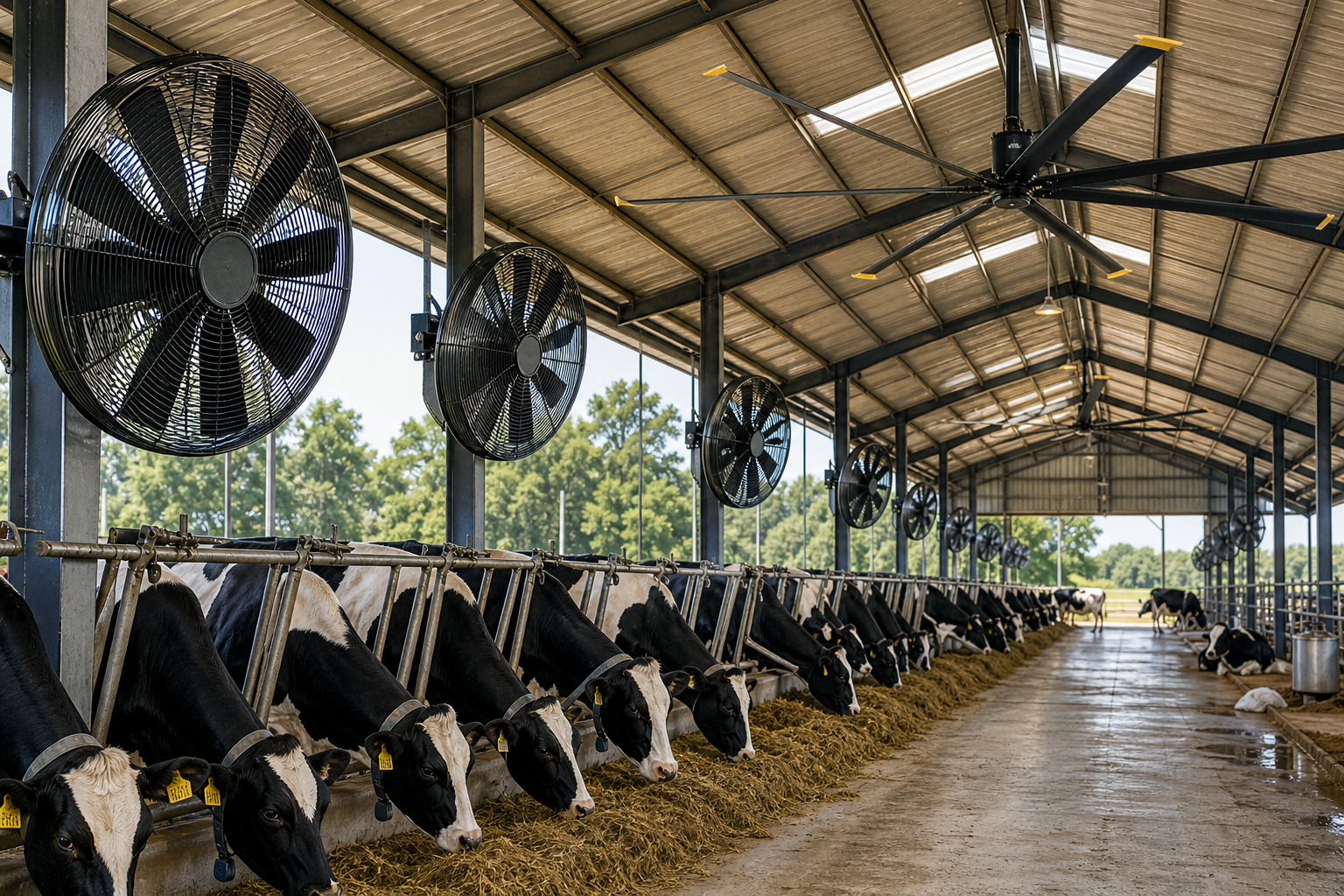
Introduction- One of the largest stock of livestock in the world is found in Pakistan. It is the fourth-largest milk producer in the world with more than 50 million cattle and buffalo bearing significant contribution to the rural and national economy. Nevertheless, in spite of this impressive size, pakistan dairy farm fan price in pakistan have a long time and very often neglected foe extreme heat. When high humidity levels are added to the heat that is routinely present in regions such as Punjab and Sindh, where most dairy farming takes place, the result is a deadly environment in which milk producing animals operate. Cows and buffaloes do not have the ability to sweat as humans do. They use respiration and external cooling as a means of temperature regulation in their bodies. They experience heat stress in case the mercury rises. Effects of heat stress on dairy animals are not discreet. The production of milk may reduce by 10-20 percent or more. Fertility rates decline. The feed consumption is decreased and the consumption of water is increased. In extreme cases, animals either grow lazy or stand long hours along water troughs, and even stop eating. In the case of an average Pakistani dairy farm fan price in pakistan, this directly translates to financial loss, less milk to sell, high costs to the veterinary and weak calves. Why then is the solution? It can be solved through the introduction of proper ventilation and forced air circulation. Normal ceiling or pedestal fans that are available in homes or offices are not up to the task. What is needed by Pakistani dairy farms are dedicated, heavy-duty Dairy Fans to Pakistan-equipment that is specifically designed to withstand the harsh conditions of the dairy farms in Pakistan and to deliver powerful, consistent airflow to the dairy farm. These fans no longer are a luxury. They have become a must-have on any farm that would like to ensure the welfare of their animals and at the same time achieve maximum profitability. This paper will discuss precisely the reasons why the conventional fans fail, what specifications to consider when acquiring a proper dairy fan, and then review 6 of the best heavy-duty options that can be used in Pakistani farms. Whether you have a small holding and your farm set up has twenty fans, or you have a commercial set up and have five hundred fans in your farm set up, the right fans to fit your dairy farm set up will transform your productivity. The reasons as to why Standard Fans have failed in Pakistani Dairy Farm fan price in pakistan. Pakistani dairy farm owners are commonly seen attempting to save money by using either residential ceiling fans, industrial wall fans available in local electrical stores or second-hand exhaust fans obtained at a factories. Paperwise, these fans circulate air. They are easily failed and are expensive in the long run. This knowledge of the reason why explains why Dairy Fans to Pakistan will have to be designed. Voltage Swings: The electricity supply in Pakistan, especially the rural areas, is infamously unpredictable. Voltage may decrease to 180 V or may rise to 260 V in a few minutes. Even normal fan motors will not work in this range. They heat up, and burn out or even run at a slower pace which provides insufficient airflow when it is most demanded by animals. Dust and Particulate Matter: Dairy farms produce tremendous amounts of dust, in the form of dry feed, bedding material (rice husks, wheat straw or sand), and dry manure. Normal fans introduce this dust to their motor housings and bearings. In few weeks, the fan gets loud, imbalanced or completely taken. Corrosive Environment: Manure gives out the ammonia gas that is very corrosive to metals. This ammonia in closed or semi-enclosed sheds mixes with moisture to create a mild acid. The painted steel fans that are considered normal rust and pith in a few months. Blades rust, guards are broken, and electricity connections are lost. Humidity and Washdowns: Washdowns have become a common practice among many progressive pakistan dairy farms as a measure to maintain hygiene. It leads to excessive moisture and direct spray of water. Low-IP (Ingress Protection) rating standard fans admit the water to windings of motor and cause short circuit and electrical risk. Inadequate Airflow (CFM): one of the most common residential ceiling fan designs is the 48-inch model with a 5,000 to 7,000 cubic feet per minute (CFM) airflow. A dairy fan of the same diameter (heavy-duty) can move 15,000 to 22,000 CFM. This difference is no small one–it is the difference between air which hardly moves, and air which cools animals by convection. Due to these problems, a number of farmers have experimented with low priced fans, only to see them fail within one or two summer seasons, and conclude that fans are not effective. The truth is that the wrong fans don’t work. Pakistan will need Proper Dairy Fans, and they will work safely and reliably over several years. The main characteristics that should be observed in a Dairy Fan. You can not just consider the size of the blades and their price when shopping Dairy Fans in Pakistan. The following are some of the features that will help distinguish between a real heavy-duty dairy fan and a short lived imitation. Knowing these features will also help you to make sense of the dairy farm fan price in pakistan range which can vary between PKR 25,000 to over PKR 400,000 depending on quality and origin. Motor Protection (IP Rating) Find at least IP55 rating. This implies that the motor is dust-proof, and has the capability to endure low-pressure water jets in any direction. Where wet conditions are required such as milking parlor, IP66 is even better. Fully sealed types of motors are much longer lasting in the farm conditions in Pakistan. Blade Material and Design The most efficient fans to use in the application of dairy farms are galvanized
7 dairy fans design tips: single & three Phase
Introduction The design of dairy fans plays a very important role in modern dairy farms. A dairy farm is not simply about animals, feed, and milk production. Very important too is the atmosphere in the dairy shed. Cows, buffalo, or other dairy animals should not be kept in hot, humid, or poorly ventilated areas, as this can reduce their health and productivity. Enter dairy fans. A good dairy fan design improves airflow, reduces heat stress, removes moisture, and creates a more comfortable environment for animals. Dairy farm design in Pakistan has become an important topic for dairy farm owners, equipment suppliers, and farm planners in hot-weather countries, especially Pakistan. On many dairy farms, the type of fan used depends on the power supply, farm size, shed structure, and ventilation needs. Common options are Dairy fan single-phase and Dairy fan three-phase. They are both beneficial, but they are not the same thing. The choice of the right type of fan could impact energy consumption, airflow performance, maintenance cost, and long-term farm productivity. This article explains the dairy fan’s design in a simple and practical way. You will learn how dairy fans work, why good design is important, and how single-phase and three-phase dairy fans are used on dairy farms. What Is Dairy Fans Design? Dairy fan design includes the planning of the type, size, location, angle, quantity, and power system of the fans used in a dairy farm. It’s not just about buying a fan and putting it somewhere. Good design considers the animals, the shed size, the roof height, the direction of airflow, the weather, and the availability of power. Dairy fans are designed to move fresh air across the animal area. This helps to cut down heat, humidity, smell, and stagnant air. In summer, the air may not move properly and may make animals uncomfortable. Insufficient ventilation can also cause wet floors, bad smells, and unhealthy conditions in the shed. A good dairy fans design should answer important questions such as: How many dairy fans are needed? Where should dairy fans be installed? Should the farm use dairy fan single phase or dairy fan three phase? What should be the fan direction? How much airflow is needed? How much electricity will the fans use? How easy will maintenance be? These questions matter because every dairy farm is different. A small farm with limited animals may need a different system than a large commercial dairy farm. Why Dairy Fans Design Is Important Dairy fans are important as animals can suffer from heat stress. Heat stress occurs when dairy animals’ body temperature rises and they cannot cool themselves sufficiently. This can lead to reduced milk production, feed intake, fertility, and overall health. Dairy animals produce body heat on their own. With a lot of animals in one shed, the heat builds up very quickly. If the shed is poorly ventilated, the problem is worse. Fans for dairy lovers help move air around the animals and get rid of heat that gets stuck. Good dairy fans design can help with: Better animal comfort Reduced heat stress Improved milk production Better feed intake Lower moisture inside the shed Cleaner air movement Improved working conditions for farm staff Better long-term farm efficiency This is why dairy fans design should not be treated as a small detail. It is part of the farm’s productivity system. A weak ventilation setup can quietly reduce profits every day. How Dairy Fans Work Dairy fans move air from one place to another. They create airflow inside the dairy shed so that hot and stale air does not linger around the animals. That blowing air helps animals get rid of body heat. As air moves over the body, the animal is cooled by air movement and evaporation. That’s especially good when it’s hot weather. Dairy fans don’t chill the air like an air conditioner, but they do create a cooler environment by moving air around. In simple words, dairy fans work by: Pulling or pushing air Creating steady airflow Reducing stagnant hot air Helping moisture dry faster Supporting better ventilation The design of the fan, blade size, motor power, and installation angle all affect how well dairy fans work. A poorly installed fan may use electricity but fail to cool the animal area properly. Dairy Fans Design Pakistan The hot summers, high temperatures, and dust common to many parts of Pakistan make the dairy fans Pakistan design so important. In Pakistan, dairy farms generally require strong ventilation systems to protect animals from heat stress. A lot of dairy farms in Pakistan are built in the form of open sheds, semi-open sheds, or traditional structures. Due to this, dairy fans’ design in Pakistan should be practical and suitable for local conditions. Farm owners should consider: Local weather Power supply quality Availability of single phase or three phase electricity Dust and maintenance needs Fan motor durability Shed structure Animal density Electricity cost Single-phase is common in many small farms, as single-phase power is widely available. In bigger farms, a three-phase dairy fan might be better as three-phase motors are more efficient for heavier loads and continuous operation. The real mistake made by many farm owners is copying another farm’s fan setup without checking their own shed design. What works for one farm may not work for another. Dairy fans design in Pakistan should be based on farm size, power supply, budget, and animal comfort needs. Dairy Fan Single Phase A dairy fan single-phase uses single-phase energy. This type is generally used in small to medium-sized dairy farms where three-phase electricity is not available. Easy to install in many rural and semi-urban areas. A dairy fan single phase can be handy for small dairy Average dairy farms Single-phase power districts Reduced fan number configurations Basic ventilation requirements Farmers working on tight budgets The greatest advantage of a dairy fan single phase is accessibility. Most farms already have single-phase electricity, so installation can be simpler. But single-phase fans are not
10 Cost-Effective Mist Fans for Dairy Farms
Introduction to Mist Fans 10 Cost-Effective Mist Fans for Dairy Farms Guide for Dairy Farms The dairy farming sector is growing rapidly, and producers are paying increasing attention to animal comfort and productivity. One of the main issues in modern farming is heat stress, especially during hot weather. This is why Mist Fans for Dairy Farms are an essential part of livestock management. These devices use high-velocity airflow and fine water mist to lower temperatures in dairy sheds. In modern pakistan dairy farms, proper cooling is essential, as excessive heat can have a detrimental impact on animal health, milk production, and overall farm performance. A good dairy fan enhances air circulation and creates a cooler environment for cows and other livestock. Good ventilation provides animals with a comfortable environment in summer, allowing them to relax and feed healthily. Now, many farmers are investing in fans for dairy farms as they are cost-effective, energy-efficient, and easy to maintain. Affordable Mist Fans for Dairy Farms are particularly beneficial for small- and medium-sized farms that require dependable cooling with low operating expenses. Why Are Mist Fans Important for Dairy Farms Heat stress is a major contributor to reduced milk yield and ill health in dairy farming. When temperatures are high, cows become uncomfortable and eat less, which immediately impacts productivity. Benefits of Mist Fans for Dairy Farms: Reduced shed temperatures & healthy habitat for animals. These cooling systems are increasingly seen as a necessity rather than a choice on many Pakistani dairy farms, as they help improve farm management and livestock care. Improved ventilation is another big advantage of a modern dairy fan. Air exchange reduces humidity, dust, and toxic gases in the dairy shed, creating a healthier environment for animals and staff. Good ventilation also minimizes the risk of infections and respiratory disorders . Many farm owners favor fans for dairy farms because they improve both animal welfare and operational efficiency. How fans for dairy farms help improve Animal Comfort Animal comfort is a major requirement for successful dairy farming. Cooling and stress management for dairy cows increases milk production and improves health. Dairy farm fans provide constant airflow to help regulate body temperature during hot weather. When used with mist cooling technology, these devices help create a refreshing environment in dairy sheds. A good dairy fan also promotes better feeding and resting conditions for livestock. Comfortable animals eat correctly and tend to be more active during the day. Farmers across numerous pakistan dairy farms have reported significant changes in animal behavior and output after implementing Mist Fans for Dairy Farms. These systems are a practical and cost-effective investment that helps keep animals healthy and improves overall farm performance. Mist Fans for Dairy Farms Features What to Look For When Buying Mist Fans for Dairy Farms Choosing the correct cooling system is crucial to keep a healthy dairy farm environment. Cooling demands will vary from farm to farm depending on the shed size, number of animals, and climate conditions. Mist Fans for Dairy Farms are high-quality, designed to deliver high airflow and effective mist cooling with minimal power consumption. Farmers say Pakistan’s burgeoning dairy business is seeking reliable solutions that can work successfully in the severe summer temperatures. A decent dairy fan should be durable, energy-efficient, and have good air circulation. Farms that invest in the right cooling equipment typically see higher animal performance and decreased maintenance expenses. Modern fans for dairy farms are now available in many sizes and designs, making it easier for farmers to select the right system for their requirements and budget. Selecting the right dairy fan There are certain essential variables to consider when choosing the right dairy fan. One of the big things to consider is the ability to move air. Large dairy sheds require large fans that can blow air over a large area, whereas smaller farms may only need medium-sized systems. Correct airflow is needed to keep animals happy and reduce humidity levels in the shed. Energy efficiency is another significant consideration while choosing Mist Fans for Dairy Farms. Farmers choose systems with optimal cooling and low electricity use to reduce operational costs. Many pakistan dairy farms are increasingly finding energy-saving devices even more critical due to rising electricity bills. Durability is also important, as cooling systems must operate continuously in dusty, hot environments. Dairy farm fans are built with durable materials and weather-resistant designs for longer life and less maintenance. Water Mist Technology for Dairy Farm Fans Modern dairy farm fans incorporate innovative mist technology to enhance cooling performance. These devices spray very small water droplets into the air that quickly evaporate and cool the surrounding area. This form of cooling is highly effective in dairy barns, providing a fresh, comfortable climate without soaking the animals or the floor. Another benefit of contemporary Mist Fans for Dairy Farms is water savings. Most systems are designed to use as little water as possible while still providing effective cooling. This feature is especially valuable in locations where water conservation is a concern. In the competitive dairy market in Pakistan, farmers are seeking cooling solutions that balance performance, affordability, and resource efficiency. A well-constructed dairy fan with misting technology can deliver long-term value and enhance the farm’s overall production. How To Install Mist Fans For Dairy Farms Proper installation is a big player in the performance of Dairy Farms Mist Fans. The fans must be carefully fixed so that air circulates uniformly throughout the dairy shed. Poor placement might cause uneven cooling and lower system efficiency. Dairy farm experts advocate strategically placing fans in locations where airflow will be effective for the feeding, resting, and milking regions. Also, arranging the ventilation is vital to achieving optimal results. A well-ventilated dairy shed enables the free circulation of fresh air and the removal of excess heat and moisture. Every dairy fan needs to be serviced often to keep performing well over time. Cleaning fan blades, water nozzles, and electrical components will help prevent technical issues and prolong equipment life.
10 Heavy-Duty Dairy Barn Fans for Cow Comfort
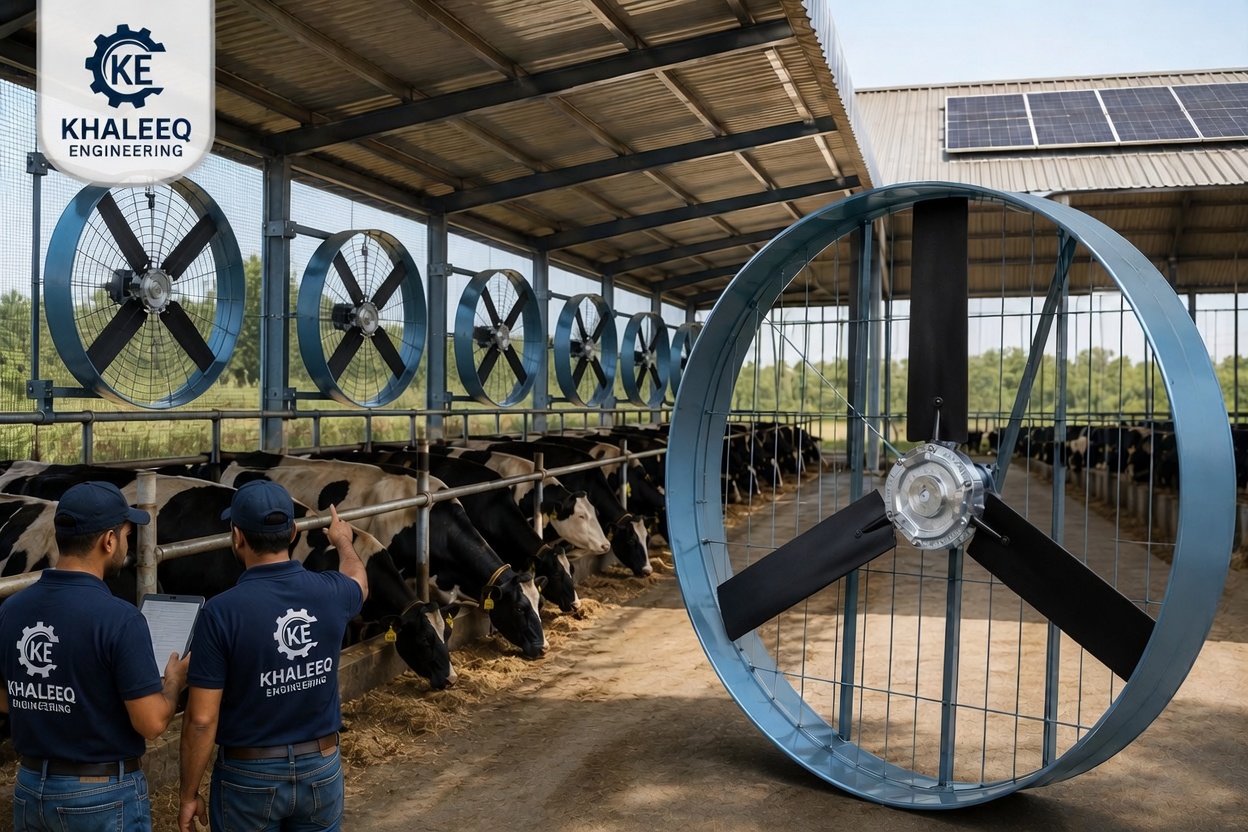
Introduction Proper ventilation systems are very important in modern dairy farming to ensure that animals remain healthy, to enhance productivity, and to provide a comfortable environment within the barns. Hot weather, high humidity, and lack of airflow may cause intense stress to dairy cows, particularly in summer. Not only does heat stress impact the physical status of cows, but it also impacts the production of milk, fertility, and the profitability of the farm in general. Due to this, a lot of farmers are investing in quality dairy barn fans that can help in ventilating and ensuring that the temperature is maintained all year round. An effective cooling system can significantly help in keeping the cows comfortable. Cows are very sensitive to heat, and when the temperature in the barns exceeds their comfortable range, the animals tend to eat less, drink more water, and yield less milk. Lack of airflow may also cause moisture and other gases to accumulate in the barn, making it unhealthy for livestock. Here is where heavy-duty dairy fans are needed. These systems aid in the circulation of fresh air, eliminating excessive humidity and preventing heat build-up within the dairy facilities. Dairy operations nowadays offer a variety of types of ventilation systems. Since high-volume low-speed systems, wall-mounted and tunnel ventilation units, all dairy farm fans have their own purpose based on the size and layout of the barn. Others are built to support large commercial farms, whereas others are used on medium-sized dairy sheds and closed livestock areas. Selecting the appropriate dairy barn fans has the potential to enhance the comfort of cows and the efficiency of farms remarkably. It also helps in proper feeding, healthy animals, and high milk production due to proper ventilation. Moreover, efficient cooling systems are also energy-saving, which lowers the electricity bills without compromising the quality of airflow. Dairy farm owners who invest in a sustainable and trusted dairy farm system usually record long-term gains in herd health and operational productivity. 1. Understanding the Importance of Dairy Barn Ventilation 1.1 Heat Stress and Its Impact on Dairy Cows One of the largest problems that dairy farm fans in the world encounter is heat stress. Dairy cows have the natural ability to generate a lot of body heat, and when temperatures increase in the environment, the animals cannot effectively dispose of the heat. Hot air and humidity are trapped in the building because of the poor ventilation of the barns that are used to keep livestock, which makes the conditions in the barns uncomfortable and unhealthy. That is why good ventilation and effective dairy barn fans play an important role in ensuring the comfort of the cow and farm productivity. The feeding habits of cows are altered as soon as they become stressed due to heat. Animals also start to feed less since the digestion itself generates body heat. Reduced feed consumption has a direct impact on the production of milk, hence decreased dairy production and loss of money by the farmers. Even when the amount of milk produced is reduced slightly, it can cause serious financial issues for large dairy fans. In most instances, farms that have no properly functioning dairy farms lead to decreased productivity in summer seasons. Heat stress also has an influence on reproduction and fertility. The extreme temperatures may interfere with breeding periods, lower the rate of conception, and unfavorably affect the development of calves. The farmers usually report more health issues in overheated cattle, such as dehydration, tiredness, and a weakened immune system. Breathing problems can also arise in barns where there is poor air flow and poor air quality. Cow behavior is another significant issue of concern. Heat-stressed cows spend a lot of time standing as opposed to lying down since they are attempting to cool themselves. Too much standing leads to more chances of having issues with the hooves and physical discomfort. Conversely, barns with effective dairy fan systems have constant air flow, which makes the animals calm and comfortable during the day. Heat stress can also be aggravated by humidity. Increased moisture in a barn causes cows to be unable to cool themselves by breathing and sweating. Dairy barn fans are heavy-duty machines that help eliminate moisture-filled air and substitute it with fresh air flowing through the barn. This reduces the overall body temperature experienced by the animals and makes the environment healthy in terms of milk production. In the case of the modern dairy farms, heat stress is no longer a choice. The farmers are now starting to invest in better dairy fan systems since they have realized that there is a direct relationship between ventilation and profitability. Appropriate airflow is not only healthy for the livestock but also enhances long-term dairy farm fan performance. 1.2 How Dairy Barn Fans Improve Cow Comfort The proper ventilation systems play a crucial role in keeping the dairy barns healthy, and dairy barn fans are the most significant equipment needed to enhance livestock comfort. These systems circulate air throughout the barn, eliminating heat and allowing cows to have a cooler environment. Proper airflow allows animals to remain in a relaxed, active, and productive state even in times of extreme heat. Controlling temperature is one of the main advantages of dairy fans. Big barns tend to trap warm air produced by livestock, machinery, and the sun. In the absence of ventilation, temperatures may quickly increase and cause stressful conditions within the facility. Fans installed properly assist in moving hot air out and fresh air in the barn, which is circulated by the cooler air. This enhances comfort and minimizes the adverse impacts of overheating. The circulation of air is also useful in regulating the moisture. The humidity is naturally high in dairy barns because of the breathing of animals, the water systems, and the aggregation of manure. Moisture builds up and makes the environment unpleasant, which helps in the growth of bacteria. A powerful dairy farm fan system helps to lower the humidity by enhancing the
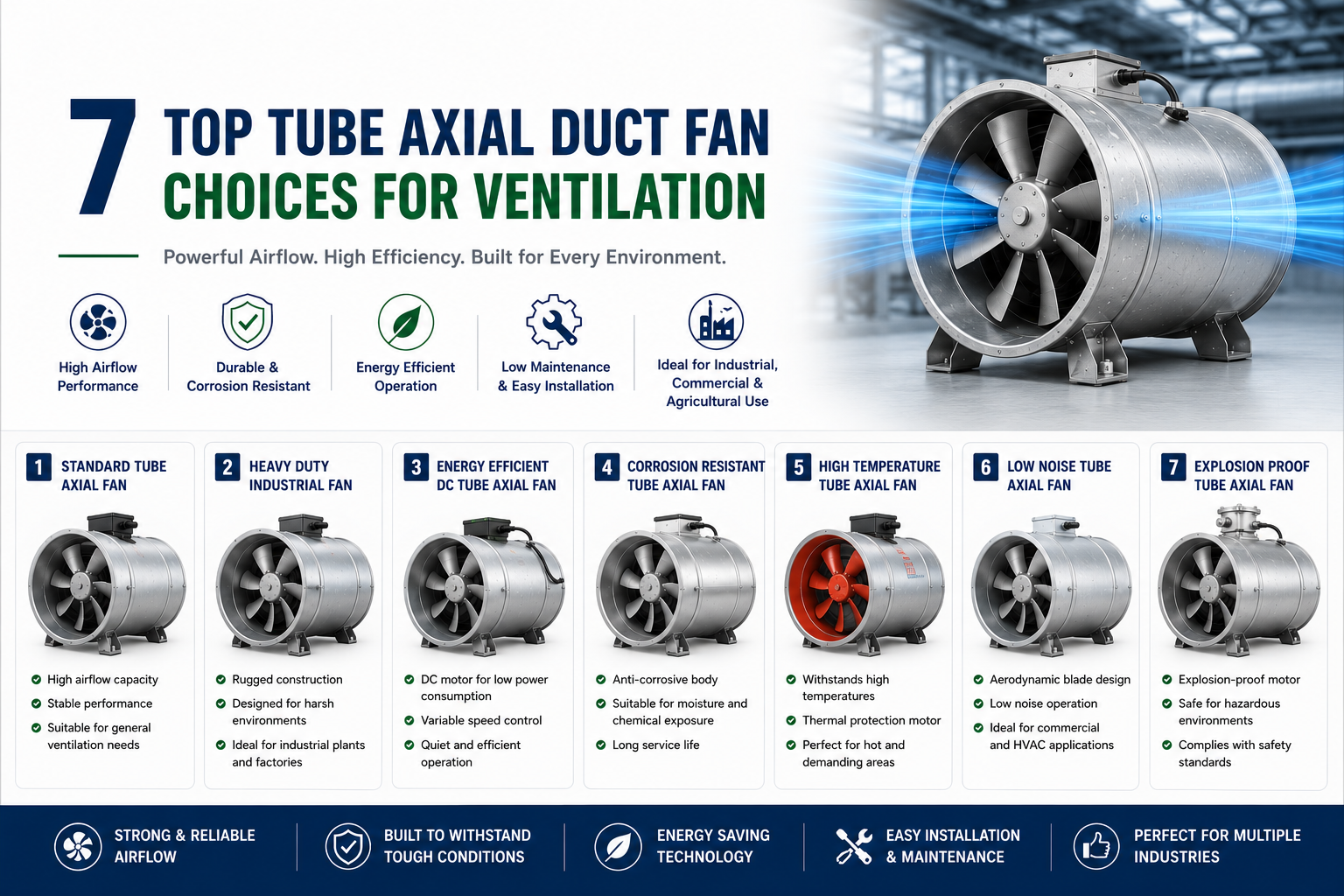
7 Top Tube Axial Duct Fan Choices for Ventilation
Introduction to axial duct fan solutions Proper ventilation with steady airflow is essential for safety, comfort, and operational efficiency in industrial, commercial, and agricultural environments. In any type of structure, whether a manufacturing plant, warehouse, workshop, greenhouse, or office building, poor air circulation can lead to excess heat buildup, humidity, foul odors, dust accumulation, and even equipment damage. Here, an axial tube duct fan is one of the most effective and reliable ventilation solutions. A tube-axial duct fan is specifically designed to move large amounts of air via duct systems with a high degree of air-flow performance. Unlike traditional ventilation techniques that may require more space or intricate arrangements, these fans are a great space-saving solution for areas that need a focused, forceful breeze. They are streamlined and cylindrical, making them excellent for incorporation into duct networks, whether in new installations or in retrofitting existing ventilation systems. The tube-axial duct fan can continuously move air over long runs, a major advantage of this type. This makes it excellent for applications where air needs to be transported via ducts, tunnels, or confined spaces. These fans are vital for bringing fresh air into commercial buildings and for removing hot air and smoke from factories, creating healthier, more productive environments. Modern ventilation requirements are evolving, and there is an increasing demand for systems that provide appropriate circulation while also reducing energy use. A high-grade tube axial duct fan meeting the criteria has excellent performance and energy efficiency. Many advanced models have better blade designs and efficient motors that cut electricity costs while ensuring reliable operation. Another big plus with these fans is their versatility. They can be used in several fields such as industrial production plants, HVAC systems, agricultural ventilation, and some exhaust systems. Recommended by engineers, facilities managers, and ventilation professionals for their ability to cope with a variety of environmental situations. Good ventilation also enhances indoor air quality by removing contaminants such as dust, odors, and moisture. This is particularly true in situations where the health of the employees and the functioning of equipment depend upon stable air conditions. Hence, installing the proper tube-axial duct fan can improve operational efficiency and worker safety. Ventilation technology is continually improving, and many systems available today include easy-to-use controls, variable-speed settings, and noise-reducing features. These advances make today’s tube-axial duct fan systems more effective and easier to use than ever before. The first step to improving airflow management is to understand the importance of properly selecting a ventilation system. The right axial duct fan can help companies optimize performance, reduce maintenance costs, and deliver long-lasting durability in demanding environments. 2. What is a tube-axial duct fan, and how does it work? An axial duct fan is a mechanical ventilation device that moves air through an enclosed duct system parallel to the fan’s rotational axis. “Axial” refers to the direction of the air movement, straight down the fan shaft, rather than being thrown outward like with centrifugal fans. The design of a tube axial duct fan typically consists of several main components that work together to efficiently deliver airflow. Typically, they consist of fan blades, an electric motor, a cylindrical housing, support brackets, and protective guards. The blades are designed to move the most air with the least amount of drag and energy. The functioning principle of a tube axial duct fan is relatively simple but very effective. The motor spins the blades at high speed, creating pressure differences that draw air through the fan and into the associated duct system. This constant movement ensures the removal of stale, hot, and unclean air and the introduction of fresh air into the atmosphere. A tube-axial fan is used in many applications because it can generate high airflow in a smaller space. The tubular design of the fan allows it to be easily installed in ventilation ducts without altering the structure. This will speed installation and decrease costs. Tube-axial fans are usually chosen over centrifugal fans for applications that require moving large volumes of air at low to medium pressures. Axial fans are good for general ventilation, cooling, and exhaust, but centrifugal systems may be better suited to high-pressure situations. Another amazing thing about it is that the tube-axial exhaust fan can take in and exhaust air. It is also used to bring in fresh air from outside and to exhaust dirty air from within. The double function enhances the versatility between different ventilation strategies. Many of today’s inline axial duct fan systems feature modern engineering, such as aerodynamic blade designs, vibration-reduction systems, and energy-efficient motors. These improvements enhance airflow performance, decrease operating noise, and reduce maintenance. The performance of a tube axial duct fan depends on several factors, including blade angle, motor power, fan diameter, and duct design. Choosing the proper fan size and specifications is vital to achieving optimal airflow and system performance. In practice, these fans are widely used in industrial production facilities, parking garages, agricultural buildings, HVAC systems, tunnels, and commercial ventilation networks. They are among the most common ventilation methods worldwide because they can provide a steady, continuous flow of air. In conclusion, understanding how a tube axial duct fan operates enables buyers to make informed choices when purchasing a system that meets their specific airflow requirements. An appropriately sized axial fan can significantly improve environmental conditions and operational efficiency for cooling, air exchange, or contaminant removal. 3. Main Benefits of Tube-Axial Fan A suitable ventilation system can substantially improve air movement efficiency, indoor air quality, and operational safety in industrial, commercial, and agricultural settings. Among the wide range of ventilation options available today, the tube axial fan is among the most effective and flexible. Fans of this type are designed to move large volumes of air efficiently via ducting or open areas. These fans have various advantages and are useful for a wide range of applications. Knowing the benefits of tube axial fans can help companies and facility managers make intelligent decisions when replacing or installing ventilation systems. High Airflow
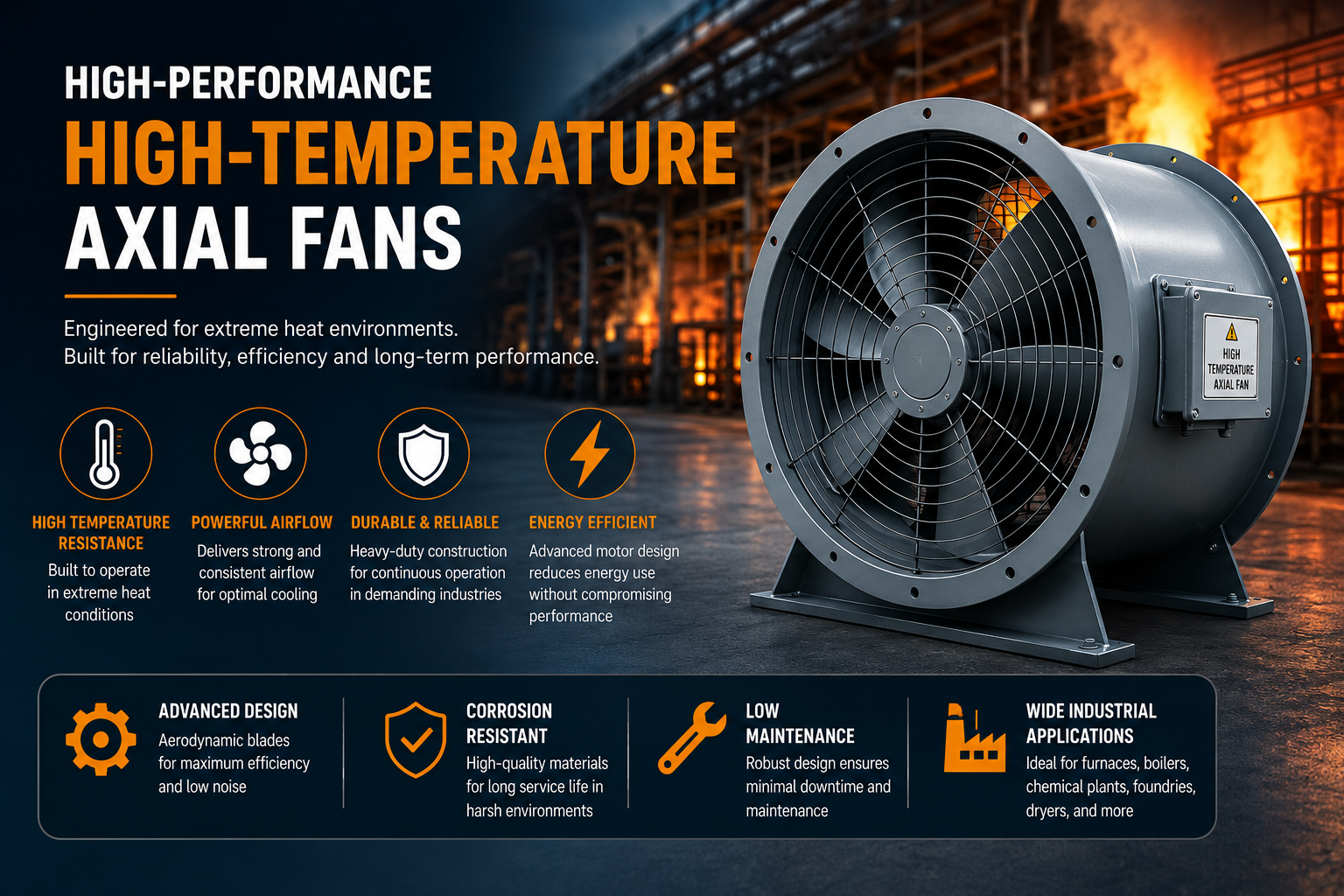
6 Ultimate High Performance High-Temperature Axial Fans
Introduction to High-Temperature Axial Fans In modern industrial environments, maintaining proper airflow and temperature control is essential for operational efficiency and workplace safety. Industries such as manufacturing, chemical processing, power generation, and metal production often operate in extremely hot conditions where heat buildup can negatively affect machinery performance and employee productivity. To solve these ventilation challenges, many industries rely on high-temperature axial fans because of their powerful airflow capacity and ability to perform in demanding environments. The increasing demand for advanced cooling and ventilation systems has made industrial airflow technology more important than ever. Companies now require ventilation equipment that can withstand high temperatures while delivering continuous airflow without performance loss. This is where modern industrial axial fans become highly valuable. These fans are specially engineered to move large volumes of air efficiently, helping industries maintain stable temperatures and improve air quality. Unlike traditional cooling systems, axial fans are designed to move air parallel to the fan shaft, allowing them to deliver high airflow rates with excellent energy efficiency. Their simple yet powerful design makes them ideal for industrial environments where heat extraction, smoke ventilation, and equipment cooling are necessary. Today, many factories and processing plants prefer advanced axial fan industrial systems because they offer durability, low maintenance, and long operational life. High-temperature environments can damage sensitive industrial equipment if ventilation systems are weak or unreliable. Overheating may reduce machinery lifespan, increase maintenance costs, and even create dangerous workplace conditions. By using efficient high pressure axial fan systems, industries can remove hot air quickly and maintain safer operating temperatures. These fans are widely used in heavy-duty industrial applications because they can operate continuously under harsh conditions without compromising airflow performance. Another important reason for the popularity of high-temperature axial fans is their energy efficiency. Modern industrial facilities focus heavily on reducing energy consumption while maintaining maximum productivity. Advanced axial fan systems are designed with aerodynamic blades and high-efficiency motors that minimize power usage while providing strong ventilation. This combination of performance and energy savings makes them an ideal solution for industrial cooling systems. What Are High-Temperature Axial Fans? The working mechanism of axial fans is relatively simple yet highly effective. The fan blades rotate around a central axis, pushing air parallel to the shaft direction. This airflow pattern allows axial fans to move large air volumes at high speed. Compared to other ventilation systems, industrial axial fans are often preferred because they provide strong airflow while consuming less energy. One major advantage of high-temperature axial fans is their heat-resistant design. These fans are manufactured using durable materials such as aluminum, stainless steel, and coated steel components that can withstand extreme operating conditions. In addition, their motors are designed with thermal protection systems to ensure reliable performance even during continuous industrial operation. The design of a high pressure axial fan also plays a significant role in its performance. The angle and shape of the blades directly affect airflow efficiency and pressure generation. Advanced blade engineering allows these fans to deliver powerful airflow while maintaining low noise levels. This is particularly important in industrial settings where ventilation systems operate for long hours every day. Modern axial fan industrial systems are available in different sizes and configurations depending on the application requirements. Some are designed for wall-mounted ventilation, while others are integrated into HVAC systems, cooling towers, or industrial exhaust systems. Their flexibility makes them suitable for a wide range of industries and ventilation needs. Key Features of High-Temperature Axial Fans One of the most important features of high-temperature axial fans is their ability to perform reliably under extreme heat conditions. These fans are specifically engineered to handle temperatures that standard ventilation systems cannot tolerate. Their heavy-duty construction ensures long-lasting performance in industrial environments where heat exposure is constant. Heat-resistant motor technology is another major feature of advanced industrial axial fans. High-quality motors are designed to operate continuously without overheating, even in demanding industrial facilities. Many modern fan systems also include thermal overload protection to prevent motor damage during extended operation. Durability is essential in industrial ventilation systems, and this is why manufacturers use corrosion-resistant materials in axial fan industrial designs. Stainless steel blades, protective coatings, and reinforced structures help the fans resist moisture, chemicals, and harsh environmental conditions. This improves fan lifespan while reducing maintenance costs. Energy efficiency is also a key advantage of modern high pressure axial fan systems. Many advanced models use aerodynamic blade technology that maximizes airflow while minimizing energy consumption. This allows industries to reduce electricity costs without sacrificing ventilation performance. Low maintenance requirements make these fans highly practical for industrial use. Their simple mechanical design reduces the risk of component failure, while easy-access maintenance features simplify inspection and cleaning procedures. As a result, industries can maintain consistent ventilation performance with minimal downtime. Noise reduction technology has also become increasingly important in modern industrial ventilation systems. Many high-temperature axial fans are now designed with balanced blades and vibration control systems that reduce operational noise. This helps create a safer and more comfortable working environment for employees. Importance of High Pressure Airflow in Industrial Applications Proper airflow management is critical in industrial facilities where excessive heat can create operational and safety challenges. High airflow systems help regulate temperatures, remove airborne contaminants, and improve overall workplace conditions. This is why high pressure axial fan technology is widely used in modern industries. High-pressure airflow is especially important in factories with heavy machinery and heat-producing equipment. Without proper ventilation, heat can accumulate rapidly, leading to equipment overheating and reduced operational efficiency. Advanced industrial axial fans help prevent these issues by continuously removing hot air and supplying fresh airflow. Smoke extraction is another major application of high-temperature axial fans. In industrial emergencies such as fires, smoke control systems play a vital role in maintaining visibility and supporting safe evacuation procedures. High-pressure axial fans are commonly integrated into industrial smoke management systems because of their strong airflow capabilities. Temperature control also improves worker safety and productivity. Excessive heat exposure can reduce employee performance and increase health risks. By installing reliable axial fan industrial systems, companies can
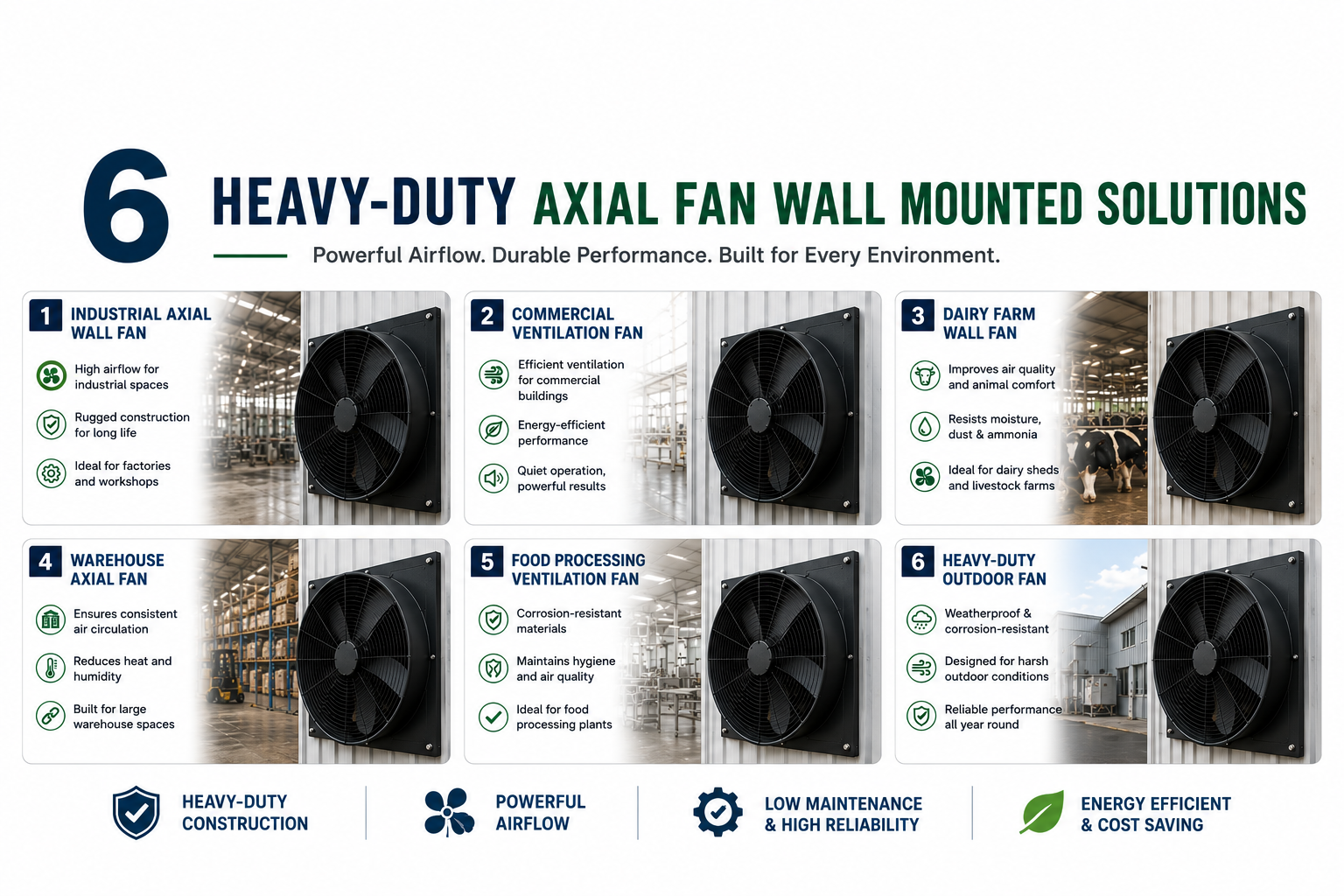
6 Heavy-Duty Axial Fan Wall Mounted Solutions
Introduction to axial fan wall mounted Solutions Proper ventilation is crucial in industrial, agricultural, and commercial settings to create a safe, productive, and comfortable atmosphere. Whether it is a manufacturing plant, warehouse, dairy farm, workshop, or storage facility, poor air circulation can lead to excessive heat buildup, humidity, dust accumulation, and dangerous working conditions. So, how can many organizations efficiently tackle these ventilation challenges? Axial fan wall-mounted systems are a practical and high-performance airflow solution. An axial fan wall mounted unit is designed to move large volumes of air directly through a wall opening, helping to remove hot, stale, or contaminated air while bringing in fresh air from outside. These fans are known for their simple design, high airflow, and energy efficiency, making them among the most widely used ventilation systems across several sectors. With rising temperatures and increased industry demand for greater environmental controls, investment in reliable ventilation equipment is more critical than ever. A well-chosen axial fan wall mounted system can considerably increase worker comfort, prevent machinery from overheating, and enhance overall operating efficiency. These fans help control temperature, reduce humidity, and enhance indoor air quality, creating healthier conditions for workers and equipment. One of the main advantages of current ventilation systems is the development of DC axial-fan technology. Axial fan DC fans use less electricity than standard AC-powered fans while providing consistent airflow performance. This makes them a great option for companies looking to cut operational costs without compromising ventilation quality. Axial-fan DC systems can be particularly useful for establishments that need continuous airflow during the day, thanks to their energy-saving benefits. In addition to wall-mounted alternatives, several businesses also incorporate inline axial fans to complete their overall ventilation configuration. Inline axial fans are generally used in ducting systems to improve airflow when direct wall mounting is not practicable. Combined with an axial fan wall-mounted unit, they form a very efficient, balanced ventilation system that can handle airflow in larger spaces. Another popular choice is an axial ventilation fan. Axial fans are designed to flow air along the axis of the fan blades. An axial-type ventilation fan is preferable due to its high airflow rates and a small, easy-to-install design. These fans are very effective at removing excess heat, smoke, moisture, and airborne particles in industrial and agricultural settings. The need for axial fan wall-mounted systems is growing rapidly across industries such as manufacturing, livestock farming, food processing, and commercial storage. On agricultural farms, such as dairy farms, good airflow is very important for reducing heat stress in animals and increasing milk production. Good industrial ventilation helps prevent machine overheating and makes the workplace safer by removing pollutants and dust. A solution with a properly mounted axial fan can deliver long-term benefits, including lower energy costs, longer equipment lifespan, and higher productivity. Today, there are sophisticated ventilation solutions suited to companies’ needs, including energy-efficient DC axial fan motors, inline axial fans, and high-capacity axial ventilation fan designs. The first step to developing a better ventilation strategy is knowing how these systems work and where they are most effective. Investing in high-quality axial fan wall-mounted equipment can enable companies to build healthier, safer, and more efficient working environments while maintaining reliable airflow performance for years to come. What is a Wall-Mounted Axial Fan? An axial fan, wall-mounted, is a type of ventilating equipment used to circulate air in a straight path, parallel to the spinning axes of its blades. An axial fan wall-mounted device blows air from one side of a wall to the other rather than redirecting it through ducts or special channels like other fan systems, making it very effective for quick ventilation and temperature control. The design of an axial fan wall-mounted system is quite basic but very efficient. It usually consists of the fan blades, a motor, a protective frame, and mounting gear that allows the unit to be securely mounted to walls. Once switched on, the blades move to create airflow, either drawing in fresh air or expelling unwanted air. In current units, the DC motor for the axial fan is one of the most crucial components. Axial fan DC technology delivers superior energy efficiency, quieter operation, and better speed control than traditional motor systems. axial fan dc versions are good for businesses that operate for long hours, as they consume less electricity. Inline axial fans are typically used in conjunction with wall-mounted units in large or more complicated ventilation systems. Inline axial fans can help direct airflow through ducts or enclosed places where direct ventilation may be problematic. By integrating inline axial fans into a wall-mounted axial fan system, customers can achieve more uniform air circulation within a facility. The axial ventilation fan is especially appreciated for its adaptability. It can be used in factories to remove industrial heat, in warehouses to increase air freshness, and in agricultural settings to control humidity and temperature. Axial ventilation fan systems are frequently regarded as among the most economical ventilation solutions on the market, capable of moving large volumes of air quickly. A wall-mounted axial fan is a good tool for maintaining optimal airflow in tough conditions. Whether upgraded with DC axial-fan technology, supplemented with inline axial fans, or used as a solo axial ventilation fan, this type of fan plays a vital role in modern ventilation systems. Benefits & Top Axial Fan Wall-Mounted Solutions Advantages of Installing an Axial Fan Wall-Mounted System One of the most effective ways to improve ventilation in industrial, commercial, and agricultural buildings is to install an axial fan wall-mounted system. These fans are built to provide strong airflow while being energy efficient and durable for the long haul. An axial fan wall-mounted solution is suitable for factories, warehouses, dairy farms, and workshops and offers several benefits that directly improve operational performance and indoor comfort. Improved Air Flow and Temperature Regulation One of the greatest benefits of an axial fan wall-mounted system is its ability to circulate air quickly and consistently. Poor air circulation can lead to heat buildup, excessive