Introduction to High-Temperature Axial Fans
In modern industrial environments, maintaining proper airflow and temperature control is essential for operational efficiency and workplace safety. Industries such as manufacturing, chemical processing, power generation, and metal production often operate in extremely hot conditions where heat buildup can negatively affect machinery performance and employee productivity. To solve these ventilation challenges, many industries rely on high-temperature axial fans because of their powerful airflow capacity and ability to perform in demanding environments.
The increasing demand for advanced cooling and ventilation systems has made industrial airflow technology more important than ever. Companies now require ventilation equipment that can withstand high temperatures while delivering continuous airflow without performance loss. This is where modern industrial axial fans become highly valuable. These fans are specially engineered to move large volumes of air efficiently, helping industries maintain stable temperatures and improve air quality.
Unlike traditional cooling systems, axial fans are designed to move air parallel to the fan shaft, allowing them to deliver high airflow rates with excellent energy efficiency. Their simple yet powerful design makes them ideal for industrial environments where heat extraction, smoke ventilation, and equipment cooling are necessary. Today, many factories and processing plants prefer advanced axial fan industrial systems because they offer durability, low maintenance, and long operational life.
High-temperature environments can damage sensitive industrial equipment if ventilation systems are weak or unreliable. Overheating may reduce machinery lifespan, increase maintenance costs, and even create dangerous workplace conditions. By using efficient high pressure axial fan systems, industries can remove hot air quickly and maintain safer operating temperatures. These fans are widely used in heavy-duty industrial applications because they can operate continuously under harsh conditions without compromising airflow performance.
Another important reason for the popularity of high-temperature axial fans is their energy efficiency. Modern industrial facilities focus heavily on reducing energy consumption while maintaining maximum productivity. Advanced axial fan systems are designed with aerodynamic blades and high-efficiency motors that minimize power usage while providing strong ventilation. This combination of performance and energy savings makes them an ideal solution for industrial cooling systems.
What Are High-Temperature Axial Fans?
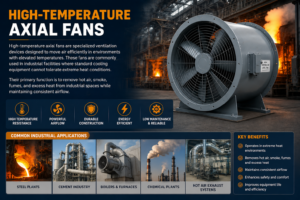
The working mechanism of axial fans is relatively simple yet highly effective. The fan blades rotate around a central axis, pushing air parallel to the shaft direction. This airflow pattern allows axial fans to move large air volumes at high speed. Compared to other ventilation systems, industrial axial fans are often preferred because they provide strong airflow while consuming less energy.
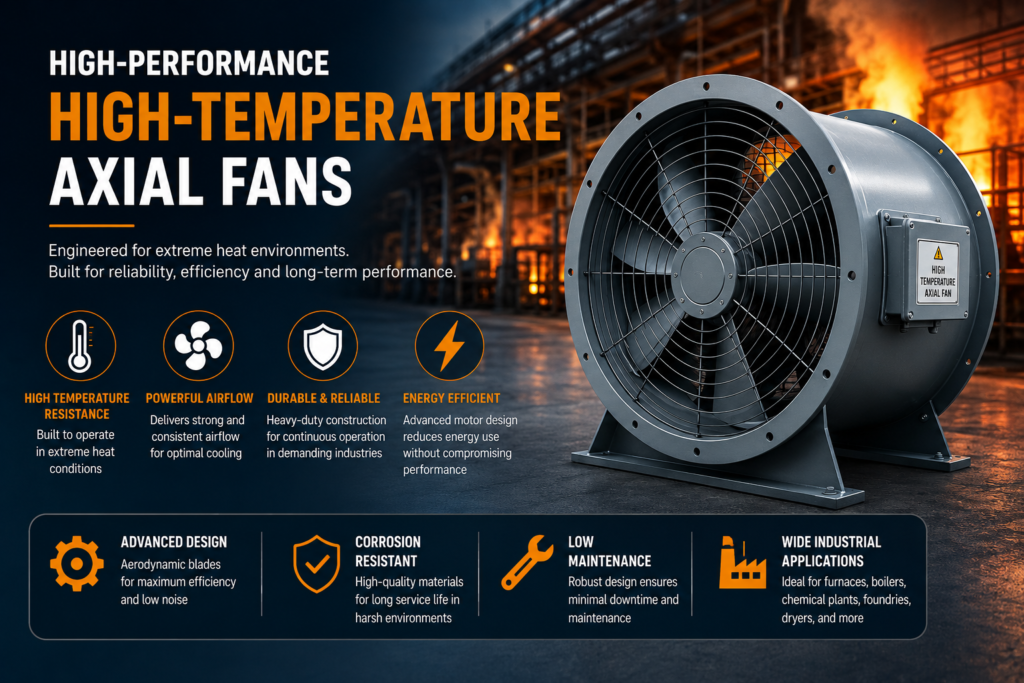
One major advantage of high-temperature axial fans is their heat-resistant design. These fans are manufactured using durable materials such as aluminum, stainless steel, and coated steel components that can withstand extreme operating conditions. In addition, their motors are designed with thermal protection systems to ensure reliable performance even during continuous industrial operation.
The design of a high pressure axial fan also plays a significant role in its performance. The angle and shape of the blades directly affect airflow efficiency and pressure generation. Advanced blade engineering allows these fans to deliver powerful airflow while maintaining low noise levels. This is particularly important in industrial settings where ventilation systems operate for long hours every day.
Modern axial fan industrial systems are available in different sizes and configurations depending on the application requirements. Some are designed for wall-mounted ventilation, while others are integrated into HVAC systems, cooling towers, or industrial exhaust systems. Their flexibility makes them suitable for a wide range of industries and ventilation needs.
Key Features of High-Temperature Axial Fans
One of the most important features of high-temperature axial fans is their ability to perform reliably under extreme heat conditions. These fans are specifically engineered to handle temperatures that standard ventilation systems cannot tolerate. Their heavy-duty construction ensures long-lasting performance in industrial environments where heat exposure is constant.
Heat-resistant motor technology is another major feature of advanced industrial axial fans. High-quality motors are designed to operate continuously without overheating, even in demanding industrial facilities. Many modern fan systems also include thermal overload protection to prevent motor damage during extended operation.
Durability is essential in industrial ventilation systems, and this is why manufacturers use corrosion-resistant materials in axial fan industrial designs. Stainless steel blades, protective coatings, and reinforced structures help the fans resist moisture, chemicals, and harsh environmental conditions. This improves fan lifespan while reducing maintenance costs.
Energy efficiency is also a key advantage of modern high pressure axial fan systems. Many advanced models use aerodynamic blade technology that maximizes airflow while minimizing energy consumption. This allows industries to reduce electricity costs without sacrificing ventilation performance.
Low maintenance requirements make these fans highly practical for industrial use. Their simple mechanical design reduces the risk of component failure, while easy-access maintenance features simplify inspection and cleaning procedures. As a result, industries can maintain consistent ventilation performance with minimal downtime.
Noise reduction technology has also become increasingly important in modern industrial ventilation systems. Many high-temperature axial fans are now designed with balanced blades and vibration control systems that reduce operational noise. This helps create a safer and more comfortable working environment for employees.
Importance of High Pressure Airflow in Industrial Applications
Proper airflow management is critical in industrial facilities where excessive heat can create operational and safety challenges. High airflow systems help regulate temperatures, remove airborne contaminants, and improve overall workplace conditions. This is why high pressure axial fan technology is widely used in modern industries.
High-pressure airflow is especially important in factories with heavy machinery and heat-producing equipment. Without proper ventilation, heat can accumulate rapidly, leading to equipment overheating and reduced operational efficiency. Advanced industrial axial fans help prevent these issues by continuously removing hot air and supplying fresh airflow.
Smoke extraction is another major application of high-temperature axial fans. In industrial emergencies such as fires, smoke control systems play a vital role in maintaining visibility and supporting safe evacuation procedures. High-pressure axial fans are commonly integrated into industrial smoke management systems because of their strong airflow capabilities.
Temperature control also improves worker safety and productivity. Excessive heat exposure can reduce employee performance and increase health risks. By installing reliable axial fan industrial systems, companies can create more comfortable work environments while meeting industrial safety standards.
Continuous airflow is essential for industries that operate 24/7. Unlike traditional cooling equipment, high-temperature axial fans are designed for long-duration operation in harsh conditions. Their durable motors and heat-resistant components allow them to maintain stable airflow performance even during heavy industrial workloads.
Common Industrial Uses of Axial Fans
The versatility of industrial axial fans makes them suitable for many industrial applications. Manufacturing plants often use these fans to control heat generated by production machinery and industrial processes. Proper ventilation improves production efficiency while protecting equipment from overheating.
Steel and metal industries heavily depend on high-temperature axial fans because of the extreme heat generated during metal processing operations. These fans help maintain safe working temperatures and improve air circulation within production facilities.
Chemical processing plants also require reliable ventilation systems to remove fumes, gases, and heat from processing areas. In these environments, corrosion-resistant axial fan industrial systems provide long-term durability and safe ventilation performance.
Warehouses and storage facilities use high pressure axial fan systems to improve airflow and maintain temperature stability. Proper air circulation helps protect stored materials while reducing humidity and heat buildup inside large storage spaces.
Power plants rely on powerful industrial ventilation systems for cooling turbines, generators, and electrical equipment. Advanced high-temperature axial fans help maintain operational stability and prevent overheating in critical power generation systems.
Commercial HVAC systems also benefit from modern axial fan technology. Large buildings, shopping centers, and industrial complexes often use these fans to improve ventilation efficiency and indoor air quality.
Part 2: Types, Benefits & Performance Factors of Industrial Axial Fans
Different Types of Industrial Axial Fans
Modern industries use different types of axial fans depending on airflow requirements, pressure levels, and operating conditions. Each fan type is designed to handle specific industrial applications efficiently. Understanding these variations helps businesses choose the right high-temperature axial fans for their facilities.
Tube Axial Fans
Tube axial fans are among the most commonly used industrial axial fans in ventilation systems. These fans are designed with a cylindrical housing that improves airflow direction and efficiency. They are ideal for applications requiring large air movement with moderate pressure levels.
Industries often install tube axial fans in warehouses, factories, parking garages, and industrial cooling systems. Their compact design and powerful airflow make them suitable for continuous ventilation operations. Many high-temperature models are equipped with heat-resistant motors and corrosion-resistant blades for long-term durability.
Vane Axial Fans
Vane axial fans are designed with guide vanes that improve airflow control and pressure generation. These fans are widely used where higher pressure performance is required. Compared to standard axial fans, vane axial systems provide better efficiency in demanding industrial environments.
A high-pressure axial fan with vane technology is commonly used in power plants, chemical industries, and heavy manufacturing facilities. These fans can move air over longer distances while maintaining stable airflow performance. Their advanced aerodynamic design also helps reduce energy consumption.
Propeller Axial Fans
Propeller fans are simple yet effective ventilation systems commonly used in large industrial spaces. These fans are designed for high airflow and low-pressure applications. Their lightweight structure makes them suitable for wall-mounted or roof-mounted installations.
Many industries prefer propeller-based axial fan industrial systems because they provide efficient ventilation at lower operational costs. These fans are commonly used in agricultural buildings, workshops, factories, and commercial ventilation systems.
Mixed Flow Axial Fans
Mixed flow fans combine the characteristics of axial and centrifugal fans. They provide higher pressure performance while maintaining strong airflow efficiency. These fans are often used in applications requiring balanced airflow and pressure capabilities.
Advanced high-temperature axial fans with mixed-flow technology are suitable for tunnels, industrial exhaust systems, and smoke extraction systems. Their modern design offers improved energy efficiency and quieter operation compared to traditional ventilation systems.
Benefits of Using High-Temperature Axial Fans
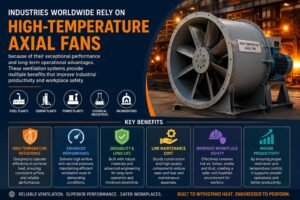
Industries worldwide rely on high-temperature axial fans because of their exceptional performance and long-term operational advantages. These ventilation systems provide multiple benefits that improve industrial productivity and workplace safety.
Excellent Airflow Performance
One of the biggest advantages of industrial axial fans is their ability to move large volumes of air efficiently. Their aerodynamic blade design allows them to deliver strong airflow while maintaining stable operating performance. This makes them ideal for industrial cooling and ventilation systems.
High Durability in Harsh Environments
Industrial environments often expose equipment to heat, dust, moisture, and chemicals. High-quality axial fan industrial systems are built using durable materials that resist corrosion and wear. Their heavy-duty construction allows them to operate reliably even in extreme conditions.
Energy Efficiency
Modern high pressure axial fan systems are designed with energy-saving technologies that reduce electricity consumption. Efficient motor systems and optimized blade designs help industries lower operational costs while maintaining effective airflow performance.
Low Maintenance Requirements
Maintenance costs are a major concern in industrial operations. Fortunately, most high-temperature axial fans are designed with simple mechanical structures that reduce maintenance needs. Their durable components and easy-access designs simplify cleaning and servicing procedures.
Long Operational Lifespan
Industrial ventilation systems are expected to operate continuously for extended periods. High-quality axial fans are built for long-term performance, making them a cost-effective investment for industries seeking reliable ventilation solutions.
Improved Workplace Safety
Proper ventilation plays an important role in maintaining safe working environments. Advanced industrial axial fans help remove heat, smoke, dust, and harmful fumes, reducing workplace hazards and improving employee comfort.
Understanding Axial Fan Industrial Design
The performance of an axial fan industrial system depends heavily on its design. Manufacturers focus on airflow efficiency, durability, and energy optimization when developing modern industrial fan systems.
Blade Design and Aerodynamics
The shape and angle of fan blades significantly affect airflow performance. Advanced blade engineering improves air movement while reducing energy consumption and operational noise. High-performance high-temperature axial fans often use precision-balanced blades for smoother operation.
Motor Power and RPM
Motor performance is another critical factor in industrial fan efficiency. Powerful motors allow fans to maintain stable airflow even under heavy operating conditions. Variable-speed motor systems are also becoming increasingly popular because they allow industries to adjust airflow based on operational requirements.
Fan Size and Airflow Capacity
Industrial facilities require ventilation systems of different sizes depending on airflow demands. Large-scale factories may use oversized industrial axial fans to ventilate wide production areas, while smaller systems may be sufficient for localized cooling applications.
Material Selection
Industrial fan systems are often exposed to harsh environmental conditions. Manufacturers use materials such as stainless steel, aluminum, and coated metals to improve corrosion resistance and durability. Heat-resistant materials are especially important in high-temperature axial fans used in heavy industrial applications.
Balanced Airflow Systems
Efficient ventilation depends on balanced airflow management. Properly designed high pressure axial fan systems distribute airflow evenly throughout industrial spaces, improving cooling efficiency and indoor air quality.
High Pressure Axial Fan vs Centrifugal Fan
Industries often compare axial fans and centrifugal fans when selecting ventilation systems. Both technologies have unique advantages depending on operational requirements.
Airflow Direction
The primary difference between these systems is airflow direction. High pressure axial fan systems move air parallel to the shaft, while centrifugal fans move air at a 90-degree angle. Axial fans are generally more suitable for high airflow applications.
Pressure Generation
Centrifugal fans typically generate higher pressure than standard axial fans. However, advanced industrial axial fans with vane technology can also provide strong pressure performance while maintaining energy efficiency.
Efficiency and Energy Consumption
Axial fans are often more energy-efficient for large airflow applications. Their streamlined airflow design allows them to move significant air volumes with lower power consumption.
Industrial Applications
Centrifugal fans are commonly used in dust collection and filtration systems, while high-temperature axial fans are preferred for industrial cooling, ventilation, and smoke extraction applications.
Choosing the Right Fan
The choice between axial and centrifugal systems depends on airflow requirements, pressure levels, installation space, and energy efficiency goals. Many industries prefer axial fan industrial systems because they offer strong airflow performance with lower operational costs.
Factors to Consider Before Buying Industrial Axial Fans
Selecting the right industrial fan system requires careful evaluation of multiple performance factors.
Temperature Resistance
One of the first considerations is the operating temperature range. High-quality high-temperature axial fans should be capable of handling extreme heat conditions without motor failure or airflow reduction.
Airflow Requirements
Industries must calculate airflow needs before choosing a fan system. Proper airflow ensures efficient cooling, ventilation, and smoke extraction performance.
Energy Consumption
Energy-efficient industrial axial fans help reduce operational expenses. Modern systems with variable-speed controls and optimized motors offer improved power efficiency.
Noise Levels
Industrial environments already generate significant noise. Choosing quieter axial fan industrial systems can improve workplace comfort and reduce noise pollution.
Installation Environment
The installation location affects fan performance and durability. Outdoor systems may require weather-resistant materials, while chemical facilities may need corrosion-resistant fan components.
Maintenance Accessibility
Easy maintenance access helps reduce downtime and servicing costs. Many modern high pressure axial fan systems are designed for quick inspection and maintenance procedures.
Safety Standards
Industrial ventilation systems should comply with safety and performance certifications. Certified fan systems provide greater reliability and workplace protection.
Part 3: Top High-Performance Models, Maintenance & Buying Guide
6 High-Performance High-Temperature Axial Fans
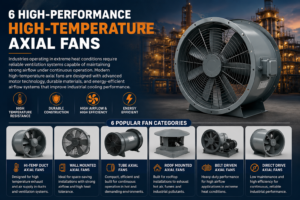
Industries operating in extreme heat conditions require reliable ventilation systems capable of maintaining strong airflow under continuous operation. Modern high-temperature axial fans are designed with advanced motor technology, durable materials, and energy-efficient airflow systems that improve industrial cooling performance. Below are six popular fan categories known for their high efficiency and industrial durability.
Fan #1 – Heavy-Duty Industrial Axial Fan
Heavy-duty industrial fans are designed for large-scale manufacturing facilities and high-temperature production environments. These fans provide powerful airflow while operating continuously under demanding industrial conditions.
One of the biggest advantages of this type of industrial axial fans system is its strong airflow performance. The heavy-duty motor design allows the fan to maintain stable operation even in environments with excessive heat and dust exposure. Many industries prefer these fans because they reduce overheating risks and improve workplace ventilation.
These fans are commonly used in steel factories, power plants, and large warehouses where strong ventilation is required. Their reinforced blade construction and corrosion-resistant materials improve operational lifespan and minimize maintenance needs.
Fan #2 – High Pressure Axial Fan
A high pressure axial fan is specifically designed for applications requiring powerful airflow and increased air pressure. These systems are ideal for industrial smoke extraction, tunnel ventilation, and heat removal applications.
High-pressure fan systems use advanced blade engineering to improve airflow efficiency. Their aerodynamic structure helps move air across long distances while maintaining stable pressure levels. This makes them highly effective for industrial facilities with complex ventilation requirements.
Many modern high-pressure systems also include energy-efficient motors that reduce electricity consumption without compromising performance. Industries prefer these fans because they offer excellent airflow control and long-term operational reliability.
Fan #3 – Energy-Efficient Axial Fan Industrial Model
Energy efficiency has become a major priority for modern industries. Advanced axial fan industrial systems now use smart motor technology and optimized airflow designs to reduce power consumption.
These fans are ideal for industries seeking environmentally friendly ventilation solutions. Variable-speed motor systems allow businesses to control airflow levels according to operational needs, helping reduce unnecessary energy usage.
Another major benefit of energy-efficient high-temperature axial fans is their lower operating cost. Over time, reduced electricity consumption can significantly lower industrial energy expenses. These systems are commonly used in commercial HVAC systems, processing plants, and manufacturing facilities.
Fan #4 – Corrosion-Resistant Industrial Axial Fan
Industrial environments often expose ventilation systems to chemicals, moisture, and harsh weather conditions. Corrosion-resistant industrial axial fans are designed to withstand these challenging environments while maintaining strong airflow performance.
Manufacturers typically use stainless steel blades, protective coatings, and sealed motor systems to improve durability. These fans are highly suitable for chemical plants, marine environments, and food processing industries.
Corrosion-resistant systems also provide longer operational life compared to standard industrial fans. Their durable construction reduces maintenance frequency and improves overall ventilation reliability.
Fan #5 – Compact High-Temperature Ventilation Fan
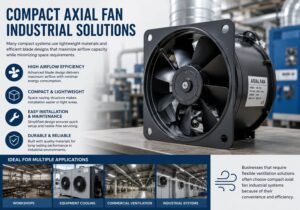
Compact ventilation fans are designed for industrial environments with limited installation space. Despite their smaller size, these high-temperature axial fans can deliver strong airflow performance and effective heat removal.
Many compact systems use lightweight materials and efficient blade designs that maximize airflow capacity while minimizing space requirements. These fans are commonly used in workshops, equipment cooling systems, and commercial ventilation applications.
Their compact structure also simplifies installation and maintenance procedures. Businesses that require flexible ventilation solutions often choose compact axial fan industrial systems because of their convenience and efficiency.
Fan #6 – Advanced Industrial Cooling Axial Fan
Advanced industrial cooling fans are engineered for high-performance industrial ventilation systems. These fans use modern airflow technologies and heavy-duty motors to support continuous industrial operation.
A major advantage of these high pressure axial fan systems is their ability to maintain consistent airflow under extreme operating conditions. Their advanced blade design improves cooling efficiency while reducing vibration and operational noise.
Industries such as power generation, heavy manufacturing, and metal processing rely heavily on advanced cooling fans to maintain equipment temperature stability and prevent overheating. These systems are considered essential for industrial facilities with high heat production.
Maintenance Tips for High-Temperature Axial Fans
Proper maintenance is necessary to ensure long-term performance and reliability of high-temperature axial fans. Regular servicing helps prevent airflow problems, motor failure, and operational downtime.
Regular Blade Inspection
Fan blades should be inspected frequently for dust accumulation, cracks, or damage. Dirty or damaged blades can reduce airflow efficiency and increase energy consumption. Cleaning the blades regularly improves ventilation performance.
Motor Lubrication
Lubricating motor bearings helps reduce friction and prevents overheating. Many industrial axial fans operate continuously, making proper lubrication essential for smooth operation and longer motor life.
Cleaning Airflow Pathways
Blocked airflow pathways can reduce cooling efficiency and increase fan workload. Industrial facilities should ensure ventilation ducts and fan openings remain free from dust and debris.
Monitoring Noise and Vibration
Unusual vibration or noise may indicate blade imbalance, motor wear, or loose components. Early inspection and repairs help prevent major mechanical failures in axial fan industrial systems.
Preventing Overheating
Industrial fans should operate within their recommended temperature range. Excessive heat exposure can damage motor systems and reduce fan lifespan. Temperature monitoring helps maintain safe operating conditions.
Scheduled Maintenance Programs
Routine maintenance schedules improve system reliability and reduce unexpected downtime. Many industries implement preventive maintenance programs for their high pressure axial fan systems to maintain stable ventilation performance.
Common Problems and Troubleshooting
Even high-quality high-temperature axial fans can develop operational issues over time. Understanding common problems helps industries respond quickly and maintain efficient ventilation systems.
Reduced Airflow
Dust buildup, blocked ventilation pathways, or damaged blades can reduce airflow performance. Regular cleaning and inspection help restore airflow efficiency.
Excessive Vibration
Imbalanced blades or loose mounting systems may cause vibration problems. Proper alignment and balancing procedures can solve these issues.
Motor Overheating
Overloaded motors or poor ventilation conditions may cause overheating. Ensuring proper airflow and motor lubrication helps prevent thermal damage.
Noise Problems
Worn bearings, loose parts, or blade damage can increase fan noise levels. Maintenance inspections help identify and correct these issues quickly.
Electrical Failures
Power fluctuations and wiring problems may affect fan operation. Industrial facilities should regularly inspect electrical connections to ensure safe system performance.
Future Trends in Industrial Axial Fan Technology
The industrial ventilation industry continues to evolve with new technologies focused on energy efficiency and smart automation.
Smart Ventilation Systems
Modern industrial axial fans increasingly use automated control systems that adjust airflow based on temperature and environmental conditions. Smart systems improve efficiency and reduce energy waste.
Eco-Friendly Cooling Solutions
Industries are adopting environmentally friendly ventilation technologies to reduce carbon emissions and energy consumption. Energy-efficient fan motors are becoming more common in modern industrial systems.
Advanced Heat-Resistant Materials
Manufacturers continue developing stronger materials for high-temperature axial fans to improve durability and performance in extreme industrial conditions.
Noise Reduction Technology
Future ventilation systems are expected to use improved aerodynamic designs that reduce operational noise while maintaining strong airflow performance.
AI and Predictive Maintenance
Artificial intelligence and predictive monitoring systems are helping industries detect maintenance issues before major failures occur. These technologies improve the reliability of high pressure axial fan systems and reduce operational downtime.
Conclusion
Modern industries require reliable ventilation systems capable of handling extreme temperatures and continuous operation. This is why high-temperature axial fans have become essential in manufacturing plants, power stations, chemical facilities, and industrial cooling systems.
Their strong airflow performance, energy efficiency, and durable construction make them one of the most effective industrial ventilation solutions available today. Whether used for heat removal, smoke extraction, or industrial cooling, advanced industrial axial fans help maintain safer and more productive working environments.
Choosing the right axial fan industrial system depends on airflow requirements, operating conditions, and energy efficiency goals. Businesses that invest in high-quality ventilation systems benefit from improved equipment protection, lower maintenance costs, and long-term operational reliability.
As industrial technology continues to evolve, modern high pressure axial fan systems will become even more efficient, intelligent, and environmentally friendly, supporting the growing demand for advanced industrial ventilation solutions.