Introduction
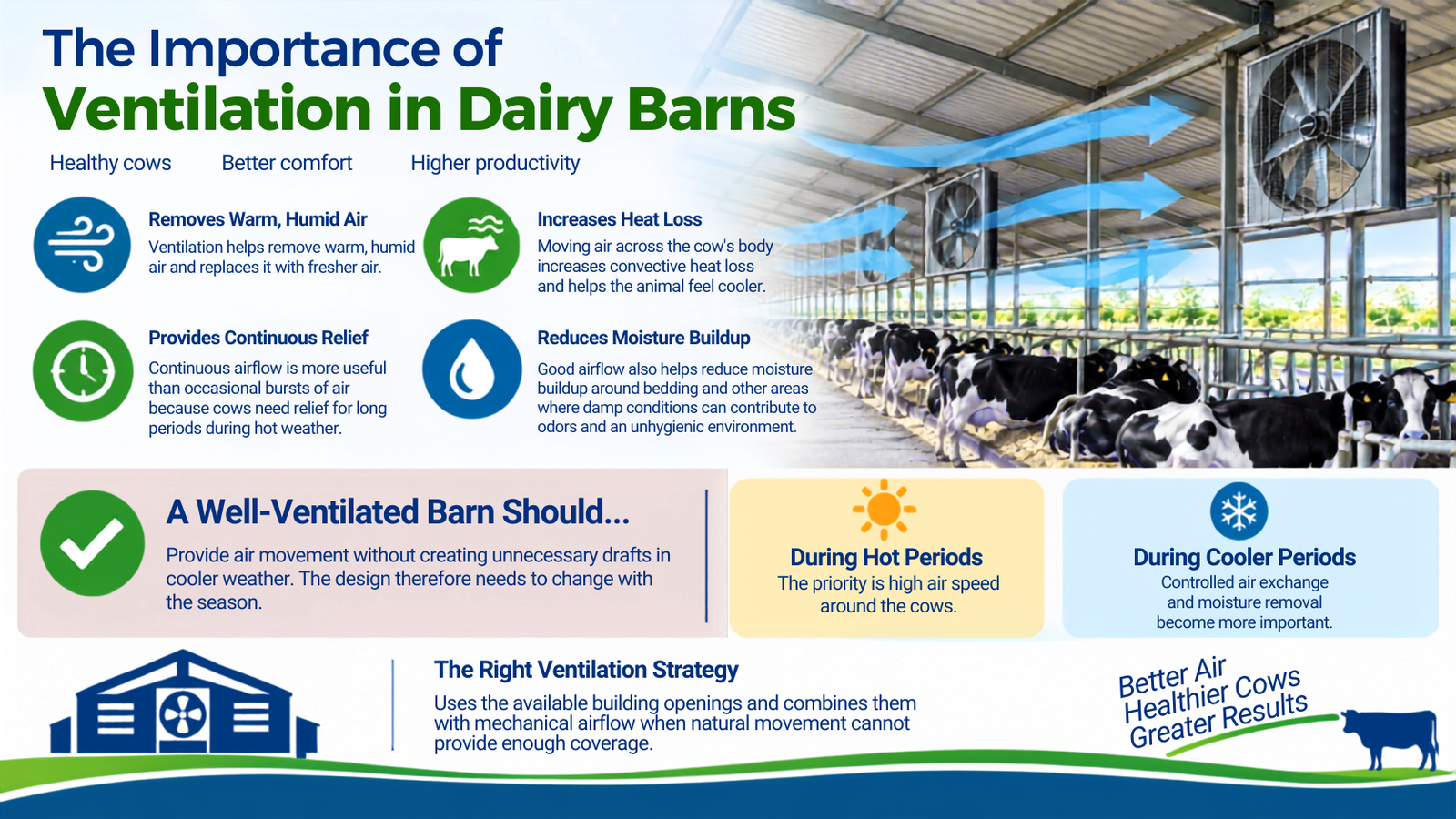
Proper ventilation systems are very important in modern dairy farming to ensure that animals remain healthy, to enhance productivity, and to provide a comfortable environment within the barns. Hot weather, high humidity, and lack of airflow may cause intense stress to dairy cows, particularly in summer. Not only does heat stress impact the physical status of cows, but it also impacts the production of milk, fertility, and the profitability of the farm in general.
Due to this, a lot of farmers are investing in quality dairy barn fans that can help in ventilating and ensuring that the temperature is maintained all year round.
An effective cooling system can significantly help in keeping the cows comfortable. Cows are very sensitive to heat, and when the temperature in the barns exceeds their comfortable range, the animals tend to eat less, drink more water, and yield less milk. Lack of airflow may also cause moisture and other gases to accumulate in the barn, making it unhealthy for livestock.
Here is where heavy-duty dairy fans are needed. These systems aid in the circulation of fresh air, eliminating excessive humidity and preventing heat build-up within the dairy facilities.
Dairy operations nowadays offer a variety of types of ventilation systems. Since high-volume low-speed systems, wall-mounted and tunnel ventilation units, all dairy farm fans have their own purpose based on the size and layout of the barn. Others are built to support large commercial farms, whereas others are used on medium-sized dairy sheds and closed livestock areas.
Selecting the appropriate dairy barn fans has the potential to enhance the comfort of cows and the efficiency of farms remarkably. It also helps in proper feeding, healthy animals, and high milk production due to proper ventilation. Moreover, efficient cooling systems are also energy-saving, which lowers the electricity bills without compromising the quality of airflow.
Dairy farm owners who invest in a sustainable and trusted dairy farm system usually record long-term gains in herd health and operational productivity.
1. Understanding the Importance of Dairy Barn Ventilation
1.1 Heat Stress and Its Impact on Dairy Cows
One of the largest problems that dairy farm fans in the world encounter is heat stress. Dairy cows have the natural ability to generate a lot of body heat, and when temperatures increase in the environment, the animals cannot effectively dispose of the heat. Hot air and humidity are trapped in the building because of the poor ventilation of the barns that are used to keep livestock, which makes the conditions in the barns uncomfortable and unhealthy. That is why good ventilation and effective dairy barn fans play an important role in ensuring the comfort of the cow and farm productivity.
The feeding habits of cows are altered as soon as they become stressed due to heat. Animals also start to feed less since the digestion itself generates body heat. Reduced feed consumption has a direct impact on the production of milk, hence decreased dairy production and loss of money by the farmers.
Even when the amount of milk produced is reduced slightly, it can cause serious financial issues for large dairy fans. In most instances, farms that have no properly functioning dairy farms lead to decreased productivity in summer seasons.
Heat stress also has an influence on reproduction and fertility. The extreme temperatures may interfere with breeding periods, lower the rate of conception, and unfavorably affect the development of calves. The farmers usually report more health issues in overheated cattle, such as dehydration, tiredness, and a weakened immune system. Breathing problems can also arise in barns where there is poor air flow and poor air quality.
Cow behavior is another significant issue of concern. Heat-stressed cows spend a lot of time standing as opposed to lying down since they are attempting to cool themselves. Too much standing leads to more chances of having issues with the hooves and physical discomfort. Conversely, barns with effective dairy fan systems have constant air flow, which makes the animals calm and comfortable during the day.
Heat stress can also be aggravated by humidity. Increased moisture in a barn causes cows to be unable to cool themselves by breathing and sweating. Dairy barn fans are heavy-duty machines that help eliminate moisture-filled air and substitute it with fresh air flowing through the barn. This reduces the overall body temperature experienced by the animals and makes the environment healthy in terms of milk production.
In the case of the modern dairy farms, heat stress is no longer a choice. The farmers are now starting to invest in better dairy fan systems since they have realized that there is a direct relationship between ventilation and profitability. Appropriate airflow is not only healthy for the livestock but also enhances long-term dairy farm fan performance.
1.2 How Dairy Barn Fans Improve Cow Comfort
The proper ventilation systems play a crucial role in keeping the dairy barns healthy, and dairy barn fans are the most significant equipment needed to enhance livestock comfort. These systems circulate air throughout the barn, eliminating heat and allowing cows to have a cooler environment. Proper airflow allows animals to remain in a relaxed, active, and productive state even in times of extreme heat.
Controlling temperature is one of the main advantages of dairy fans. Big barns tend to trap warm air produced by livestock, machinery, and the sun. In the absence of ventilation, temperatures may quickly increase and cause stressful conditions within the facility. Fans installed properly assist in moving hot air out and fresh air in the barn, which is circulated by the cooler air. This enhances comfort and minimizes the adverse impacts of overheating.
The circulation of air is also useful in regulating the moisture. The humidity is naturally high in dairy barns because of the breathing of animals, the water systems, and the aggregation of manure. Moisture builds up and makes the environment unpleasant, which helps in the growth of bacteria. A powerful dairy farm fan system helps to lower the humidity by enhancing the air exchange, and also ensures that the barn is dry and fresh.
The other notable benefit is the better air quality. Lack of ventilation will enable dust, odors, and toxic gases like ammonia to develop within the barn. These wastes may have adverse effects on both animals and personnel. The use of heavy-duty dairy barn fans that constantly supply fresh air outdoors and replace stale indoor air in the dairy barns keeps livestock breathing conditions cleaner.
There is also an enhanced behavior of cows when they are well ventilated. Comfortable cows take more time to rest, eat, and drink water normally. This is a direct benefit to improved milk production and healthy herd performance. Conversely, cows that are overheated are restless and less productive.
Modern dairy fans are constructed to work effectively and with high power in covering large spaces. Most of these systems have corrosion-proof materials and low-energy-consumption motors to make them last longer in severe agricultural conditions. These ventilation systems are significant in promoting farm efficiency and animal welfare, whether in open sheds or closed dairy facilities.
To dairy farmers, heat stress of livestock and year-round production of dairy are among the most effective methods of protecting livestock through investment in reliable dairy barn fans.
1.3 Key Features of Heavy-Duty Dairy Fans
Sturdiness is also of the essence in dairy farming setups. Barns are subjected to dust, moisture, manure gases, and fluctuating weather conditions, all of which could destroy normal ventilation equipment. Fans used in dairy barns are heavy-duty and are typically constructed of galvanized steel, stainless steel, or other corrosion-resistant finishes to prevent rust and wear.
Heavy construction material is used to prolong the life of the fan and minimize maintenance needs.
Another desirable feature is low noise operation. Too much noise would cause stress to livestock and disrupt the environment in the barn. High-tech dairy fans have been developed to run smoothly and quietly and provide powerful airflow. This will allow cows to feel calmer and enhance the comfort of the animals in general.
Maintenance is also easy, and this is also a significant factor in the performance of fans. Most heavy-duty systems are built with easy-to-access motors, closed bearings, and robust belts, making them easy to clean and repair. The farmers are able to operate ventilation systems more efficiently, decreasing downtimes and increasing equipment life.
Other features of modern dairy farm fan systems can be weather-resistant motors, automatic speed control, and adjustable mounting options. These characteristics enable the farmers to adjust airflow according to the season and layout of the barns. Dairy farms will be able to increase productivity, safeguard the health of livestock, and ensure consistent long-term cooling efficiency by installing high-quality ventilation equipment.
1.4 Types of Dairy Farm Fan Systems
Various dairy farms need different ventilation options based on the size of barns, climate, and farm stock population. There are various types of modern dairy barn fans, with each designed to address certain airflow issues within dairy aerodromes. The knowledge of such systems aids farmers in the selection of the most efficient ventilation systems to put in place.
The High-Volume Low-Speed (HVLS) fan system is one of the most popular ones. They are massive ceiling-mounted dairy fans that are intended to move large volumes of air slowly over large regions. HVLS fans perform extremely well in open dairy sheds as they produce stable airflow and do not produce an overload of wind pressure. They consume less energy and are suitable for keeping big barns at comfortable temperatures.
Another ventilation solution that is widely used is wall-mounted fans. These systems offer directed air flow towards livestock zones, and they are particularly handy in confined dairy areas. Wall-mounted dairy barn fans can be installed easily, and they are capable of enhancing the circulation of areas that are prone to heat buildup. The farmers tend to combine several units to form a balanced air flow in the barn.
The use of exhaust fans contributes significantly to the elimination of hot and humid air in dairy buildings. They are heavy-duty systems that remove stale air in the barn, and the fresh outdoor air enters the barn in a natural manner. Fan systems based on exhaust are very effective in regulating the humidity, odor, and air contaminants in a dairy farm.
Large commercial dairy farms tend to have tunnel ventilation systems. With this arrangement, there are high-powered dairy fans that produce airflow in a single direction within the entire barn. New air comes in on one side, and the warm air comes out on the other side through exhaust systems. Ventilation of tunnels helps to stabilize temperatures and the overall air quality.
Another viable alternative to farms that require flexible cooling is portable fans. The movable dairy barn fans can be relocated to various locations based on weather or based on the requirements of livestock. Portable units are handy when there is extreme heat in the summer or emergency ventilation.
There are also farms that use basket fans, circulation fans, and solar-powered systems to enhance energy use and cooling efficiency. All types of dairy farm fans have their advantages, and most contemporary dairy facilities implement several types of ventilation to attain the optimal outcomes of both cow comfort and milk production.
2. Top 10 Heavy-Duty Dairy Barn Fans for Cow Comfort
2.1 Industrial Dairy Barn Fans
One of the most efficient and powerful dairy barn fans in contemporary dairy farming is industrial dairy systems. Dairy fan is an abbreviation of High-Volume Low-Speed, which implies that these fans rotate with huge volumes of air at a reduced speed. The dairy fans are unlike little high-speed fans; they have a very large blade that spreads the air evenly over a large area within the barn.
khaleeq dairy fans have one of the greatest benefits in the fact that they are able to cool large dairy sheds with a minimum amount of energy. The oversized blades are also able to move large volumes of air without the need to have very high speeds on the motor. This makes a mild yet constant breeze that enables cows to remain cool and comfortable even when the weather is extremely hot.
These types of fans are particularly helpful in open dairy barns whose air circulation may otherwise be disproportional. Dairy units facilitate the elimination of hot spots and enhance ventilation throughout feeding areas, resting, and milking areas. Adequate airflow will also minimize moisture accumulation and ensure that the air in the facility is cleaner.
Energy efficiency is another great advantage. Ventilation systems are usually used in large commercial dairy farms, and therefore, electricity expenses become a considerable issue. The latest khaleeq dairy farm fan has been designed with modern technology in its motors to provide intensive air flow but to consume less power than a combination of smaller fans.
A characteristic of durability is also important. The dairy barn fans used in industries are usually constructed using high-quality steel frames, resistant to corrosion, and the motors are of agricultural grade. Most of the systems have automated speed controls that enable the farmers to regulate the airflow according to the weather conditions in the seasons.
khaleeq dairy fans have gained popularity as one of the most popular ventilation systems in large-scale dairy farms, aiming at maximizing cow comfort and productivity due to their wide coverage and low cost of operation.
2.2 High-Speed Wall-Mounted Dairy Fan
Another very efficient system that can be used in enhancing airflow within dairy premises is high-speed wall-mounted systems. These dairy barn fans are intended to generate high directional airflow, and thus are ideal in enclosed barns and where directionality in cooling is required.
In contrast to the dairy fan systems, which offer wide circulation, wall-mounted dairy fans direct the air flow in the direction of livestock rooms. This aids in cooling cows faster and easing heat stress in hot weather. They are usually installed by farmers in places where animals have feeding lines, resting places, and holding spaces where animals spend the majority of their time.
Space saving is one of the greatest benefits of wall ventilation systems. The fans are mounted on walls or other support structures; hence, they do not take up precious floor space in the barn. This renders them convenient to both small and large dairy plants.
These are heavy-duty dairy farm fan systems that are normally fitted with high-powered motors that have the capability of producing high airspeed circulation. Good air circulation will assist in eliminating moisture, smell, and stale air, and the quality of indoor air will be improved. Better ventilation will result in a healthier environment for both cows and farm workers.
The other significant feature is durability. Agricultural environments put ventilation equipment at risk of dust, moisture, and corrosive gases. Wall-mounted dairy barn fans are of high quality, with galvanized steel housings, protective coating, and closed motors, so they can perform over an extended period in harsh conditions on the farm.
Maintenance requirements are usually low and in direct-drive motor designs, particularly. These systems have easy cleaning and inspection, with minimal downtime for farmers. A lot of contemporary units have adjustable mounting brackets that permit the direction of airflow to be tailored to the design of the barn.
Due to their robust cooling capacity, simple to install, and robustly constructed, wall-mounted dairy fans are still one of the most prevalent ventilation systems in dairy farming operations to enhance cow comfort and ensure the production is not adversely affected.
2.3 Galvanized Steel Dairy Farm Fan
Galvanized steel systems are commonly regarded as some of the strongest and most durable dairy barn fans that could be used in agricultural ventilation. Dairy farms are situated in a harsh environment with moisture, dust, humidity, and gases that are corrosive, such as ammonia.
Normal ventilation systems will easily get rusted or torn under such conditions, and hence many farmers use galvanized steel in constructing ventilation systems that have been proven to be useful over the years.
The key benefit of galvanized steel dairy fans is that they are highly resistant to corrosion. The systems have protective layers of zinc, which do not allow the formation of rust even in very humid dairy barns. This safeguarding system enables the fan to remain strong and efficient over many years and minimizes the expenses of having to replace or repair it.
Galvanized steel dairy farm fan systems are heavy-duty and can be used in the uninterrupted operation in livestock facilities with high requirements. Their robust metal frames offer high stability levels in terms of structural stability, and the fans can efficiently run at high speeds without undue vibrations. This enhances uniformity in airflow and prolongs equipment life.
The other significant advantage is that it can be used in changing weather conditions. Temperatures and moisture exposure, as well as airborne contaminants, often vary in dairy barns. The dairy barn fans made of galvanized steel are able to resist these rough conditions, yet be effective in ensuring reliable airflow during the entire year.
These are normally powered with heavy-duty motors, reinforced blades, and safety guards. Most models are also engineered using energy-efficient technology to assist in minimizing the usage of electricity, and yet achieve good ventilation performance.
Galvanized steel ventilation units come in particularly handy whenever one wants to use a lot of dairy, and where the reliability of the equipment is of utmost importance. Failure of fans in hot weather may pose hazardous heat stress conditions for livestock. These dairy fans give farmers more confidence in their operations due to their longevity and reliable operation.
Maintenance is rather easy as well. Coating helps in minimizing the rust accumulation, and components that are durable wear fewer repairs in the long run. The system will normally be efficient by having regular cleaning and inspection.
Galvanized steel dairy farm fan systems are one of the most ideal investments that dairy farmers can make to ensure that their cows are well-ventilated, enhance air circulation, and promote efficient dairy production.
2.4 Belt Drive Dairy Fans
The belt drive systems are one of the most popular fans that are employed in the dairy barns of commercial livestock facilities due to their strong airflow and reliability in their functionality. The fans have a belt-and-pulley system to move the energy generated by the motor to the blades and to facilitate the efficient movement of air in the barn.
The capacity to carry a significant amount of air, with little noise, is one of the greatest benefits of belt drive dairy fans. Such high noise levels in dairy barns can cause stress to animals, as well as disrupt their natural functions, although belt drive systems may generate lower levels of operating noise than certain high-speed high direct motor designs. This provides a more relaxed atmosphere for cows and helps to achieve an ideal comfort level in animals in general.
These robust systems are particularly useful in large dairy barns where there is a need to have robust and constant airflow. Strong circulation assists in eliminating heat and humidity and improving indoor air quality.
In the dairy farm, it is common to have several units of belt drive dairy farm fans to ensure that there is a balanced air flow within the feeding, resting, and milking areas.
Other significant advantages include motor protection. Belt drive systems do not connect the motor to the fan blades directly, and this will decrease the direct strain on the motor during operation.
This can assist in extending the life of the motor and improving the total equipment life. Most of the contemporary belt drive dairy barn fans are engineered to work long hours in the challenging agricultural conditions.
Belt drive fans come in various sizes and airflow rates as well, and can be applied in medium-scale dairy farms as well as large-scale farms. Depending on the size of the barns, the need to ventilate them, and the size of the herd, farmers will be able to select systems.
These, however, need to be maintained regularly so as to be in good working order. Belts can be slack or worn out; thus, they should be checked and replaced after some time. Fortunately, a majority of commercial dairy farms have been constructed to be easily serviced, and the farmers can easily service the equipment.
Hardy building materials like galvanized steel housings, blades that are not corroded, and sealed bearings enhance reliability in humid dairy environments. Most of the systems also have adjustable speed controls to allow better manipulation of the airflow under various weather conditions.
Dairy farm fan systems powered by belt drives remain a favorite ventilation system in the current dairy operation due to their silent operation, high airflow capacity, and longevity.
2.5 Direct Drive Dairy Barn Fans
Direct drive systems are gaining popularity in contemporary dairy farming due to their easy-to-use design, low maintenance, and airflow performance. Direct drive dairy barn fans have the motor directly attached to the fan blades, as opposed to belt-driven models, which use belts and pulleys to connect the motor to the fan blades. This design makes it have fewer moving parts and enhances the efficiency of its operations.
Direct drive dairy fans have one of the greatest benefits in the form of minimized maintenance. Farmers do not have to use belts to tighten, replace, or check on a regular basis; they save time repairing the equipment. This is particularly useful in large dairy operations where the ventilation is in operation all year round.
There are also direct drive systems, which have a steady performance of airflow. The motor being directly connected to the blades causes little loss of energy during operation. This enables the fan to have a constant speed and effective movement of air in the barn.
The powerful airflow assists in getting rid of the heat, moisture, and stale air, and increases the comfort of cows in hot weather.
The other significant advantage is energy efficiency. Numerous current direct drive dairy farm fan models incorporate highly sophisticated motors that do not require as much electricity to operate, but provide strong cooling action. Reduced energy use also contributes to decreased costs of operations of dairy farms in the long run.
To survive in the humid and dusty agricultural conditions, these heavy-duty dairy barn fans are usually constructed out of corrosion-resistant materials, like galvanized steel or aluminum. Sealed motors and hard steel bearings also aid in safeguarding the system against dampness and dirt that are usually encountered in dairy plants.
The other significant benefit is reduced noise. Direct drive systems are not associated with a lot of vibration since fewer mechanical components are involved. The lower noise levels will provide livestock and workers with a more comfortable environment in the barn.
Direct drive ventilation systems can be used in a variety of dairy applications, such as wall-mounted systems, exhaust systems, and circulation fans. They are also small in size, thus they can be easily installed in small barns.
Direct drive motors might be a little more expensive than other belt-driven systems in the short term; however, their long-term savings in reduced maintenance and energy efficiency can be a worthwhile investment. Among the reasons why farmers prefer to use direct drive dairy fans are reliability and ease of use, which are the main factors preventing any airway blockage and enhancing the air quality in dairy barns.
2.6 Basket Style Dairy Fan Systems
Basket-style systems are very practical and strong dairy barn fans, which are meant to supply concentrated air in livestock facilities. These fans are referred to by the name of the protective cage structure made of metal that is used to cover the blades like a cage.
The design is safer and enables effective circulation of air in the barn as it is strong and focused.The primary advantage of basket-style dairy fans is their small but mighty design. Although these are smaller than large dairy systems, they do have the ability to produce impressive volumes of air that could service medium-sized and enclosed dairy barns.
They are commonly used by farmers to feed lanes, holding yards, and milking yards where they need direct cooling.The protective basket design is particularly essential in farming conditions where safety and longevity are key factors.
Animal, worker, and equipment protection: Heavy-duty metal guards prevent physical contact between animals, workers, and equipment with moving blades. Meanwhile, the open cage design also enables the maximum ventilation performance by allowing free airflow.
Basket-style dairy farm fan systems are commonly mounted on walls or hanging off ceilings to enhance the positioning of airflow and conserve space. The mounting can also be adjusted to enable farmers to install the fans as per the layout of the barn and the needs of ventilation.
Durability is one of the attributes that is appreciated in these systems. Good quality basket fans are normally manufactured with galvanized steel frames, which are resistant to corrosion, sealed motors that can accommodate dust, humidity, and 24/7 operation. This ensures they can be used in severe dairy farm conditions in the long term.
Easy installation and maintenance are other benefits. The relatively small size enables farmers to fit in numerous units within various parts of the barn in a short period of time. It is also easy to clean and service as opposed to the bigger industrial ventilation systems.
Dairy barn fans in the basket style come in various airflow capacities and blade sizes, enabling dairy farmers to select systems according to herd size and building size. Energy-efficient motors and variable speed controls are also used in some of the modern units to enhance airflow management and reduce electricity consumption.
Due to their specialized cooling capacity, durable design, and avoidable installation details, basket-style dairy fans continue to be a dependable ventilation solution for dairy farms in need of enhanced cow comfort and effective air circulation in the barns.
2.7 Portable Dairy Farm Fan Units
Portable ventilation systems are very convenient dairy barn fans that are flexible and mobile within livestock buildings. These units are not fixed to the floor, like the fixed installations, but can be transferred to other parts of the barn where cooling is most required. This renders them particularly handy in extreme weather, such as in barns that require varying ventilation needs.
One of the key advantages of portable dairy fans is their flexibility. They can be easily re-positioned by farmers in regions that are prone to heat, like feeding lines, milking areas, or resting spots. This is an aimed method of cooling that allows relieving heat stress in a short period of time and enhancing cow comfort in certain areas of the barn.
These systems come in handy, especially when there are seasonal changes. Dairy farm fan units can be transported as portable units and set up near livestock in summer to create direct airflow and moved or stored when necessary in cooler seasons. This flexibility renders them an economical system, suitable for small and medium-sized dairy farms.
Portable fans are meant to produce powerful airflow in spite of being mobile. Most of the models have high-speed motors and robust blades to distribute air well in enclosed or semi-open barns. This assists in lowering humidity, enhancing oxygenation, and making the atmosphere healthier for dairy cows.
It is also important to be durable. Portable dairy barn fans should be of high quality; they should have reinforced frames, protective grills, and corrosion-resistant materials to resist conditions on the farm. Being moved so often, manufacturers also make them have a stable base and powerful handles to be easily transported.
The other advantage is ease of use. Portable systems do not need a lot of installation and can be operated with the usual electrical connections. They can be easily installed and removed by farmers without any complicated installation processes or structure to mount the equipment.
A large number of contemporary portable dairy fans now have adjustable speed controls, which enable farmers to manage the strength of airflow depending upon the temperature and the behavior of the cow. This amount of control assists in enhancing energy saving and also in maintaining maximum comfort for livestock.
Portable dairy farm fan units are a good choice of supplemental ventilation in a dairy operation that requires a responsive and flexible airflow control due to their mobility, convenience, and good cooling ability.
2.8 Tunnel Ventilation Dairy Fans
Tunnel ventilation is a state-of-the-art airflow technology that is most commonly applied in extensive commercial dairy farms. These are the powerful dairy barn fans created to permit a controlled air circulation path to circulate air in one direction within the entire barn in a tunnel-like effect. This is a very useful way of ensuring a unified temperature and air quality in the dairy setting on a large scale.
The capacity to remove the hot air is a major benefit of tunnel-based dairy fans. Air is brought in through one side of the barn, and high-capacity exhaust systems remove warm and humid air through the other. This constant airflow system can greatly decrease the accumulation of heat and contribute to a constant interior climate for dairy cows.
Extreme summer conditions, where the heat stress risks are the greatest, are the conditions in which tunnel ventilation works best. These dairy farm fan systems provide a continual flow of cool air over cows by producing powerful directional airflow in the barn. This assists in enhancing feed consumption, lactation, and the general health condition of animals.
A second advantage is that the air quality is improved. The use of tunnel systems makes it easier to eliminate dust, moisture, and even harmful gases like ammonia compared to conventional ventilation systems. The air would be cleaner, the respiratory issues in livestock would be less, and the environment would be safer for the farm workers.
These are dairy barn fans, which are heavy-duty and are normally located at strategic exit and entry points of the barn. Air movement into the structure is pushed through with high-capacity fans, with an even airflow being maintained by exhaust fans. It must be designed and installed properly to ensure the highest amount of cooling.
Energy efficiency is also an important consideration. The tunnel systems are powered by powerful motors, but the latest dairy fans are built to maximize the movement of air and reduce energy consumption. Automated controls and variable speed settings assist in controlling ventilation depending on temperature and humidity levels.
Tunnel ventilation systems are generally applied in large-scale dairy farms with a high animal density. They would be suitable for enhancing the comfort of cows in intensive production settings, as they can control the movement of air over large areas.
Due to their high cooling ability, excellent air quality management, and massive performance, the tunnel-based dairy farm fan system is regarded as one of the most sophisticated ventilation systems in contemporary dairy farming.
2.9 Solar-Powered Dairy Fan Solutions
Solar-powered ventilation can particularly apply to the rural or remote farming regions where the supply of electricity can be erratic. Solar-powered dairy barn fans in these places can be used to keep the air flowing despite power outages, keeping the cows comfortable all day.
Although these fans use solar power, they are capable of providing powerful and efficient air. The advanced battery storage systems enable them to continue during cloudy conditions or at night, when most of them are required to be ventilated continuously. This will avoid the heat strain and maintain the temperatures of the barn.
Another important characteristic is durability. The outdoor environment is generally hostile to solar-powered dairy fans, so the panels used to casing the fan are usually weatherproof, the frames corrosion-resistant, and the motors have sealed compartments. This enables them to be used in long-term agricultural applications.
A large number of systems have smart controllers that automatically control the speed of the fans according to temperature and humidity. This increases efficiency and makes cows get the best air, without needless use of energy.
The solar-powered dairy farm fan solutions are gaining relevance in contemporary dairy farming, particularly among farmers who are interested in cost efficiency and sustainable operation due to their energy saving, environmental benefits, and reliable operation.
2.10 Heavy-Duty Exhaust Dairy Barn Fans
Exhaust systems are very important in ensuring an excellent air flow in livestock buildings. The heavy-duty exhaust units are high-powered fans in dairy barns that transfer hot, damp, and stale air to the outside of the barn and bring in fresh air outside the barn. This is an ongoing air flow that is crucial in keeping the cows comfortable and avoiding heat stress.
One of the main functions of exhaust dairy fans is heat removal. Barns have the potential to trap a lot of heat in hot weather, including that of animals, equipment, and the sun. Exhaust systems aid in the effective removal of this hot air, reducing the overall temperature in the facility.
Another significant advantage is the humidity control. The moisture level in dairy barns is generally high because of the respiration of animals, the use of water, and manure. Humidity may lead to an unpleasant climate and predispose bacteria to growth.
An effective dairy farm fan exhaust system is used to maintain balanced humidity in the barns.Such systems also help in improving the quality of air by eliminating the harmful gases like ammonia, which may accumulate in poorly ventilated barns. The constant air circulation results in healthier breathing of cows as they breathe cleaner air, and this lowers respiratory diseases and enhances their health.
Dairy barn exhaust fans are heavy-duty fans that are attached either to the wall or the end panel of the barns. They are installed in tandem with intake ventilation systems in order to generate balanced air flow in the entire facility. Proper positioning is needed to be maximally efficient.
Contemporary exhaust fans are constructed with resistant materials, sealed motors, and strong blades to endure the rough farming conditions. Most systems are also equipped with automated controls so that the speed of the fans can be controlled according to the temperature and humidity levels to ensure that they perform efficiently at all times.
Another benefit of high-technology exhaust dairy fans is energy efficiency. High-performance motors will have the ability to provide good airflow with reduced power consumption, which will enable farmers to control the costs of operation better.
Dairy farm exhaust-based fan systems, due to their capacity to eliminate heat, regulate moisture, and enhance air quality, are a crucial component of a contemporary dairy barn ventilation design that aims at cow welfare and productivity.
3. Choosing the Best Dairy Barn Fans for Long-Term Performance
3.1 Factors to Consider Before Buying Dairy Barn Fans
The choice of dairy barn fans is an investment with long-term payoff directly impacting the comfort of cows, milk production, and the overall farm efficiency. Prior to buying any ventilation system, farmers should consider various critical issues to be able to buy the most appropriate ventilation system to fit their dairy system.
The initial and most significant factor is the size of the barn. Big open barns might need big capacity dairy fans, including dairy or tunnel ventilation systems, where smaller or enclosed barns might do well with wall-mounted or basket types. When properly sized, the airflow will be evenly distributed among all livestock areas without any hot spots or poorly-ventilated areas.
Another important factor is the airflow capacity. An efficient dairy farm fan must be capable of circulating enough air to eliminate heat buildup and humidity and keep the air fresh in the barn. The maximum possible efficiency should be attained by matching the power of fans, the size of the herd, and the layout of the barn.
The consumption of energy is also a significant factor in decision-making. As dairy barn fans tend to operate long hours, energy-saving models can save a lot of money in terms of electricity bills in the long run. The current-day systems are optimized in their motors and variable speed controls, which assist in balancing the performance with reduced energy consumption.
Another factor that is crucial is the noise level, particularly in closed barns. Silent-running dairy fans will contribute to a more peaceful environment for the cows, which will decrease stress and enhance the overall animal behavior. Reduced stress levels will tend to increase milk production and healthy livestock.
The durability and maintenance requirements should also be taken into consideration. Dairy conditions expose equipment to dust, moisture, and corrosive gases. Using high-capacity, corrosion-resistant dairy farm fan systems will guarantee reliability over a long period of time and low repair expenses.
Lastly, the budget is of practical use. In the case of advanced systems, they can prove to be more expensive initially, but can be more valuable in the long term with durability, efficiency, and better production outcomes. Dairy barn fans that farmers should select should be based on the initial cost and long-term operating costs.
3.2 Installation Tips for Maximum Cooling Efficiency
Dairy barn fans need to be installed properly in order to perform optimally. Even the high-quality systems may give poor performance when improperly installed or not placed in strategic positions in the barn.
The first important consideration is the placement of fans. Placing dairy fans in places where heat can be concentrated is recommended, like in feeding lines, resting areas, and corners with poor ventilation. Correct positioning makes sure that there is a proper flow of air throughout the barn.
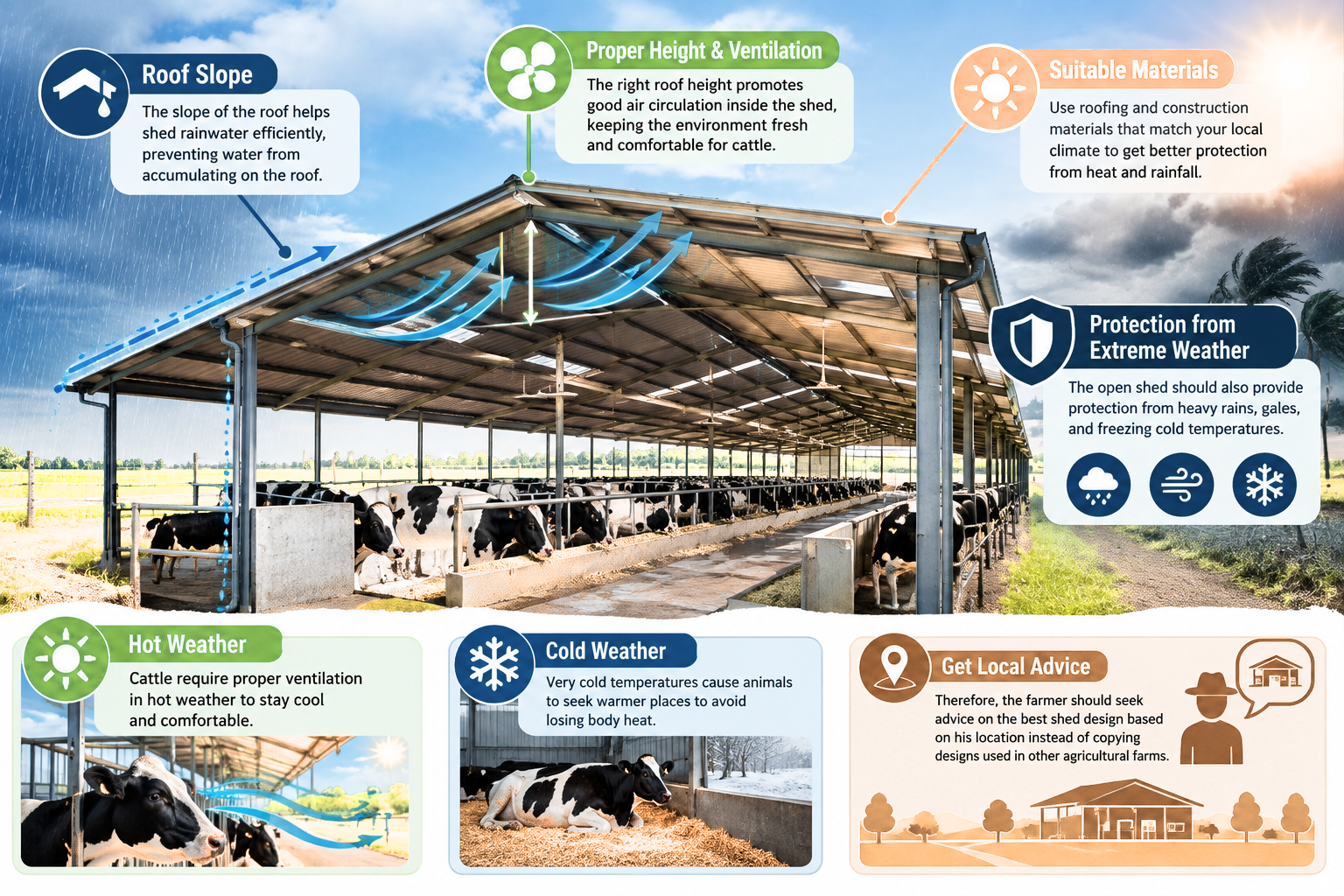
Raising the elevation is also crucial. The dairy farm fan installation should be at an adequate height to avoid causing direct draft to animals and should not be installed too high to minimize cooling. The optimal height will ensure that the air is given a chance to circulate freely above the level of the cow and will not cause any discomfort.
The direction of airflow should also be well thought out. The fans ought to be oriented in such a manner that they cause the air to move smoothly throughout the barn instead of haphazard movement. In large barns, there should be several dairy barn fans that are installed to work in unison so that the same ventilation is maintained in the whole area.
Coupling fans with natural ventilation openings can also enhance the cooling performance. Mechanical dairy fans support airflow that is aided by windows, vents, and roof openings that yield better temperature regulation and humidity reduction.
3.3 Maintenance Practices for Dairy Fans
To make sure that dairy barn fans perform over time, it is important to carry out regular maintenance to avoid unpleasant surprises in the form of failures during the hot seasons.
Cleaning is one of the most significant activities. Particles of dust, dirt, and manure can settle on fan blades and slow down the efficiency of airflow. Often, cleaning dairy fans can ensure good and stable ventilation in the barn.
There is also a need for motor inspection. Mechanical failure can be prevented by checking the electrical connections and providing good lubrication (where necessary). Dairy farm fan systems that are well-maintained are more efficient and durable.
Another practice is corrosion prevention. Metal parts may rust as the dairy barns are moist and gassy. Protective coating and regular inspection of metal frames can help prolong the life of dairy barn fans.
A seasonal maintenance schedule should also be adhered to by the farmers. All ventilation systems must be serviced properly before summer to make sure that they can cope with peak heat conditions without collapsing.
3.4 Future Trends in Dairy Farm Ventilation
The dairy ventilation technology is fast advancing, and the dairy barn fans of the future are smart, efficient, and more environmentally friendly.
Automation is one of the significant trends. There are now developing smart dairy fans which have sensors that automatically change the speed according to the temperature and humidity levels. This guarantees maximum cooling without manual operation.
Another increasing area of concern is energy efficiency. The new generation dairy farm fan systems incorporate high-technology motors that can provide greater airflow, yet use less electricity, which can assist farmers in cutting the operational costs.
It is also becoming widespread with integration with IoT (Internet of Things) technology. These systems enable farmers to check the conditions of barns and to remotely operate dairy barn fans via mobile devices.
Sustainable energy sources, including solar power and ventilating systems, are also becoming commonplace as farmers turn to greener and more economical ways of farming.
Conclusion
Adequate ventilation is important in ensuring cow comfort, productivity, and efficiency of the entire dairy farm. Quality dairy barn fans are important in alleviating heat stress, enhancing airflow, and promoting a healthy environment for livestock.
Starting with dairy systems, exhaust units, solar-powered, and other dairy fans, each type of dairy fan has its own advantages based on the size of the barn and the requirements of operation. The correct dairy fans are not only helping animals but also increasing milk production and profitability in the long term.
To the modern dairy farmers, choosing a robust and effective dairy farm fan system is no longer an option but one of the priorities for successful and sustainable dairy fan.
Fans for Dairy Farm 12 Ultimate Efficiency in Pakistan, Axial Flow Fan Manufacturers: 8 Top Industrial Brands