
Abstract
The dairy farming industry has changed a lot over the years. What used to be based on old ways of farming has become a very structured and technology-based part of agriculture.
Now, successful dairy farms use care for the animals, new technology, smart feeding systems, trained management, eco-friendly methods, and up-to-date milk processing to make top-quality dairy products.
Best Dairy Farm in the World, as people want to know where their food comes from, the question of the Best Dairy Farm in the World has grown more important.
There is no single farm that can be called the best in all areas because dairy farms differ in size, weather, production methods, the technology they use, the kinds of cows they have, and what they seek to achieve.
Some farms are known for producing a lot of milk, while others are famous for being eco-friendly, using technology, taking good care of the animals, or running large operations. The Top Dairy Farms around the world showcase how new ideas and careful farming can work together.
This article examines what makes a dairy farm special and looks at the features of the Dairy Farm, the Modern Dairy Farm, and the World’s Best Dairy Farm.
It also discusses aspects such as how the animals are treated, what they eat, the technology used, environmental responsibility, the quality of the milk , how the farm is managed, and what is coming next for the dairy industry.
Introduction
Dairy farming is one of the important parts of global agriculture. Milk and dairy products provide nutrients and are consumed by millions of people around the world.
From family-run farms to vast business operations, dairy farms are crucial for food production, job creation, rural development, and supporting the agricultural economy.
When people search for the Best Dairy Farm in the World, they may have varying ideas about what “best” truly means. Some consider high milk production to be the most important factor.
Others pay attention to how the animals are treated, environmental responsibility, the use of technology, farm cleanliness, or the production of high-quality dairy products.
A great dairy farm is typically proficient in multiple areas simultaneously. It must ensure the cows are healthy, maintain cleanliness, utilize resources effectively, and produce safe, high-quality milk.
Modern farms must also address environmental issues such as water usage, greenhouse gas emissions, waste management, and land use.
The dairy industry worldwide encompasses farms of different sizes and styles. Some of the Top Dairy Farms are high-tech, employing sensors, automated milking machines, digital monitoring, automatic feeding, and data analysis.
Other successful farms utilize managed grass-based systems. Best Dairy Farm in the World Both approaches can work well when suitable for local conditions.
The concept of the World’s Best Dairy Farm should not solely focus on size. A large farm may produce a significant amount of milk, while a smaller farm might excel in animal care and sustainability. The best farm is one that strikes a balance between high production and responsible practices.
What Makes the Dairy Farm the Best in the World?
Identifying the best dairy farm in the world requires consideration of many factors, rather than just one metric. A farm may have thousands of cows, but that does not necessarily mean it is the best. New technology is helpful, but without good management, even the most advanced tools cannot create a truly outstanding dairy farm.
One of the essential factors is the health of the animals. Healthy cows generally produce more milk and perform better. Good farms provide cows with food, clean water, comfortable housing, veterinary care, and time to move and rest.
Cleanliness on the farm is another crucial aspect. Dairy milk can easily become contaminated, so farms must maintain clean milking equipment, milk storage areas, feeding zones, and animal living spaces. Good hygiene protects both the cows and the people who consume the milk.
The quality of the milk is equally important.
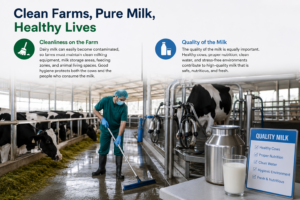
Modern dairy farms frequently test the milk, checking for composition, protein levels, and bacteria counts. Maintaining consistent milk quality helps farms meet safety regulations and stay connected with milk processors and buyers.
Another indicator of a farm’s success is effective management.
A professional dairy farm keeps detailed records for each cow, including dietary intake, health history, breeding dates, milk production, and farm expenditures. These records help farmers identify issues early and make informed decisions.
Environmental stewardship is also increasingly crucial.
Modern farms are expected to use water, energy, land, and feed efficiently. Farms that recycle waste, generate energy from renewable sources, reduce waste, and optimize resource usage are setting a positive example for the future.
Top Dairy Farms Around the World
The top dairy farms are found in regions that operate under very different conditions. Some are in countries with histories of dairy farming, while others have grown rapidly through investments in technology and large-scale farming.
Countries like the United States, New Zealand, the Netherlands, Germany, Denmark, Australia, and others have developed dairy industries. Each country has its own farming traditions, types of cows, laws, weather, and methods of producing milk.
New Zealand is well known for pasture-based dairy farming. Its farms use natural grazing systems where cows get most of their food from grass. This method works well when the land, climate, and pastures support it.
The Netherlands has a tradition of dairy farming and is famous for combining production with smart farming methods. Dutch farms focus on land use, animal care, genetics, and improved environmental practices.
The United States has a variety of dairy operations. Many are family-run farms, while others are commercial businesses. American farms often use feeding systems, housing setups, milking machines, and data tracking tools.
European dairy farms pay attention to animal welfare, environmental regulations, milk quality, and efficient resource usage. Meanwhile, countries in Asia and the Middle East have invested heavily in large dairy projects to increase domestic milk supply.
Since dairy farming depends greatly on local conditions, there is no single model that fits all. The best farms adapt their systems to their climate, land, cow breeds, market demands, and the technologies they can utilize.
The Largest Dairy Farm
The term “dairy farm” can mean different things. It could refer to the number of cows, the total land used, daily milk output, or overall capacity. That is why claims about the “largest dairy farm” should always be checked carefully.
Some huge dairy farms have tens of thousands of cattle and produce massive amounts of milk each day. Running these farms requires very organized systems for feeding, animal health, milking, breeding, housing, transport, and waste management.
Managing a herd brings unique challenges. Farmers need to track every cow. They must know which animals are healthy, which need help, which are giving milk, and which are close to calving.
Large farms also require feeding systems. Cows need different types of food based on age, health, stage of milk production, and whether they are pregnant. Automated feeding systems can ensure each cow gets the appropriate amount of food.
Milking is a considerable task. On a large farm, doing it by hand would take too much time and effort. That is why large farms use efficient milking parlors or robotic milking machines.
Waste management becomes especially important as the herd grows. Manure can be turned into fertilizer or biogas. Proper waste control lowers pollution and adds value back to the farm.
Being the largest does not mean being the best. Even a huge farm must still follow standards for animal care, milk quality, cleanliness, worker safety, and environmental protectrion.
The Future of the Best Dairy Farm in the World
A dairy farm looks very different from old-fashioned ones. Technology has changed everything about how milk is produced-from feeding and milking to animal health and farm management.
One of the visible changes is robotic milking. Robotic systems allow cows to go to a milking station when they choose. Sensors recognize the cow and gather data about milk yield and other indicators. The system then decides if the cow is ready to be milked.
Automated feeding systems are becoming common as well. These systems deliver precise amounts of feed tailored to each cow’s nutritional needs.
Wearable sensors represent another significant advancement. Devices placed on cows can monitor movement, activity, eating habits, chewing behavior, and other indicators. Changes in these patterns can alert farmers to illness or breeding cycles.
Digital farm software allows farmers to work with vast amounts of information. Rather than guessing based on sight or intuition, farmers use data to understand trends and identify areas that need attention.
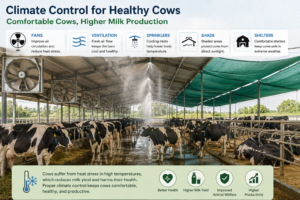
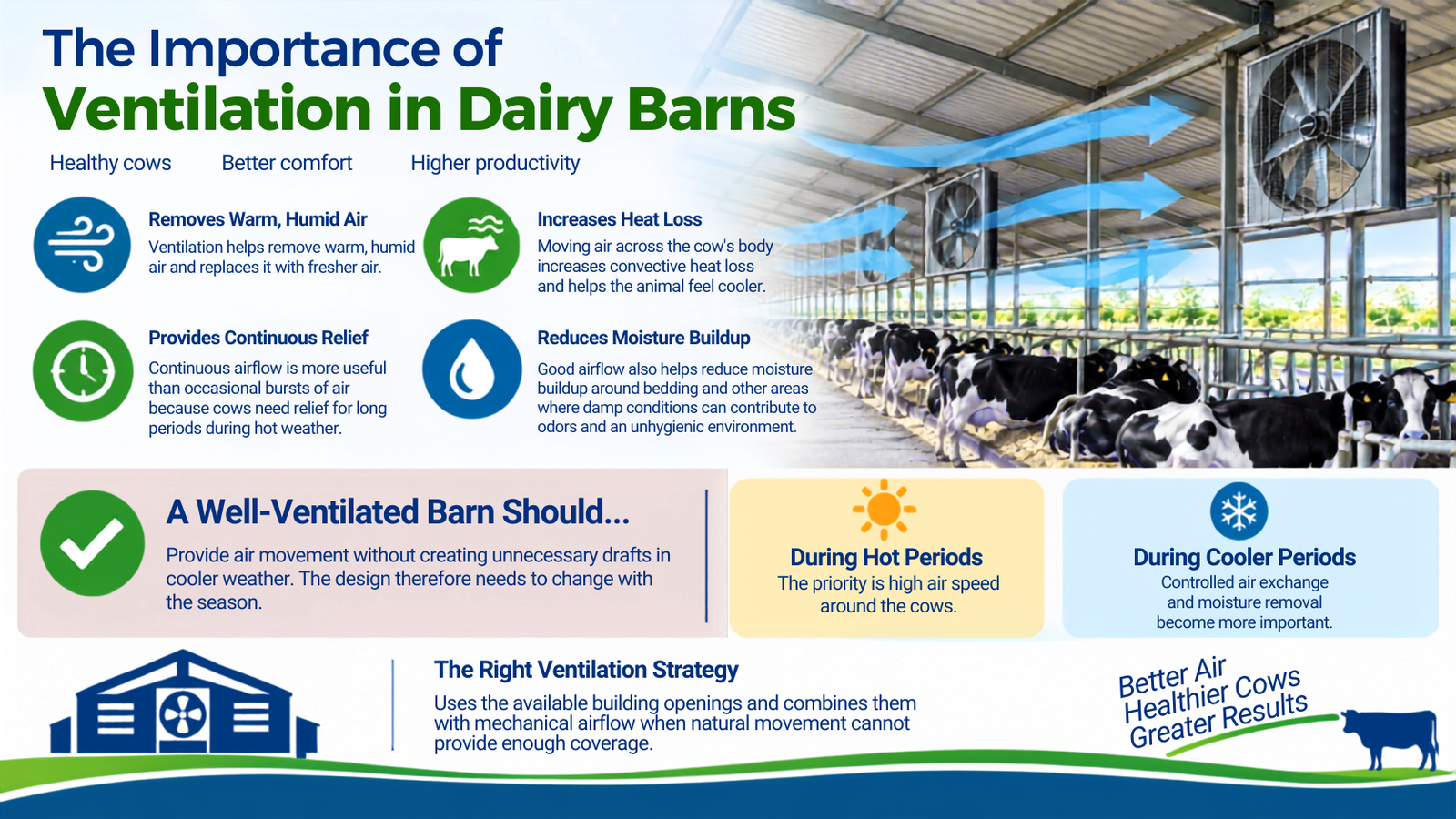
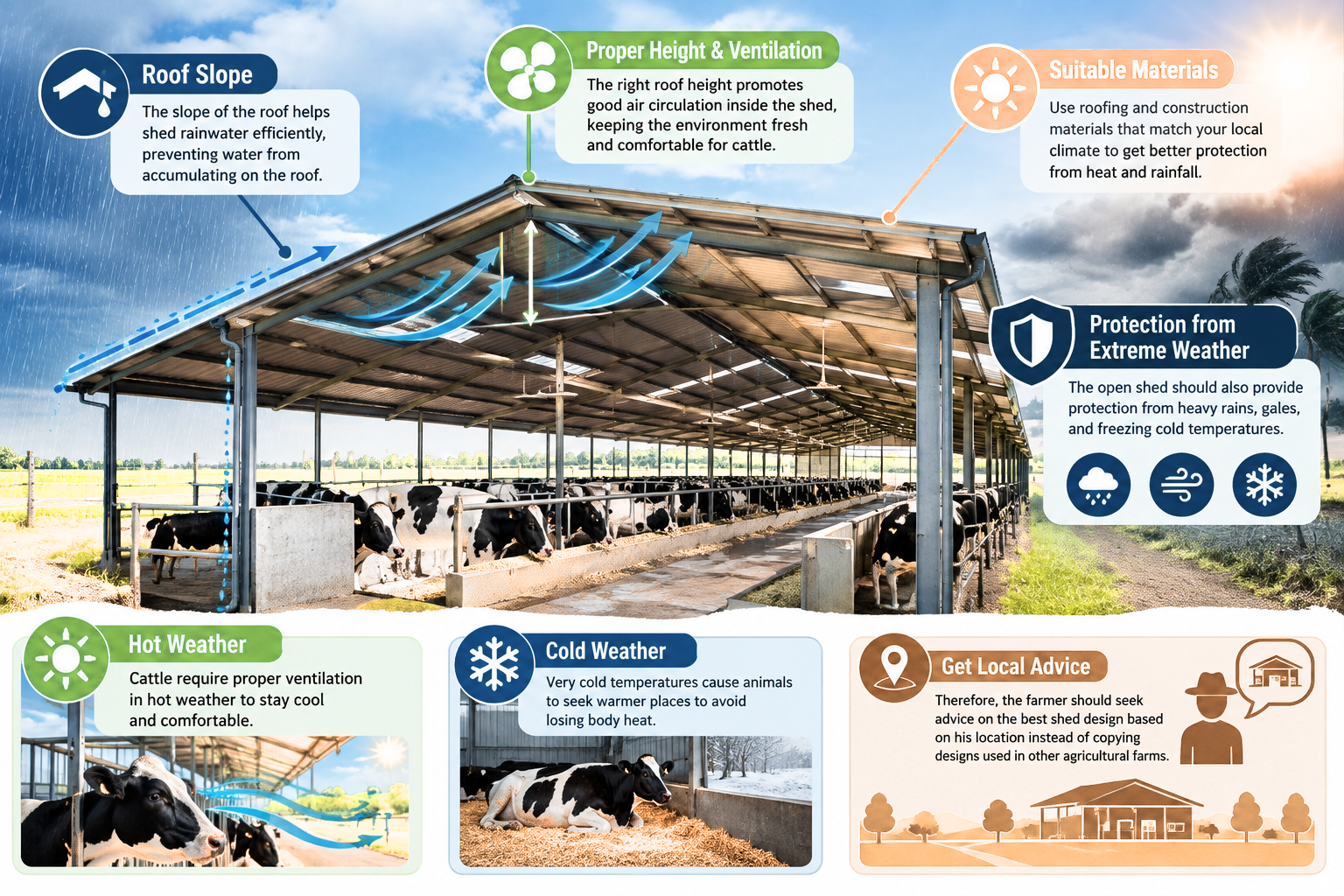
Climate control is also key. Cows can suffer from heat stress when temperatures rise, which reduces milk output and harms their health. Modern farms may use fans, ventilation, sprinklers, shade, and shelters to keep cows comfortable.
Technology does not replace farmers ; it provides them with tools and clearer information. With the right technology and good judgment, farmers can run healthier, more productive farms.
Animal Welfare at World-Class Dairy Farms
Animal welfare is one of the features of a top-quality dairy operation. A farm cannot claim to be the best in the world if it ignores the health and comfort of its animals.
Cows need food, clean water, safe resting spots, proper temperatures, good airflow, and regular vet care. They also need management that avoids stress.
Comfortable floors help prevent injuries. Clean, dry resting areas lower the chance of sickness. Hoof care is important too because foot problems hurt the animals and reduce productivity.
Regular veterinary checks help catch diseases and injuries quickly. Early treatment improves recovery and stops minor issues from getting worse.
Calf care is a part of dairy farming. Young calves need nutrition, clean living spaces, protection from disease, and careful watching during the first weeks of life.
Responsible breeding programs also support animal welfare over time. Farmers now think about health, fertility, how long an animal lives, and body structure along with how much milk it produces.
A world-class dairy farm understands that animal welfare and productivity go together. Healthy, relaxed animals live longer and give more milk. When cows are treated well, the farm thrives.
Feeding and Nutrition
Nutrition is the basis of dairy production. Even the modern farm cannot reach great results without a feeding plan that is well designed. I have seen how a clear feeding plan helps cows thrive.
Dairy cows need energy, protein, minerals, vitamins, fiber, and water. Their needs shift as they grow and as their production cycles change. I notice these changes when new calves arrive
.
Lactating cows usually need diets rich in nutrients because making milk takes a lot of energy. Dry cows and young animals have different needs, so they should not always get the identical feed. I pay attention to each group.
Many leading dairy farms hire nutrition experts and use computer systems that manage rations. These tools help farmers create diets and keep feed costs down. I appreciate the precision these tools bring.
High – quality forage is very important. Depending on the area, dairy farms might use grass, hay, silage, alfalfa, corn silage, and other ingredients for feed. I love seeing forage in the pasture.
Water is just as important. Dairy cows drink a lot of water, especially when they produce a lot of milk or when the weather is hot. Offering clean, easy – to – reach water is essential. I always check the water troughs twice a day.
Feed storage also needs handling. Stored feed can grow mold or lose its nutrients. Modern farms use-controlled storage systems to keep feed quality. I keep the storage area dry and cool.
Best Dairy Farm in the World Milk Quality and Food Safety
Milk quality is a sign of a successful dairy farm. Consumers expect dairy products to be safe, healthy, and consistent. I pride myself on keeping milk clean.
The milking area must stay clean. Equipment needs cleaning and upkeep to lower contamination risks. Workers must follow hygiene steps before, during, and after milking. I lead the cleaning schedule.
Milk is usually cooled quickly after it is collected to keep it good. Managing temperature is very important because warm milk can create conditions for bacteria. I keep a thermometer handy.
Modern testing tools can examine milk samples for quality signs. Farms may track numbers, somatic cell counts, composition, and other traits. I trust the lab’s results.
A good farm also maintains traceability. Records can show where milk came from, how the animals were cared for, and if any health or quality issues arose. I keep logs.
These systems are vital because dairy products travel through a chain. Milk can go from a farm to a collection center, a processing plant, a distributor, a store, and to the consumer. I follow the journey closely.
Sustainable Dairy Farming
Sustainability is one of the priorities in modern farming. The best dairy farm in the world should not only make milk efficiently but also consider its effect on natural resources.
One significant area is manure management. Dairy manure holds nutrients that can be used as fertilizer. By treating manure as a resource rather than waste, farms can process and reuse it to boost soil fertility.
Some large farms use anaerobic digesters to turn manure into biogas. The renewable energy generated from this can be used for electricity or heating, depending on the farm’s setup.
Water conservation is another area. Farms can cut water use by employing cleaning systems, recycling technology, preventing leaks, and practicing careful management.
Energy efficiency can also reduce impacts. Solar panels, efficient lighting, modern refrigeration, and energy – saving equipment can cut electricity use.
Feed production is another sustainability concern. Farms can enhance efficiency by growing feed locally, reducing unnecessary transport, and choosing crops that fit local conditions.
Soil health matters too. Proper manure use, crop rotation, cover crops, and erosion control can help keep farmland productive.
Sustainable farming is not just about protecting the environment. Using resources efficiently can also reduce operating costs and improve a farm’s long – term resilience.
Best Dairy Farm in the World: Technology and Automation
Automation is one of the traits of a modern dairy farm. As labor costs rise and farms grow more complex, technology can help farmers handle tasks more efficiently.
Robotic milking is one example. Automated systems can milk cows and record production data. Farmers can then use that data to keep track of each animal.
Automated manure removal systems can improve cleanliness, cut manual work. Sensors and cameras can also help farmers watch animal behavior.
Artificial intelligence and data analysis may become more important in dairy farming. Computer systems can analyze data from sensors, production logs, health records, and environmental conditions.
Predictive systems can help spot animals at risk of illness or reproductive issues before symptoms show. This can help farmers intervene earlier.
GPS and precision agriculture tools can improve feed crop production by helping farmers manage fields accurately.
Automation must be used responsibly. Technology should support farming practices, not replace proper animal care or human judgment.
Dairy Farm Management
Successful dairy farming needs management skills. A farm is more than an agricultural operation; it is also a business.
Farm managers must control costs while keeping animals healthy and productive. Feed, labor, veterinary services, electricity, equipment, land, transportation, and maintenance can all cost a lot.
Good record keeping is essential. Farmers can use records to compare milk production, spot areas that are not efficient, watch reproductive performance, and plan future investments.
Staff training is also important. Workers must understand how to handle animals, maintain hygiene, operate equipment, follow safety rules, and act in emergencies.
Communication among farm employees can improve efficiency. Clear duties help ensure that important tasks are finished consistently.
Financial planning is equally important. A farm may buy equipment, but the purchase must provide real long – term benefits.
Successful dairy businesses always review their systems and look for ways to improve.
Breeds Used in High-Performing Dairy Farms
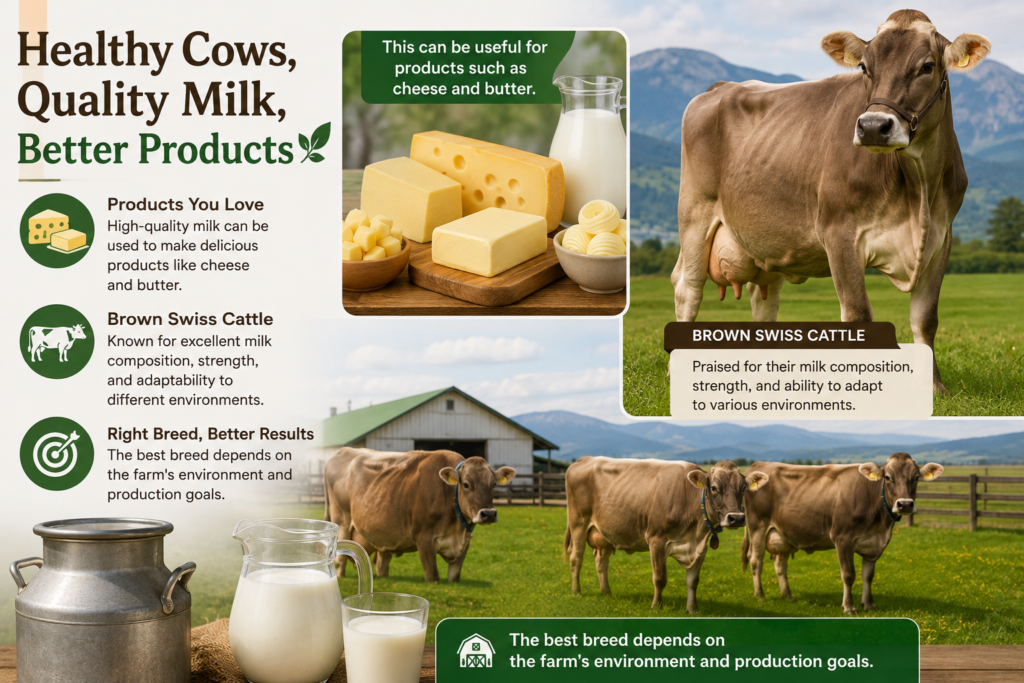
Dairy breeds have different traits. Holstein cattle are the famous dairy breed and are known for producing a lot of milk.
Jersey cattle are known for milk that has high fat and protein.
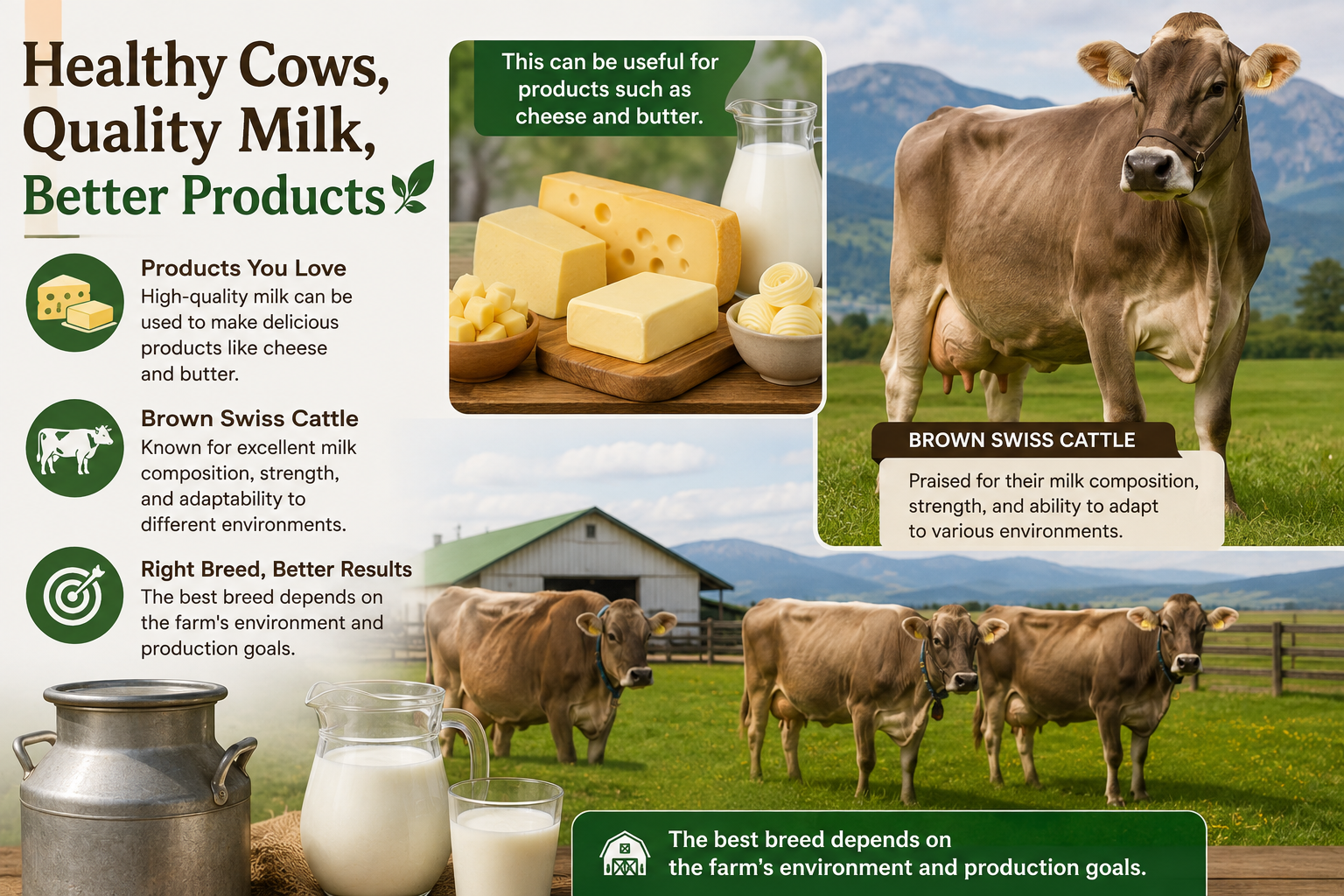
This can be useful for products such as cheese and butter.
Brown Swiss cattle are another dairy breed and are often praised for their milk composition, strength, and ability to adapt.
The best breed depends on the farm’s environment and production goals.

A breed that works well in one climate may not be the best in another.
Modern breeding programs use information to select animals with good traits. Farmers can choose for milk production, fertility, health, longevity, feed efficiency, and other attributes.
The goal is not just to produce milk. Long – term productivity and animal health are becoming the measures of success.
Comparing Small Dairy Farms
Some people think that the largest dairy farm must automatically be the best dairy farm in the world, but that is not always true.
Large farms benefit from economies of scale. They may have equipment, specialized workers, professional nutritionists, veterinarians, and sophisticated data systems.
Smaller farms can have advantages. Family farmers may know each animal well, can make quick decisions, and some small farms also focus on specialty dairy product production, local markets, or pasture – based farming.
Farm size is one way to measure performance.
A small farm can be very successful if it produces milk, keeps animals healthy, manages resources well, and serves customers effectively.
Likewise, a large farm must show management to justify its size.
The Role of Farmers and Skilled Workers
Even the most advanced dairy operation relies on people. Machines and software help, but experienced farmers are still essential.
Farmers watch animal behavior, assess feeding systems, manage workers, check equipment, respond to emergencies, and make decisions when conditions change.
Veterinarians protect animal health. Nutritionists design feeding programs. Equipment technicians keep machinery and automation working. Agronomists may help manage crops and soil.
This mix of expertise and technology creates a stronger dairy operation.
A farm that invests in employee education and training is more likely to maintain standards.
Challenges Facing the Dairy Industry
The dairy industry faces challenges. Climate change can affect temperatures, water availability, feed production, and animal comfort.
Heat stress is an issue in warm areas. Farmers need cooling and ventilation to protect cattle and maintain productivity.
Feed prices can also fluctuate.
Grain costs, fertilizer prices, transport costs, and weather can all affect farm profits.
Labor availability is another problem. Modern technology can reduce some labor needs, but skilled workers are still required for complex dairy systems.
Consumer expectations are also changing. Many consumers want transparency about animal welfare, environmental practices, and where their food comes from.
Successful dairy farms must adapt to these changes while remaining productive and profitable.
The Future of the Best Dairy Farm in the World
The future of the best dairy farm in the world will probably mix advanced technology with responsible farming.
Artificial intelligence, robotics, sensors, genetic tools, energy, and precision farming may become common.
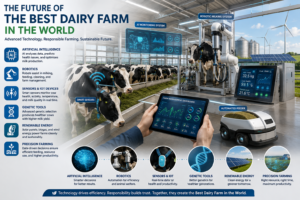
These tools can help farmers monitor animals accurately and use resources better.
Robotic systems may take on routine jobs. Digital platforms may provide farmers with real – time data about animal health and production.
Renewable energy could become a part of farm operations. Solar power, biogas, and other systems may help farms reduce dependence on traditional energy sources.
Sustainability will also be more important. Future farms may focus on reducing emissions, improving soil health, saving water, and recycling nutrients.
The core principles of dairy farming will remain the same: healthy animals, good feed, clean water, safe milk, skilled management, and responsible care.
The best dairy farm in the future will not necessarily be the biggest. It will likely be the farm that balances productivity, animal welfare, technology, sustainability, and economic stability.
Frequently Asked Questions
1. What is the Best Dairy Farm in the World?
There is no dairy farm that everyone agrees is the best in the world. Different farms may be considered the best depending on what is being measured-like how much milk they produce,
how advanced their technology is, how well they treat animals, how sustainable they are, or how clean their milk is.
2. What makes a dairy farm one of the Top Dairy Farms?
Top dairy farms usually stand out because they take care of their animals, produce high-quality milk, manage their operations well, feed their animals properly, keep everything clean, use modern tools, and take care of the environment. These farms show that quality matters more than quantity.
3. What is the Largest Dairy Farm?
The largest dairy farm can be defined in various ways. It could be based on how many cows are in the herd, how much land the farm covers, how much milk it produces, or its total capacity.
Because of this, different farms might be called the largest depending on the measure used.
4. What is a Modern Dairy Farm?
A modern dairy farm uses up-to-date tools and systems. This includes feeding machines, robotic milking equipment, sensors that track animal health, digital record-keeping, climate control in barns,
and data analysis to help make better decisions. These farms work smarter, not harder.
5. Which dairy breed produces the most milk?
The Holstein breed is known for producing the most milk. It is the common dairy cow around the world because of its high output. Many large dairy operations rely on Holsteins to meet their milk production goals.
6. Why is animal welfare important on dairy farms?
Animal welfare is key because healthy and happy animals produce milk and are easier to manage. Good housing, clean water, proper nutrition, regular veterinary care, and gentle handling all help keep animals productive. Ethical farming means treating animals with care and respect.
7. How does technology improve dairy farming?
Technology helps make farming more efficient and ensures better animal care. It helps farmers watch over their animals closely. It can automate feeding and milking, keep records, spot health issues faster, save time, and help with decision results.
8. Is the dairy farm always the best?
No. Just because a farm is big doesn’t mean it’s the best. A great dairy farm must also focus on animal care, milk quality, sustainability, cleanliness, and smart management. Size alone doesn’t make a farm excellent.
9. How can dairy farms become more sustainable?
Farms can become more sustainable by using water wisely, switching to solar or wind power, recycling manure, improving feed so animals produce less waste, protecting soil, reducing waste, and managing resources better. These actions help the planet and make farming last longer.
10. What will dairy farming look like in the future?
In the future, dairy farms will likely use robots, artificial intelligence, sensors, renewable energy, precision farming, and advanced genetics. Even with high-tech developments, the focus will remain on animal health, milk quality, and responsible practices.
The goal will be to produce milk in a way that is both efficient and kind to animals and the environment.
Conclusion
Looking for the Best Dairy Farm in the World isn’t about finding the biggest farm or the one with the most milk. Real excellence in dairy farming comes from a mix of factors.
It means caring for animals, giving them good food, keeping facilities clean, producing safe milk, having skilled workers, managing operations efficiently, using smart technology, and protecting the environment.
Top dairy farms around the world show that success can come in many forms. Some stand out because of their size, while others are known for innovation, sustainability, animal care, or top-quality milk.
The Largest Dairy Farm may demonstrate what’s possible with large -scale agriculture. Size needs to go hand in hand with responsibility. A Modern Dairy Farm may utilize robots, sensors, and automation. Technology only helps if it supports real farming values.
In the end, the World’s Best Dairy Farm should be a model of balance. It should treat animals with care, produce healthy milk, use resources wisely, support its people, employ smart innovations, and remain financially strong.
As the dairy industry changes, the best farms will blend tradition with new ideas. The farm of tomorrow won’t be judged by how much milk it produces but by how well it produces it-with care, responsibility, and sustainability.




1 Comment
[…] milk production, while others use modern technology and improved livestock management systems. The top dairy farms in Pakistan generally share several characteristics, including better animal nutrition, hygiene, professional […]