Introduction
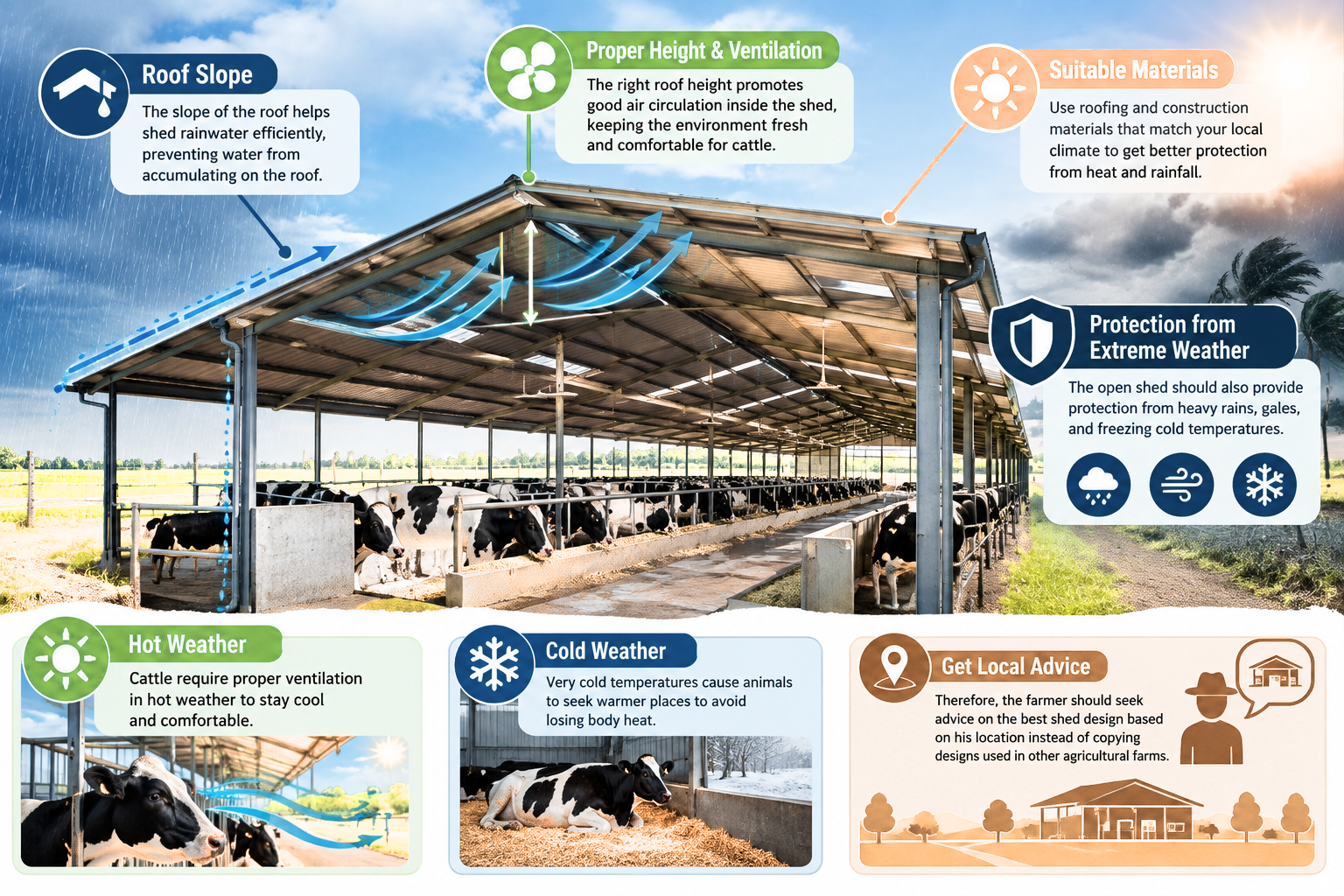
Comfortable conditions are one of the most important preconditions for successful dairy farming. In Pakistan, dairy farmers are frequently exposed to extreme heat, especially during the summer months. Cows and other livestock can have serious problems in severe heat and humidity because they cannot keep their normal body temperature. This condition, better known as heat stress, can have a negative effect on feed intake, milk production, fertility and overall animal performance.
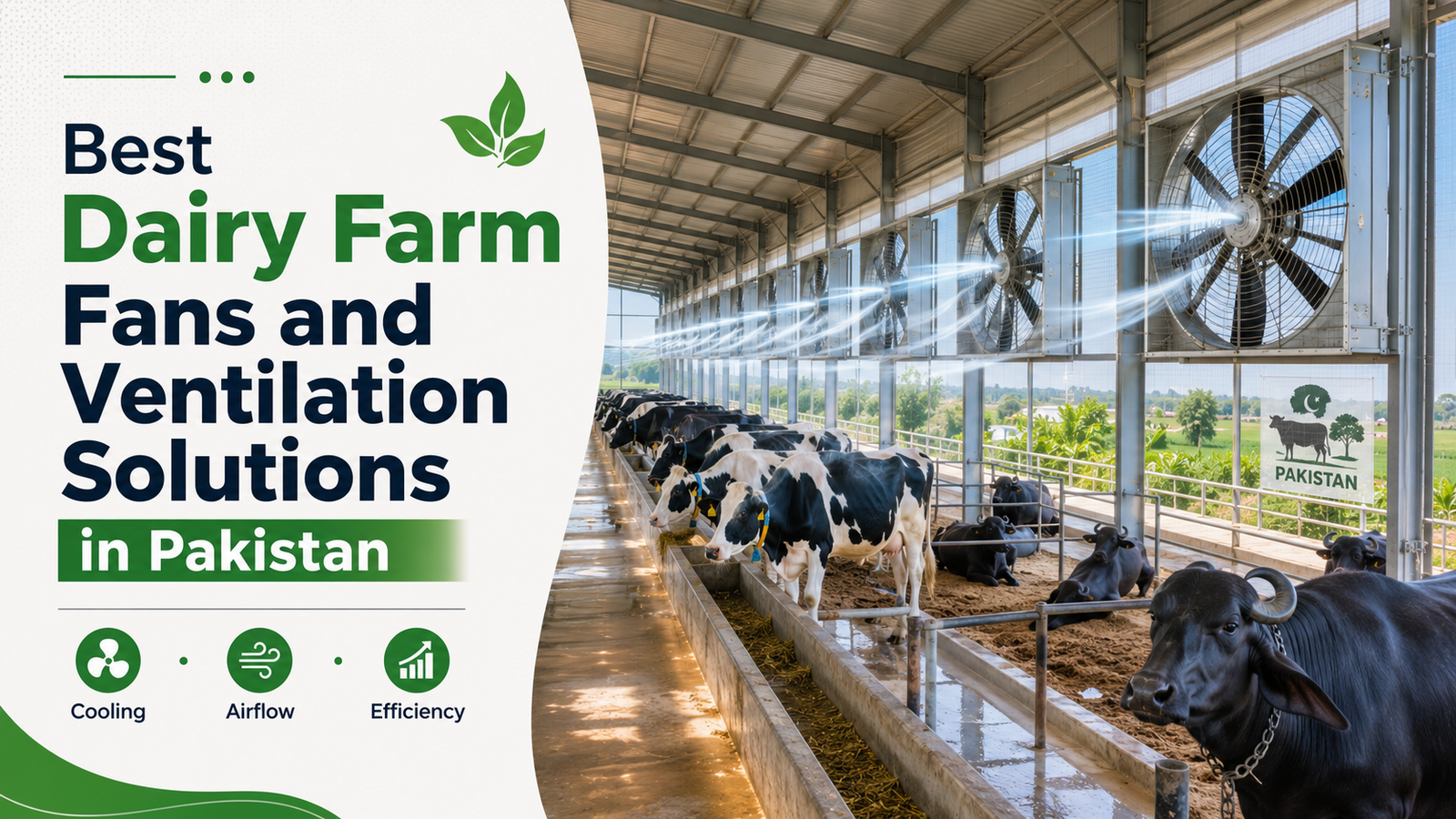
One of the most practical solutions is to install a dairy farm fan. They are used in cattle sheds, dairy barns, livestock farms and other agricultural buildings to enhance air movement and help animals stay comfortable. If you’re a fan of dairy, these aren’t your average household fans. Dairy fans are designed to move a large volume of air over a relatively larger area.
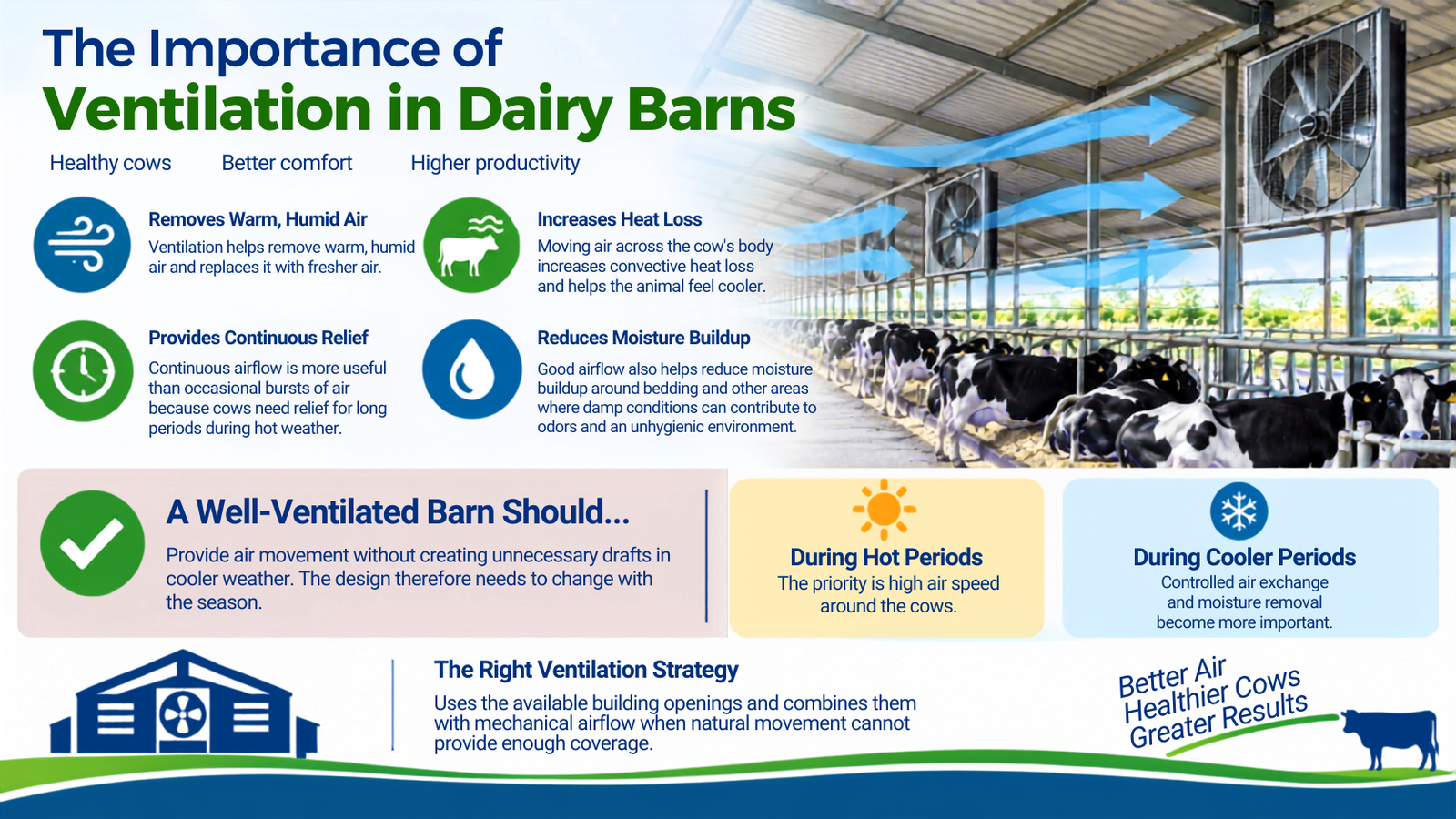
With farmers becoming more aware of the importance of proper ventilation for the productivity of animals, the demand for dairy fans in Pakistan is increasing. Good ventilation will get rid of the hot, damp air, increase the movement of fresh air, reduce bad smells and make the inside of the dairy shed a healthier place.
This guide contains all the necessary information that a farmer needs to know before buying a dairy farm fan in Pakistan. The guide discusses types, benefits, key specifications, installation, maintenance and factors affecting the price of a dairy farm fan.
Dairy Farm Fan Pakistan
– Complete Guide, Prices, Types, Benefits and Buying Tips – All About Dairy Farm Fans in Pakistan Introduction
Comfortable conditions are one of the most important requirements of a successful dairy farm. Dairy farmers in Pakistan are frequently exposed to high temperatures, particularly during the summer months. Extreme heat and humidity can cause serious problems for cows and other livestock because they can’t regulate their normal body temperature. This condition is better known as heat stress which can reduce feed intake, milk production, fertility and overall animal performance .
The simplest solution is to install a fan from a dairy farm. They are used in cattle sheds, dairy barns, livestock farms and other agricultural buildings to promote air movement and keep animals comfortable. Dairy fans are not household fans. Dairy fans are built to move a lot of air across a wide area.
Pakistan is seeing an increase in demand for dairy fans as farmers are becoming more aware of the relationship between proper ventilation and animal productivity. A good ventilation system will remove the hot humid air and replace it with fresh air, it will also reduce bad smells and create a healthier environment in the dairy shed.
This guide will provide a farmer with all the information that he/she needs to know before buying a dairy farm fan in Pakistan. The guide covers the types, benefits, key specifications, installation, maintenance and price influencing factors of a dairy farm fan
.
How a Dairy Farm Fan Operates
A dairy fan functions by generating air movement in the farm building. The motor turns the fan blades . The blades push and pull air in the area .
Agricultural fans are designed to move large volumes of air. They don’t cool an entire building like an air-conditioning system does, but instead they mainly enhance the movement of air around the livestock.
This is a key distinction.
A dairy farm fan does not necessarily lower the air temperature. Instead, it enhances air circulation, helping animals to better shed heat. The overall cooling effect can be much stronger if you combine fans with suitable ventilation and water-based cooling systems.
Big Types of Dairy Fans
There are different types of fans used in dairy farms. The choice depends on the size of the shed, the number of animals, the design of the ventilation system, the availability of electricity and the budget.
1. Dairy Fans, Wall Mounted
Wall mounted fans are attached to walls of dairy sheds. These are useful for farmers who want to direct airflow through specific areas.
Benefits include: • Installation is easy • Efficient use of floor space
• Good air flow direction
• Easy maintenance
• Good for many cattle sheds Wall-mounted models can be especially useful for smaller and medium-sized dairy farms.
2. Dairy Fans Ceiling Mounted
Fans are installed above the animals, mounted in the ceiling They can deliver air down and across a good part of the shed.
These fans are often appropriate for large barns with limited floor and wall space.
3. HVLS Dairy Fans
HVLS means High Volume Low Speed. These fans are characterized by large blades and slow rotation but moving a very large volume of air.
HVLS fans are commonly used in large dairy barns because one large unit can move air over a large area.
Benefits may include: • Wide Coverage Area
• Reduced operating speed
• Air movement
• Less need for multiple small fans in some applications
• Suitable for big agricultural buildings
But they may cost more to buy and install in the first place.
4. Extraction fans
Exhaust fans remove hot, stale, humid and unpleasant air from the building. Often they are combined with fresh-air openings or other ventilation systems.5. Fans for circulation
• Able to move a large volume
• Enduring
• Cleans easily
Ke y Specs to Look Out For
Farmers should check the specifications of the d farm fan in Pfully before buying it.
Top specs include:
Air flow: Typically measured in cubic feet per minute ( CFM ) or cubic meters per hour . More airflow usually means more air movement, but the amount you need depends on the building.
Motor power: The motor’s performance and its electricity consumption depend on its size.
Blade size Larger blades can move more air, depending on design and motor performance.
Speed: Some fans have speeds that are adjustable so farmers can change the airflow depending on the weather.
Construction: Galvanized steel, stainless steel and long-lasting coated materials offer a better resistance to agricultural conditions.
Noise level: High noise levels may disturb animals and workers.
Energy efficiency: Electricity with efficient motors will save you money in the long run.
Safety features: It is important to have protective guards and a secure mounting
Part 2: Dairy Farm Fan Price in Pakistan, Benefits and Buying Guide
Dairy Farm Fan Price Pakistan
The price of dairy farm fans in Pakistan can be very different depending on the size of the fan, motor, airflow capacity, quality of construction, brand, technology and where to buy.
Because agricultural fans are made in many different specifications it is difficult to give a fixed price. A small circulation fan can be a lot cheaper than a large HVLS fan for a commercial dairy barn.
Common factors that affect price include:
1. Diameter of fan
2. Engine power
3. Airflow Capacity
4. Design of fan
5. Efficiency of Motor
6. Production (imported or local)
7. Brand image
8. Warranty
9. Installation specifications
10. Spare parts availability
Farmers should therefore compare fans on performance and total operating cost and not simply buy the cheapest model.
The Cheapest Dairy Fan May Not Be the Best Choice
Price matters, especially for small farmers, but a cheap fan can be expensive in the long run if it consumes too much electricity or needs frequent repairs.
Two fans can have the same purchase price, but very different electricity consumption. If one fan runs many hours every day the energy cost can be a significant portion of the total ownership cost.
A better way is to compare:
Purchase Price + Installation Cost + Electricity Cost + Maintenance Cost + Service Life Expectancy
This is a better understanding of the real value of a dairyfan.
Advantages of Dairy Fans
1. Helps to Reduce Heat Stress
Farmers mostly put in dairy fans to help animals cope with hot conditions.
Air moving over the animal’s body may increase heat loss and improve comfort. This is especially important on hot summer afternoons.
Basic idea is :
Water wets the animal’s skin –> air movement assists evaporation –> evaporation removes heat –> animal comfort increases.
But the system must be well designed. High humidity and still air can lead to excess moisture and an unhealthy environment.
So fans and sprinklers should be integrated into a cooling system that works together.
Selecting the Right Dairy Farm Fan
Selecting the right fan is not just a matter of price.
1. Measure the dimensions of the dairy shed Length of Wide • Elevation • Mass • Animals are important
• Number of feeding areas
• Resting areas
• Existing ventilation openings
This data is used to calculate the ventilation requirement.
Step 2: Create the Required Air Flow
The fan should be capable of providing sufficient air for the size of the area and the number of animals.
An agricultural ventilation specialist can calculate the proper airflow requirement for your operation based on your local climate and building design.
Step 3: Consider Fan Placement
Where you position the fans is very important for performance.
Put a powerful fan in the wrong place and you may get poor results . Put the fans in the right places and you can spread the air around more .
Step 4: Verify motor efficiency
Dairy fans can run for many hours so motor efficiency is important.
A motor that is more expensive but more efficient may save money over the lifetime of the motor.
Step 5: Durability testing
Dairy farms are full of dust, moisture, manure and corrosive gasses. In such conditions, the fan should be made from appropriate materials.
Step 6: Look for spare parts.
Before you buy, make sure parts like motors, bearings, belts, capacitors, controllers and blades are easily available for replacement.
Step 7: Consider Warranty
A good warranty can protect you from manufacturing defects and reduce your monetary risk.
Installation of Dairy Farm Fans
Installation is key.
Fans should be directed to blow air over the animals, not on walls, equipment or other structures.
The installation should also consider: • Electrical safety • Height of fan • Airflow direction
• Fan engagement distance
Openings for ventilation • Water system; •Animal migrations
• Worker health and safety
All electrical installations should be performed by qualified professionals, especially in the presence of water and livestock.
Common Errors in Dairy Fan Installation
Error 1: Insufficient fans installed
One fan may not be enough to ventilate a large shed.
Error 2: Fans Are Set Too Close Together
If fans are too close together they can create inefficient airflow patterns.
Mistake 3: Forgetting to get fresh air
Without adequate provision of fresh air, air extraction can limit the effectiveness of ventilation.
Mistake #4: Airflow blockage
Air flow may be blocked by walls, equipment, partitions or stored materials.
Mistake 5: Ignoring Maintenance Access
Fans should be placed where they can be safely inspected and cleaned by workers.Part 3: Milk lovers in Pakistan: upkeep, buying tips & future
Dairy Fan Repair
Regular maintenance helps fans run effectively and can help extend the life of the fan.
Maintenance routine should include: • Cleaning fan blades
• Check the motor
• Examine electrical connections
• Belt check (where applicable)
• Lubricate parts as needed
• Check safety guard
Check Mounting Hardware • Cleaning dust and dirt • Unusual noise detection • Vibration check Dust that collects on the blades can reduce the amount of airflow and put extra strain on the motor. Cleaning Dairy Farm Fan Dust, hair, moisture, and other contaminants exist in the environments in which dairy fans operate. Dirty blades = lost efficiency. Farmers should develop a cleaning schedule according to farm conditions. Before you clean an electrically powered fan, always disconnect the power supply and follow the manufacturer’s safety instructions. Use of electricity Electricity is a significant part of the operating cost of dairy fans. A fan with a powerful motor can move a lot of air, but it also uses more electricity. Modern efficient motors can better balance airflow and energy consumption. Farmers should consider how many hours the fan will run daily. For example: Electricity use (daily) = Fan power × Hours of operation The monthly cost can then be estimated from the local electricity tariff. Since electricity rates can vary, farmers should figure current operating costs before buying equipment. How many dairy fans does a farm require? There is no one number. The requirement is contingent upon: • Dimensions of the shed • Number of cows • Fan air flow • Fan diameter • Climate change • Building design • Natural ventilation • Placement of fans • Target air flow • Cooling strategy A small dairy farm may only need a few strategically placed fans, while a large commercial operation may need a complete ventilation system. It is better to calculate the requirement than to copy another farm’s setup. Small Farms Need Dairy Fans Small dairy farmers tend to have limited budgets. They should focus on maximum air flow per rupee with reliability. A pragmatic way is to: 1. Improve natural ventilation in the first instance. 2. Place fans in the areas where animals spend the most time. 3. Choose energy-efficient motors. 4. Regularly maintain the fans. 5. Grow the system as the herd grows. Small farms may not require expensive HVLS systems if appropriately sized circulation fans can meet their requirements.Dairy Fans for Large FarmsLarge commercial farms often require a more methodical approach. In a large farm benefits can be: • Circulation fans with high capacity • HVLS ventiladores • Ventilation fans • Automatic controls • Sensors of temperature • Humidity sensing • Sprinklers for water • Adequate inlet and outlet ventilation Fans don’t run at max speed all the time, but they run based on environmental conditions, and automation can help. Intelligent Dairy Ventilation Systems Ventilation management is becoming more and more high tech on modern dairy farms. Sensors can detect environmental conditions, and controllers can automatically change fan speed. For instance: Temperature rises → sensor registers change → controller increases fan speed → airflow increases → animal comfort increases. Such systems can reduce unwanted electricity consumption and at the same time maintain better environmental conditions. Purchase Dairy Farm Fans in Pakistan Suppliers of agricultural equipment, livestock equipment dealers, industrial fan manufacturers and specialty ventilation companies all sell dairy fans. Check out a few suppliers before buying and request: – Fan specifications – • Rate of flow •Motor details • Warranty details • Cost of installation • Maintenance needs • Availability of spare parts • Coût de livraison It is also useful to physically inspect the fan if possible. Questions to Ask Your Supplier Questions to Ask Before Buying a Dairy Farm Fan: 1. How much air flow? 2. What is the power of the motor? 3. What is its power consumption? 4. How far can one fan reach effectively? 5. Is it meant to operate all the time? 6. What material are the blades made of? 7. How long is the warranty period? 8. Do you have spare parts available in Pakistan? 9. Is the installation included in the price? 10. Is there technical support? These questions can help prevent costly buying mistakes. Dairy Farm Fan Price – What Farmers Need to Know to Compare “Farmers need to be looking at the overall value, not just the initial dairy farm fan price. Consider this: Cost to buy Initial outlay Rate of flow Determination of ventilation performance Electricity cost Motor efficiency Construction Determines the durability warranty Spare parts Protection Installation makes it easier to repair Maintenance influences total investment Coverage Affects long-term cost Helps you work out how many fans you need It may be cheaper to buy a more expensive fan with better airflow and lower energy consumption over a period of several years. Dairy Fans Seasonal Use Summer Summer is the most critical season for dairy ventilation
Fans may have to run for long periods of time, especially during the hottest parts of the day. The Spring and Autumn Fan can be used according to the temperature. Natural ventilation can contribute some of the required air. Winter Excessive ventilation in cold weather can be uncomfortable for animals. Farmers should balance fresh-air needs with protection from cold drafts. Ventilation should not be completely turned off. The object is to provide suitable fresh air and at the same time to maintain the conditions suitable for the animals. Animal Welfare and Dairy Fans Good ventilation is not only an economic choice. It’s also about responsible livestock management. Animals should be provided with: • Safe drinking water • Shadow • Good ventilation • Comfortable resting places • Proper feed • Good quality accommodation • Proper veterinary care So a dairy farm fan should be viewed as part of an overall animal-management system. The Future of Dairy Lovers in Pakistan Farmers want to produce more and manage their farms in a more sustainable way and this will probably make good ventilation in dairies more important. Systems in the future may increasingly include: • Efficient powertrains – variable speed fans • Temperature sensors • Automatic controls • Solar energy systems • Intelligent monitoring • Sprinkler systems integrated • Remote monitoring of farms Solar energy also could be a good alternative for farms with high electricity costs or unreliable power availability. Solar Dairy Fan Pakistan has a great potential for solar energy, therefore solar ventilation can be a profitable option for agricultural operations. Fans can be powered by a solar system during the day when temperatures are high. A typical system might consist of: Solar panels → charge controller/inverter → battery or direct power system → milk lovers The design depends on the power requirements of the fans and also if the farmer requires the system to operate after sunset. Final Purchase Checklist Before purchasing a dairy fan, farmers should check: • Size of shed • Number of animal •Airflow required • Size of fan • Engine power • Energy efficiency • Quality of construction • Guaranty • Spare parts • Installation needs • Availability of electricity • Maintenance activities • Supplier’s reputation • Total cost of ownership Conclusions A dairy farm fan in Pakistan can be a good investment for a farmer who wants better air circulation and keep his cows alive in hot weather. Good air movement can help with animal comfort, improve conditions in the dairy shed, reduce stagnant air and form an important part of an overall heat-stress management strategy. Farmers should not just look at dairy farm fan prices to find the cheapest model available. The best choice will depend on variables such as airflow capacity, motor efficiency, durability, coverage area, maintenance requirements, warranty, and the availability of spare parts. Every farm is unique. A small dairy may benefit from properly sized circulation fans while a large commercial dairy farm may require HVLS fans, exhaust systems, sensors and automated controls. The best way is to assess the whole dairy shed, work out how much air flow is required, select the correct size of fan, install the equipment correctly and keep it in good condition. A well-ventilated dairy farm provides a more comfortable environment for animals and increases the overall efficiency of the farm.
operation. The modernization of the dairy sector in Pakistan is expected to increase the importance of effective dairy fans and intelligent ventilation systems. FAQ What is a fan for a dairy farm? The dairy farm fan is a high airflow ventilation fan for cattle sheds and livestock buildings. It increases air movement, helping animals to deal with the heat. What is the price of dairy fan in Pakistan? Price varies depending on the size of the fan, motor power, airflow capacity, construction, brand, and technology. Farmers should compare specifications and total operating costs rather than looking at one fixed price.” What’s the best fan for a dairy farm? The best fan will depend on the size of the shed, the number of animals, the climate, the amount of air movement you need, and your budget. Wall-mounted, circulation, exhaust and HVLS fans are all good, based on the circumstances. The dairy fans are good in summer. Yes. In hot weather, dairy fans can be important air movers, helping animals lose heat more effectively. Can dairy fans boost milk production? “Fans do not directly increase milk production. However, good ventilation may be useful in alleviating heat stress and allowing normal feeding, resting and milk production performance. How often do you clean dairy fans? The frequency of cleaning will depend on the quantity of dust and the farm conditions. Fans should be checked and cleaned regularly when dust, hair or dirt builds up on blades and guards. Can I use fans with water sprinklers? Yes. Heat management systems can include fans and sprinklers together. It is important that evaporation occurs well as well as proper airflow is important. What should I look for before buying a dairy fan? Look at the air flow, motor power, energy efficiency, size of the fan, quality of the build, warranty, availability of spare parts, installation requirements and likely running costs. SEO Keyword Placement Emphasis **Keyword:** dairy farm fan in Pakistan **LSI Keywords:** • fan of a dairy farm • price of dairy farm fan • dairy lovers • Pakistan’s dairy enthusiasts • cow shed fan • • Fan for livestock ventilation • ventilation of dairy farm • fan, dairy cooling • fan cowshed • • Dairy fan HVLS • industrial, dairy fan • ventilation in the dairy barn • Dairy cooling system for farms • cattle fan farm ventilation system • SEO Title Suggestion: Dairy Farm Fan in Pakistan – Types, Price, Benefits & Buying Guide Suggested Meta Description: Learn about dairy farm fans in Pakistan, dairy farm fan price, types, benefits, installation, maintenance, and how to choose the best dairy fans for your cattle shed