
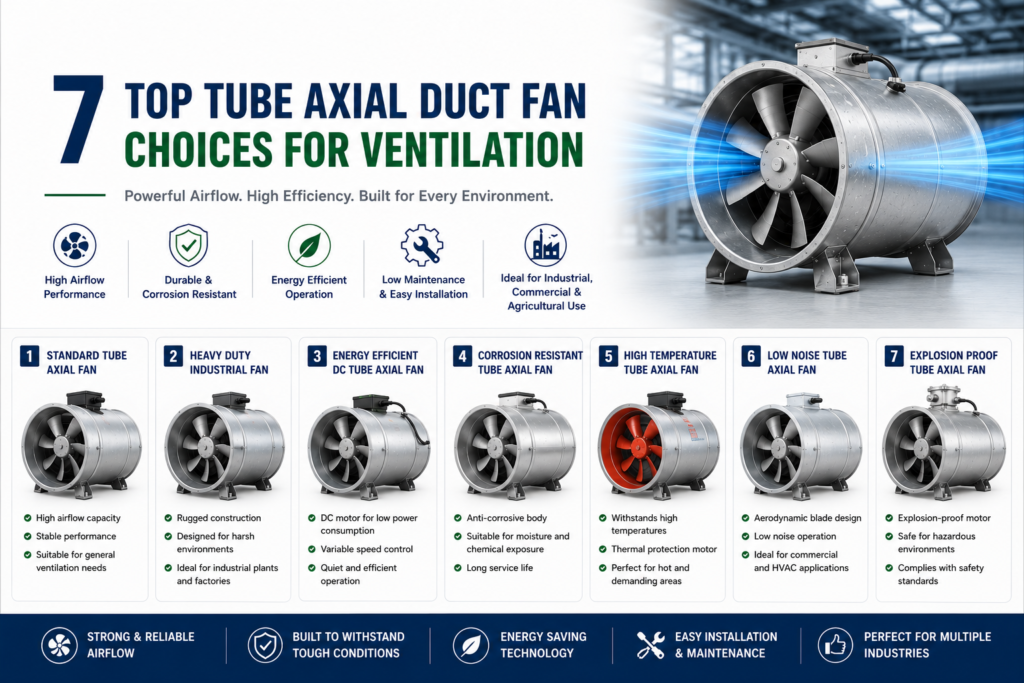
Introduction to axial duct fan solutions
Proper ventilation with steady airflow is essential for safety, comfort, and operational efficiency in industrial, commercial, and agricultural environments.
In any type of structure, whether a manufacturing plant, warehouse, workshop, greenhouse, or office building, poor air circulation can lead to excess heat buildup, humidity, foul odors, dust accumulation, and even equipment damage.
Here, an axial tube duct fan is one of the most effective and reliable ventilation solutions.
A tube-axial duct fan is specifically designed to move large amounts of air via duct systems with a high degree of air-flow performance.
Unlike traditional ventilation techniques that may require more space or intricate arrangements, these fans are a great space-saving solution for areas that need a focused, forceful breeze.
They are streamlined and cylindrical, making them excellent for incorporation into duct networks, whether in new installations or in retrofitting existing ventilation systems.
The tube-axial duct fan can continuously move air over long runs, a major advantage of this type. This makes it excellent for applications where air needs to be transported via ducts, tunnels, or confined spaces.
These fans are vital for bringing fresh air into commercial buildings and for removing hot air and smoke from factories, creating healthier, more productive environments.
Modern ventilation requirements are evolving, and there is an increasing demand for systems that provide appropriate circulation while also reducing energy use.
A high-grade tube axial duct fan meeting the criteria has excellent performance and energy efficiency. Many advanced models have better blade designs and efficient motors that cut electricity costs while ensuring reliable operation.
Another big plus with these fans is their versatility. They can be used in several fields such as industrial production plants, HVAC systems, agricultural ventilation, and some exhaust systems.
Recommended by engineers, facilities managers, and ventilation professionals for their ability to cope with a variety of environmental situations.
Good ventilation also enhances indoor air quality by removing contaminants such as dust, odors, and moisture. This is particularly true in situations where the health of the employees and the functioning of equipment depend upon stable air conditions.
Hence, installing the proper tube-axial duct fan can improve operational efficiency and worker safety.
Ventilation technology is continually improving, and many systems available today include easy-to-use controls, variable-speed settings, and noise-reducing features. These advances make today’s tube-axial duct fan systems more effective and easier to use than ever before.
The first step to improving airflow management is to understand the importance of properly selecting a ventilation system. The right axial duct fan can help companies optimize performance, reduce maintenance costs, and deliver long-lasting durability in demanding environments.
2. What is a tube-axial duct fan, and how does it work?
An axial duct fan is a mechanical ventilation device that moves air through an enclosed duct system parallel to the fan’s rotational axis. “Axial” refers to the direction of the air movement, straight down the fan shaft, rather than being thrown outward like with centrifugal fans.
The design of a tube axial duct fan typically consists of several main components that work together to efficiently deliver airflow. Typically, they consist of fan blades, an electric motor, a cylindrical housing, support brackets, and protective guards.
The blades are designed to move the most air with the least amount of drag and energy.
The functioning principle of a tube axial duct fan is relatively simple but very effective. The motor spins the blades at high speed, creating pressure differences that draw air through the fan and into the associated duct system.
This constant movement ensures the removal of stale, hot, and unclean air and the introduction of fresh air into the atmosphere.
A tube-axial fan is used in many applications because it can generate high airflow in a smaller space. The tubular design of the fan allows it to be easily installed in ventilation ducts without altering the structure. This will speed installation and decrease costs.
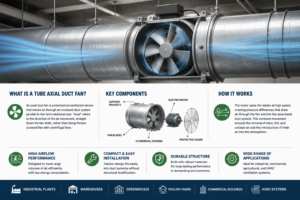
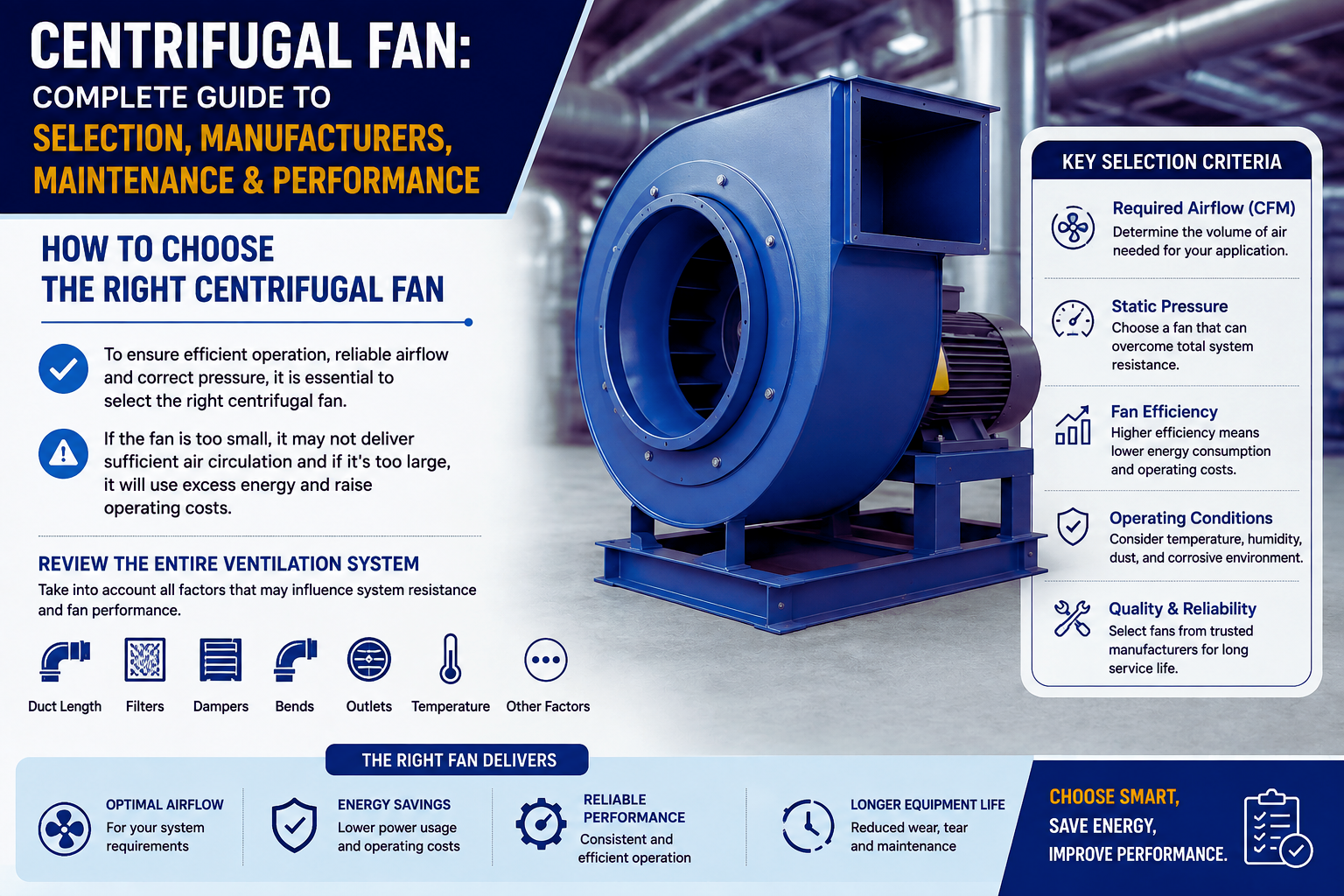
Tube-axial fans are usually chosen over centrifugal fans for applications that require moving large volumes of air at low to medium pressures.
Axial fans are good for general ventilation, cooling, and exhaust, but centrifugal systems may be better suited to high-pressure situations.
Another amazing thing about it is that the tube-axial exhaust fan can take in and exhaust air. It is also used to bring in fresh air from outside and to exhaust dirty air from within.
The double function enhances the versatility between different ventilation strategies.
Many of today’s inline axial duct fan systems feature modern engineering, such as aerodynamic blade designs, vibration-reduction systems, and energy-efficient motors. These improvements enhance airflow performance, decrease operating noise, and reduce maintenance.
The performance of a tube axial duct fan depends on several factors, including blade angle, motor power, fan diameter, and duct design. Choosing the proper fan size and specifications is vital to achieving optimal airflow and system performance.
In practice, these fans are widely used in industrial production facilities, parking garages, agricultural buildings, HVAC systems, tunnels, and commercial ventilation networks. They are among the most common ventilation methods worldwide because they can provide a steady, continuous flow of air.
In conclusion, understanding how a tube axial duct fan operates enables buyers to make informed choices when purchasing a system that meets their specific airflow requirements.
An appropriately sized axial fan can significantly improve environmental conditions and operational efficiency for cooling, air exchange, or contaminant removal.
3. Main Benefits of Tube-Axial Fan
A suitable ventilation system can substantially improve air movement efficiency, indoor air quality, and operational safety in industrial, commercial, and agricultural settings.
Among the wide range of ventilation options available today, the tube axial fan is among the most effective and flexible. Fans of this type are designed to move large volumes of air efficiently via ducting or open areas.
These fans have various advantages and are useful for a wide range of applications. Knowing the benefits of tube axial fans can help companies and facility managers make intelligent decisions when replacing or installing ventilation systems.
High Airflow Efficiency
One of the major advantages of tube axial fans is their ability to produce high-power airflow effectively. These fans are designed to move large volumes of air quickly, making them ideal for areas that require constant ventilation or rapid air exchange.
Good airflow over long distances is a problem for some ventilation systems. Axial fans are designed for uniform performance over ducted systems.
This makes it ideal for warehouses, manufacturing plants, commercial buildings, and agricultural areas where air circulation is important.
Modern fans have aerodynamically designed blades that improve airflow efficiency and reduce resistance. This enables the fan to run at its best with the least amount of energy.
Investing in a reliable tube-axial fan can significantly boost productivity and comfort for industries that rely on precise temperature control and a constant flow of fresh air.
Energy Efficiency and Cost of Operation
Energy efficiency is a major challenge for businesses seeking cost-effective ventilation solutions. A high-quality axial fan may improve airflow performance and reduce power consumption.
Modern fan systems often include energy-efficient motors, optimized blade geometry, and smart control systems for variable-speed adjustment.
These characteristics enable the user to manage the fan according to specific ventilation requirements. This helps reduce unnecessary energy use when less airflow is required.
Switching to an advanced tube axial duct fan can reduce your energy costs compared to earlier or less effective ventilation systems. These savings can eventually recoup the initial cost and serve to minimize the total cost of ownership.
For instance, in factories and data centers where ventilation runs 24/7, energy-efficient tube-axial fan technology can save significant energy in the long run.
Compact Design Easy Installation
Another big advantage of the tube-axial fan is its compact and sleek shape. The cylindrical housing enables the fan to be mounted directly in duct systems, reducing the need for structural alterations and/or large installation areas.
That is why the inline axial duct fan is so desirable for use in applications where space is at a premium or where existing ventilation systems need to be upgraded without extensive remodeling.
Installation is often quicker and easier than with larger or more complex fan systems. The fan can normally be installed in ducts, on walls, or in ceilings, depending on the ventilation system and the application requirements.
The simple installation means minimal labor cost and downtime for contractors and maintenance personnel. With the right tube-axial fan system, companies can quickly and efficiently install effective ventilation upgrades.
Hardy Under Difficult Conditions
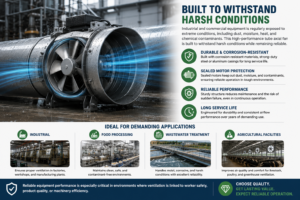
Industrial and commercial equipment is regularly exposed to extreme conditions, including dust, moisture, heat, and chemical contaminants. This high-performance tube axial fan is built to withstand harsh conditions while remaining reliable.
A wide variety is built with corrosion-resistant materials, strong-duty steel or aluminum casings, and sealed motors for long service life.
These protective features make them ideal for demanding applications, including industrial, food processing, wastewater treatment, and agricultural facilities.
The sturdy structure of the tube-axial exhaust fan reduces maintenance and the risk of sudden failure.
Reliable equipment performance is especially critical in environments where ventilation is linked to worker safety, product quality, or machinery efficiency.
Choosing a quality tube-axial fan means you will get lasting value and reliable operation even in the harshest working situations.
Advantages of Noise Reduction
Excess sound can impair comfort and productivity in workplaces, commercial buildings, hospitals, and other places where ventilation noise is an issue. Modern tube-axial fan systems are increasingly designed with noise reduction and user experience in mind.
The innovative blade construction, vibration-dampening technologies, and acoustically adjusted housings reduce operational noise while providing great airflow performance.
The low-noise inline axial duct fan is the right choice for indoor installations where quiet operation is a must, offering the ideal balance between efficient ventilation and acoustic comfort.
Reduced noise pollution may contribute to higher staff concentration, customer satisfaction, and a better overall work environment. Thus, the silent-running tube axial fans are a smart investment for commercial and industrial applications.
4. Common Applications for a Tube Axial Exhaust Fan
The flexibility and performance of the tube-axial exhaust fan make it an ideal choice for a wide range of ventilation applications across many industries. It has an effective flow of large volumes of air. It can handle various airflow issues.
Manufacturing Facilities and Industrial Warehouses
Industrial environments generate heat, dust, smoke, and airborne contaminants that must be extracted to maintain safe working conditions. An axial exhaust fan in a tube provides effective air exchange, eliminating stale air and bringing in fresh outdoor air.
Warehouse fans aid in temperature control and help prevent heat buildup, which can harm both workers and stored goods. They are essential in manufacturing operations for removing fumes, smoke, and airborne particles generated during production.
Good ventilation, supported by a dependable tube-axial duct fan, leads to healthier personnel, improved equipment operation, and compliance with laws.
Commercial Office Space & Buildings
Good ventilation is essential in commercial buildings today for occupant comfort and indoor air quality. One approach to keep the air fresh is an axial tube exhaust fan. It pushes stale air out, manages humidity, and helps the HVAC perform its job.
Office buildings, shopping centers, hotels, and restaurants benefit from good air circulation. Proper ventilation removes odors, increases employee productivity, and creates a more pleasant environment for consumers and workers.
Many inline axial duct fan systems are small and quiet. This makes them perfect for commercial ventilation installations where performance and aesthetics are crucial.
Agricultural Ventilation System
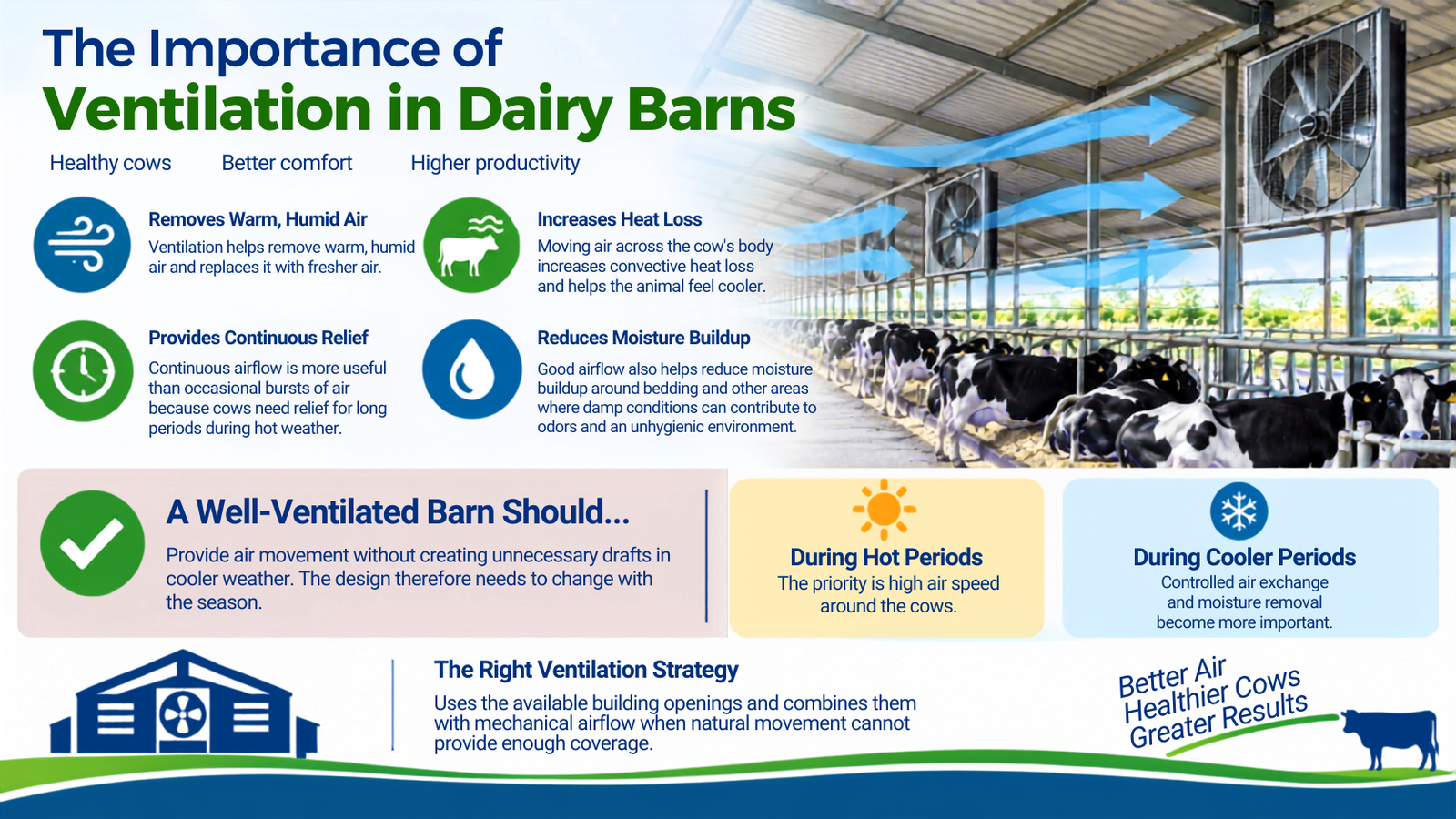
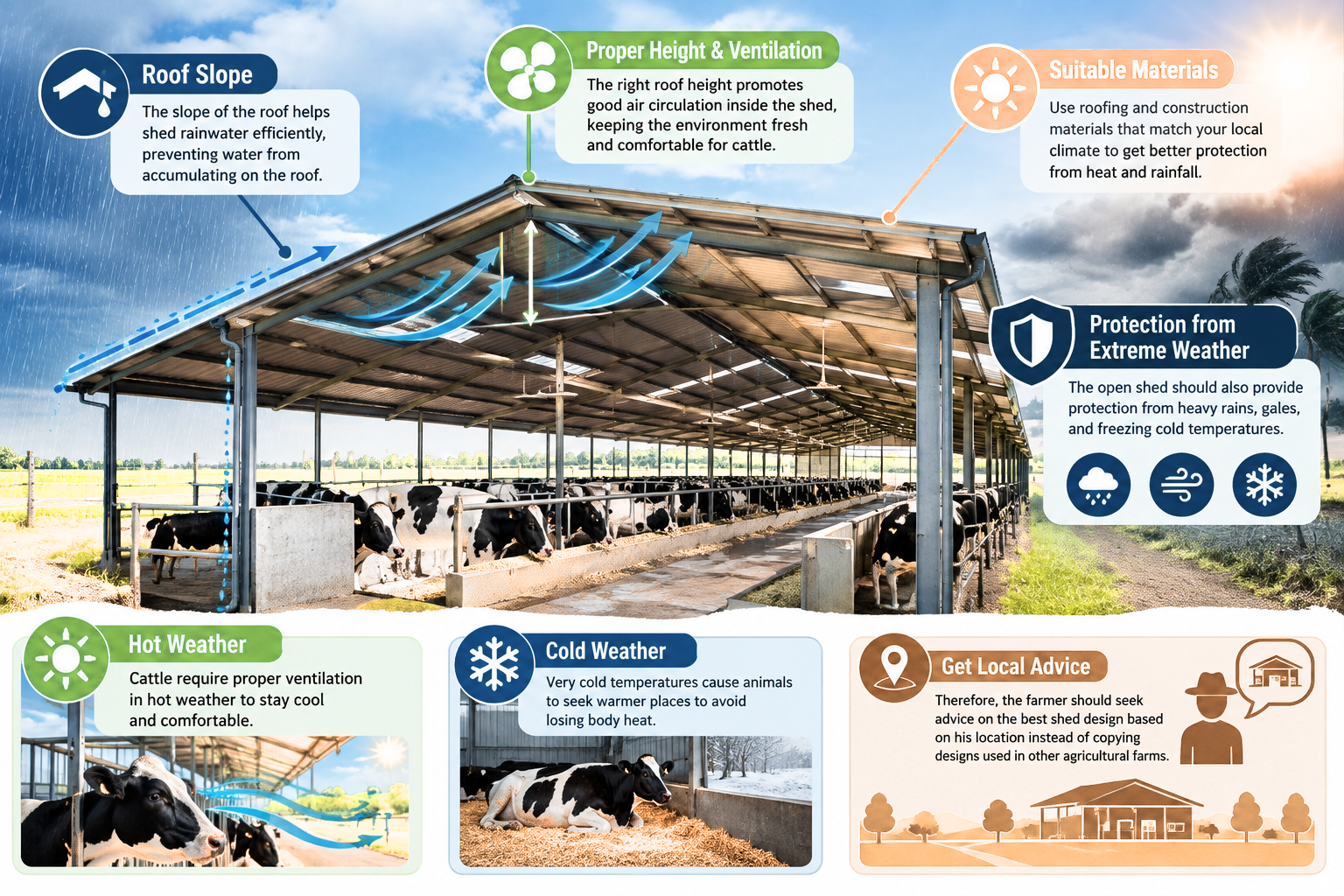
Effective airflow regulation is essential in agricultural applications, including poultry farms, dairy barns, greenhouses, and animal facilities. The axial fan helps create healthier environments for animals and crops by enabling control of temperature, humidity, and air quality within a tube.
Good ventilation helps control excess moisture, reduce odors, and prevent the spread of airborne illnesses. Glasshouses. Good air circulation helps plants grow well by keeping conditions just right.
A rugged tube-axial exhaust fan for agricultural applications handles dust, moisture, and corrosive conditions and provides reliable long-term performance.
HVAC Equipment & Air Handling Units
Heating, ventilation, and air conditioning systems rely heavily on proper airflow to distribute conditioned air throughout buildings. The tube-axial duct fan is an important component of many HVAC systems, used to move air through duct systems.
These fans keep the air circulating properly, helping the system operate more efficiently and reducing strain on other HVAC equipment. Industries, commercial, industrial, hospitals, and educational facilities are widely used in major commercial buildings.
Using a high-performance inline axial duct fan can improve the energy efficiency and interior climate management of the overall ventilation system.
Smoke & Heat Removal
One of the most important safety uses of a tube axial exhaust fan is smoke extraction and emergency heat removal. Good smoke ventilation can improve visibility, assist with escape, and support firefighting operations in the event of a fire.
Many industrial structures, tunnels, parking garages, and large public facilities use specialized tube axial duct fan systems that are resistant to high temperatures and usable in an emergency event.
Designed for use in demanding situations, these fans extract smoke and dangerous gases while safeguarding building residents and emergency workers.
In particular, heat removal is crucial in high-temperature environments such as machine rooms, power plants, and industrial processing facilities.
Properly selected axial fans provide for temperature control and help prevent equipment from overheating.
The great variety of benefits and uses highlights why the tube-axial fan remains one of the most dependable choices for ventilation today.
It’s suitable for almost any application that requires dependable air movement, as it delivers robust airflow, energy efficiency, durability, and versatility.
Tube-axial exhaust fans are a crucial component in maintaining healthy, efficient, and safe interior environments, whether in industrial businesses, commercial buildings, agricultural operations, or specialized safety systems.
A good inline axial duct fan will ensure long-term operation and help enterprises efficiently meet their ventilation requirements.
5. Selecting the best inline axial duct fan
Selecting the right tube-axial duct fan is important for optimal airflow, energy savings, and long-term durability. There are many models available on the market, and understanding the primary factors that influence performance can help you select the right model for your ventilation needs.
Whether you are upgrading an industrial ventilation system, installing a commercial HVAC system, or improving airflow in an agricultural facility, the right inline axial duct fan may make a big difference.
Here are the most important things to consider when picking the best inline axial duct fan for your application.
5.1 Airflow Capacity Requirements
The first and most important point to consider when selecting a tube-axial duct fan is the airflow capacity. Airflow is commonly rated in CFM (cubic feet per minute). This is the amount of air the fan can move in a certain time.
Different scenarios require different amounts of airflow.
For example, a small business office will only need moderate airflow, while a large industrial warehouse may need a high-capacity tube axial fan for proper ventilation.
When evaluating airflow capacity, consider:
Choosing a fan that does not circulate enough air can lead to poor ventilation, overheating, and inefficiency. Conversely, the use of an oversized inline axial duct fan might result in wasted energy costs.
You’ll also want to match the fan diameter to your duct size. The right size means improved airflow performance and less air resistance in the ventilation system.
5.2 Construction and Design
Long-term performance and durability are important factors for tube axial duct fans. Ventilation systems are usually operating 24/7 and are often exposed to harsh conditions; consequently, it is necessary to select a fan made from high-quality materials.
Typical building materials include the following:
- General Industrial Use Galvanized Steel
- Stainless Steel (Corrosion Proof)
- Lightweight Performance (Aluminum)
- Powder Coated Finishes (Increased Protection)
This is why you have to choose a corrosion-resistant tube axial exhaust fan for humid, chemical-prone, or outdoor installations, which is highly crucial.
and also check the motor, blade assembly, and housing for quality. A heavy, sturdy design lowers vibration and maintenance and increases service life.
Well-constructed tube-axial fans may cost more up front but often offer better reliability and lower long-term maintenance costs.
5.3 Problems of energy efficiency
Energy savings are increasingly a major emphasis for firms seeking more cost-effective ventilation. A modern inline axial duct fan with an energy-efficient motor can drastically reduce your electricity use while still delivering superb airflow performance.
Look for features such as the following:
High-efficiency motor technology
- Variable speed control options
- Compatibility with smart automation Optimized blade design for minimal drag.
The variable-speed function allows users to adjust airflow to meet actual ventilation needs, preventing unnecessary power consumption.
If your facility operates ventilation systems 24/7, choosing an energy-efficient tube axial duct fan can make a huge difference in the long-term savings on utility expenses.
Reducing operational expenses is not the only benefit of energy-efficient technologies; they also support sustainability goals and environmental compliance.
5.4 Noise and Maintenance
Noise reduction is a major concern for commercial buildings, offices, hospitals, and indoor workplaces. Modern inline axial duct fan designs often incorporate low-noise features to improve acoustic comfort.
Fan noise factors:
- blade design
- engine quality
- mounting stability
- vibration control system
They operate silently and provide a more comfortable workplace without sacrificing ventilation performance.
There’s also the amount of upkeep you’re going to have to conduct before you buy. Fans that provide easy access to blades and motor parts make cleaning and servicing easier.
Normal maintenance typically includes: - Cleaning of fan blades
- Checking of motor bearings
- Checking of electrical connections
- Monitoring of airflow performance.
However, choosing a maintenance-minimum tube axial exhaust fan can help reduce downtime and enhance the system’s reliability in the long run.
6. Best Axial Tube Fans For Airflow
There are so many models to choose from that you can find the perfect tube-axial duct fan for your specific operational needs. Here are seven major types of high-performance fans commonly used in modern ventilation systems.
6.1 Industrial heavy-duty tube-axial blower
This axial duct fan is intended for harsh industrial environments, delivering a strong airflow for extensive factories, warehouses, and manufacturing plants.
Top features
- High airflow volume
- Steel-Reinforced Construction
- Continuous-operating motors
- Heat and dust resistant
These fans are perfect for industrial applications that require removing hot air, contaminants, and particles.
6.2 Energy efficiency of tube axial fans
If you are a business seeking to reduce energy costs, an energy-efficient tube axial fan is the solution.
Advantages of:
- Lower power consumption
- Compatible with Smart Speed Control
- Optimized airflow performance
- Lower carbon footprint
These are ideal fans for commercial and industrial applications that require long-term, continuous use.
6.3 Compact commercial tube-axial fan
In many commercial applications, adequate ventilation is required without sacrificing valuable installation space. A compact tube axial exhaust fan provides optimum airflow in tight spaces.
Ideal for:
- Office blocks
- Department stores
- Restaurants
- Educational institutions
These devices often offer low-noise operation and a modern aesthetic.
6.4 Axial flow tube fan with high-temperature resistance.
Certain industries operate at high temperatures and have special ventilation systems. The high-temperature tube axial duct fan is designed for reliable running in a high-heat environment.
Typical applications are the following:
- Boiler rooms
- Industrial ovens
- Power stations
- Smoke extraction systems.
The fans feature heat-resistant motors and durable materials for improved safety.
6.5 In-line low-noise axial duct fan
If you want it to be as quiet as possible indoors, a low-noise inline axial duct fan is a terrific method to produce a lot of airflow with very little noise.
Best for:
- Hospitals
- Hotels
- Meeting rooms
- Home ventilation systems
Blade designs reduce noise, and comfort levels are maintained through vibration-control devices.
6.6 Axial fan with corrosion-resistant tube
Moisture, chemicals, and harsh weather conditions can damage standard ventilation equipment. This corrosion-resistant axial fan tube is designed to withstand tough applications.
Recommended for:
- Food processing plants
- Marine facilities
- Chemical plants
- Farm buildings
Built to last with protective coatings and stainless steel parts.
6.7 Axial Tube Fan with Intelligent Control
Today, ventilation systems are increasingly automated and smartly monitored. Advanced smart-controlled tube axial duct fan for increased performance and convenience.
Features:
- Remote monitoring
- Automatic speed regulation Activation by temperature
- Energy consumption monitoring
These cutting-edge systems aim to increase efficiency, reduce maintenance requirements, and enable intelligent building management. Select the right tube-axial duct fan by carefully considering airflow requirements, environmental factors, efficiency goals, and space constraints.
From heavy-duty industrial to quiet commercial spaces, and from high-tech, smart-controlled systems to everyday applications, choosing the right inline axial duct fan ensures reliable ventilation and long-term operational success.
By understanding these crucial buying factors and fan classifications, organizations can select a tube-axial exhaust fan that delivers the best performance, durability, and value.
7. Tips for Installing Tube Axial Duct Fans
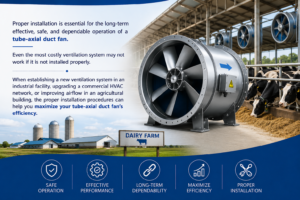
Proper installation is essential for the long-term effective, safe, and dependable operation of a tube-axial duct fan. Even the most costly ventilation system may not work if it is not installed properly.
When establishing a new ventilation system in an industrial facility, upgrading a commercial HVAC network, or improving airflow in an agricultural building, the proper installation procedures can help you maximize your tube-axial duct fan’s efficiency.
Correct Positioning for Best Airflow
The placement of your axial duct fan for tubes can significantly affect the overall airflow efficiency. Position the fan so it can circulate air freely, without unnecessary obstacles or turbulence.
When selecting the installation location, remember:
- Direction of air intake and outflow
- Distance from airflow obstructions
- Ease of maintenance access
- Environmental conditions such as heat or humidity.
The tube-axial fan is installed in a straight duct segment for more consistent airflow and reduced pressure loss. Do not position the fan too close to bends, filters, or other duct components that could obstruct airflow.
For exhaust applications, the tube-axial exhaust fan must be installed to effectively remove contaminated or heated air from the room. Intake systems should be located to ensure uniform distribution of fresh air throughout the building.
A well-designed airflow system will help the fan perform optimally and reduce motor strain over time.
Mounting and Ducting Compatibility Suggestions
PRE-INSTALLATION Ensure your tube-axial duct fan is suitable for the duct size and system design. If the fan diameter and duct size do not match, the airflow may be reduced, and energy use may increase.
The main installation checks are:
- Fan size matched to duct size
- Check direction of airflow
- Provision of safe mounting brackets
- Checking electrical compatibility.
Properly placed inline axial duct fans must be rigidly supported and solid so that they do not vibrate while running. Vibration can cause noise levels, mechanical wear, and reduced fan life.
Anti-vibration mounts or flex connectors can help reduce stress on the fan and the ductwork it is connected to. This is especially true in commercial and office applications where quiet operation is preferred.
Some larger industrial systems are recommended to be installed by professionals to meet ventilation legislation and electrical safety standards.
Installation safety precautions
Safety is always the number one consideration when installing any tube-axial fan system. Bad wiring or a loose mount can cause big problems.
IMPORTANT SAFETY INFORMATION:
- Turn off power before installation
- Follow the manufacturer’s installation instructions
- Use suitable protective equipment
- Make sure all electrical connections are secure
- Check grounding and overload protection
When the tube-axial exhaust fan is used in hazardous environments such as chemical plants or high-temperature facilities, additional safety measures may be required. If necessary, choose explosion-proof or heat-resistant fan models.
Working with registered electricians and ventilation professionals helps avoid installation problems and ensures years of safe operation.
Don’t Make These Common Mistakes
Preventing common installation mistakes can significantly improve the performance and durability of your tube-axial duct fan.
Common problems include:
- Incorrect airflow direction
- Incorrect fan sizing
- Loose hardware mounting
- Poor wiring
- No vibration control
- Duct design resulting in restricted airflow.
Any of these problems can reduce airflow efficiency, increase energy consumption, and shorten equipment lifespan. With proper planning and professional assistance, these obstacles can be eliminated altogether.
8. Best Practices Maintenance of Inline Axial Duct Fans
Your inline axial duct fan requires regular maintenance to ensure good operation and prevent sudden malfunctions. A professionally maintained ventilation system will give you more air flow, lower energy bills, and longer equipment life.
Inspection Checklist Periodic
A simple routine inspection may help identify potential problems before they become major.
Suggested inspection duties:
- Check fan blades for debris or corrosion
- Check motor performance
- Check airflow output
- Check electrical connections
- Listen for any weird sounds or vibrations
Verification confirmed stability
Regular inspections contribute to consistent performance and minimize downtime.
Fan Blades and Motor Parts Cleaning
Dust, grime, and grease will build up over time and will reduce the performance of a tube-axial fan. Dirty fan blades cause higher resistance and make the motor work harder, which uses more energy.
Cleaning procedures should include:
- Power isolation and shutdown
- Removal of protective shields when applicable
- Thoroughly clean blades
- Cleaning of engine vents
- Cleaning nearby duct areas of debris.
A clean-tube axial exhaust fan is more effective and places less mechanical stress on the system.
If you live in a dusty environment or the air is filled with many particles, you may need to clean more often.
Debugging Common Performance Problems
Even the best inline axial duct fan systems can sometimes experience performance issues. ‘Early problem resolution prevents massive failures.
Common difficulties are:
- Lack of airflow
- Noise overload
- Engine overheating.
- Vibration of fan
- Interruptions in electricity supply
Possible causes are clogged ducts, worn bearings, loose parts, or damaged blades.
Promptly addressing these issues can help restore function and avert costly repairs.
How to Make Your Fan Last Longer
A well-kept tube-axial duct fan can provide many years of trouble-free service. Simple precautions will go a long way to extend equipment life.
Some best practices are the following:
- follow the manufacturer’s maintenance schedule
- Timely replacement of worn-out components
- operate within optimum parameters
- prevent continuous overload conditions
- monitor energy performance.
This time invested in preventive maintenance will be repaid through reduced operating costs and increased ventilation reliability.
9. Conclusion: Choosing a suitable tube axial duct fan
Choosing a suitable tube-axial duct fan is one of the most important decisions in developing or modifying a ventilation system.
The right fan can improve indoor air quality, enhance safety, reduce energy costs, and boost overall operational efficiency.
In this article, we discussed the foundations of tube axial fan technology, its main features, essential uses, considerations when buying, and best practices for installation and maintenance.
When making the right decision, think about the following:
- Airflow capacity needed
- Environmental conditions
- Energy efficiency goals
- Noise requirements
- Maintenance requirements are ongoing
Whether you are looking for a high-performance tube axial exhaust fan for industrial ventilation, a silent inline axial duct fan for commercial applications, or a corrosion-resistant type for harsh environments, it is crucial to match the fan to your specific requirements.
The system of today needs to be reliable, efficient, and flexible. The high-quality axial tube duct fan provides all three and is a trusted choice for enterprises worldwide.
The right system, properly managed, enables firms to create healthier, safer, and more productive environments while getting the most from their ventilation investment.





1 Comment
Please help me understand this:
“Duct design resulting in restricted airflow.
Any of these problems can reduce airflow efficiency, increase energy consumption, and shorten equipment lifespan. With proper planning and professional assistance, these obstacles can be eliminated altogether.”
Regarding “increase energy consumption”, it seems to me if a tube axial fan is moving less air, because of restricted airflow, isn’t it doing less work and therefore consuming less energy?
Thanks