Introduction
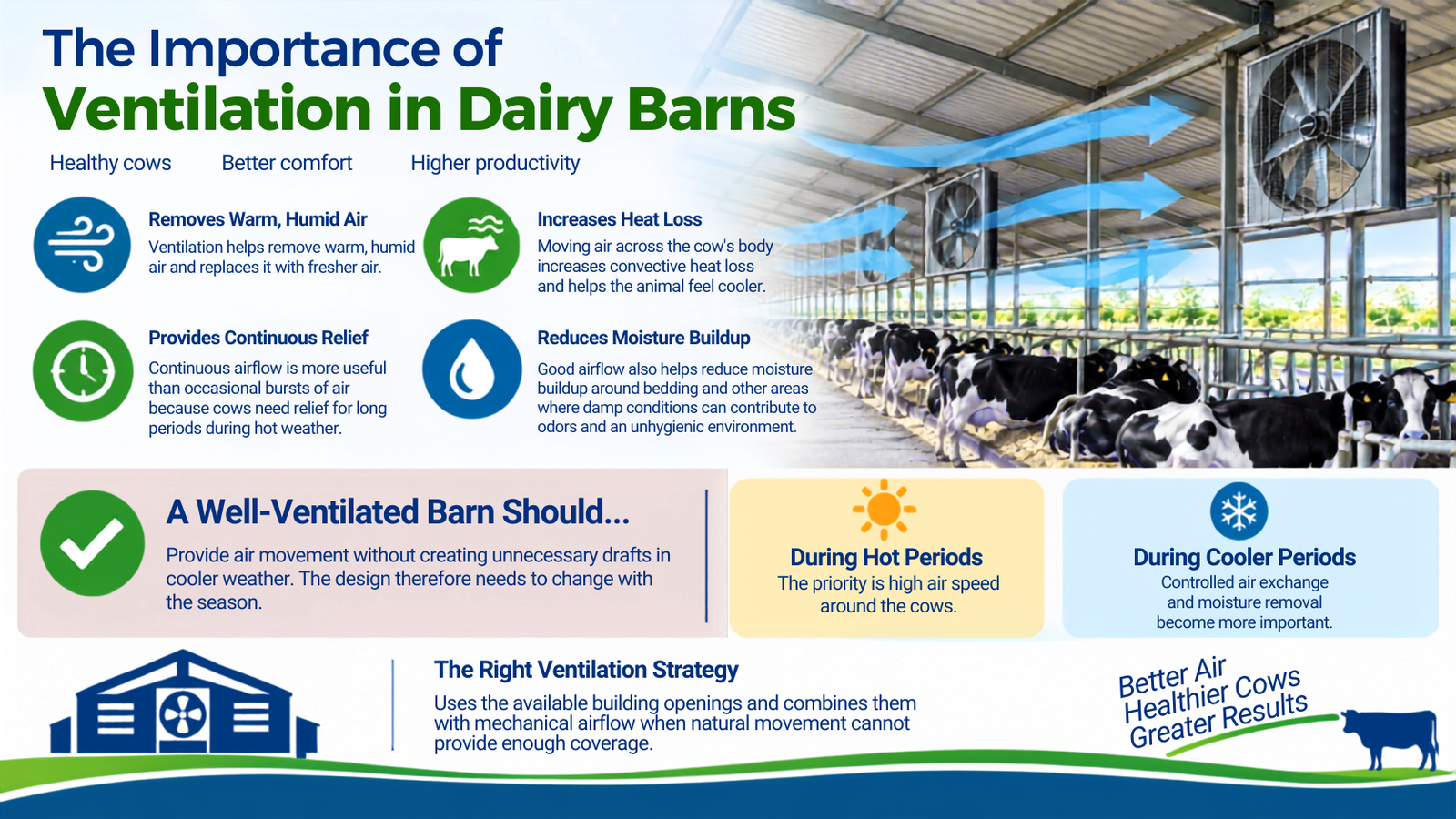
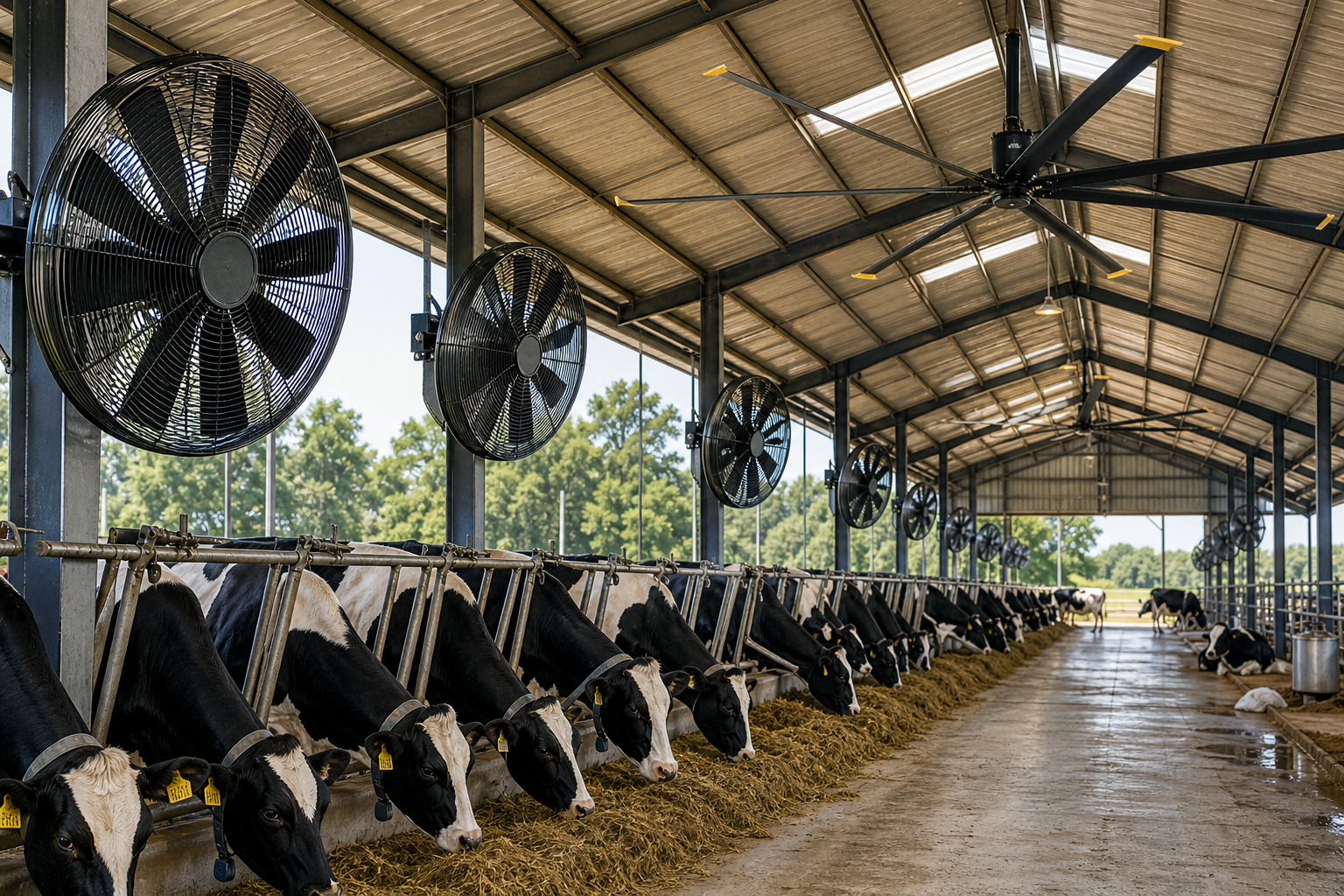
A comfortable, well ventilated dairy farm is critical to thriving cows, consistent milk production, and overall success of the farm. When the temperature and humidity rise cows can become very uncomfortable and experience heat stress. Efficient air movement can allow for the removal of unwanted heat, moisture, odors and stale air from the barn while bringing in fresh air. This is why choosing the right Dairy Farm Fans has become a priority to many modern day dairy farms.
Fans are not just a piece of equipment, when properly selected, installed, positioned and maintained they can add value to the comfort of your cows and the ventilation of your barn. Proper ventilation can even impact feeding behavior, resting, milk production, and overall farm performance.
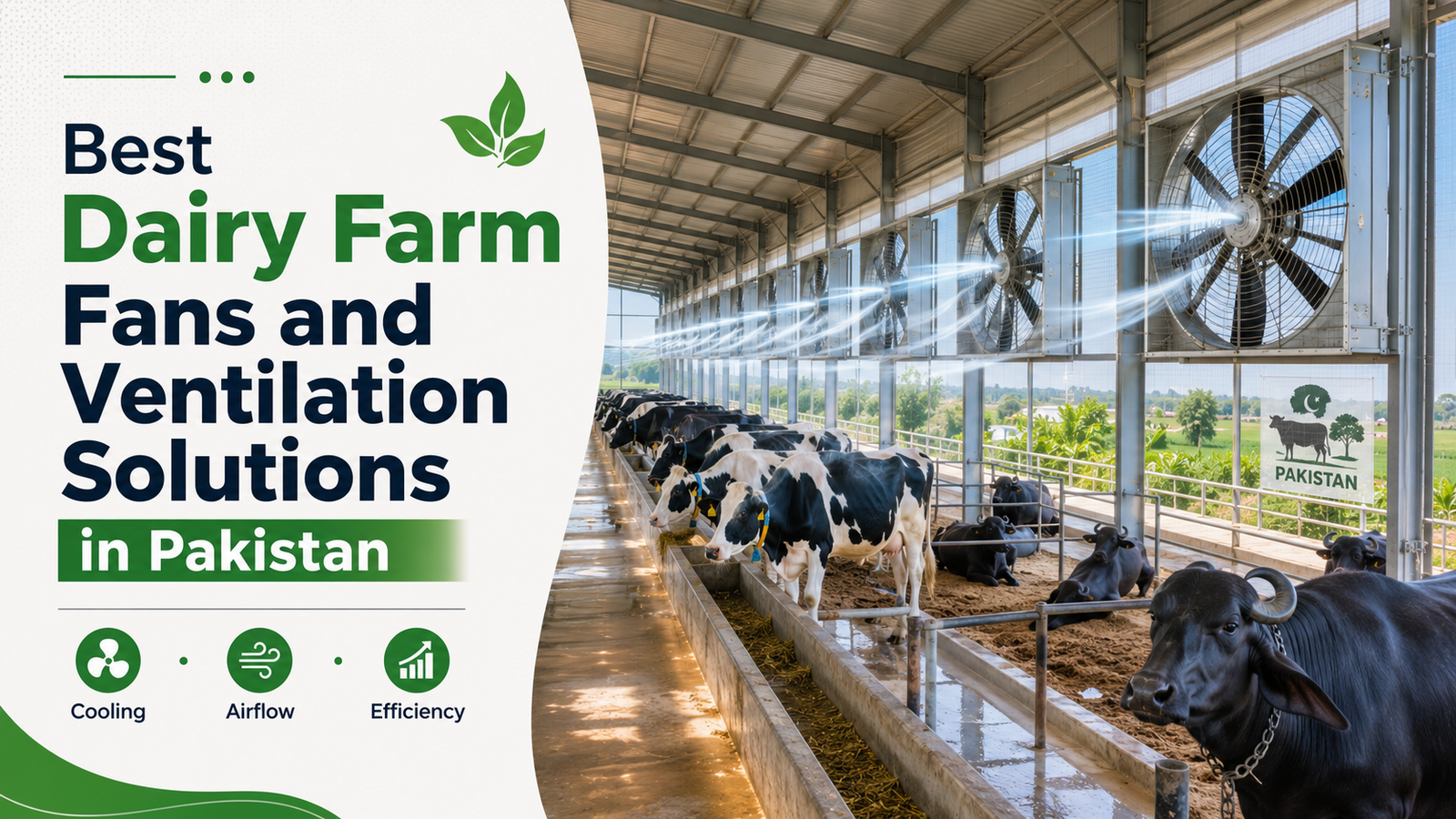
Modern day farms use a variety of ventilation equipment based on their facility type and size, the number of cows, climate and other factors. Dairy Barn Fans, Cow Cooling and Farm Ventilation Fans, and complete Dairy Farm Ventilation strategies offer a variety of ventilation improvements for the modern day barn.
This guide will discuss the importance of proper ventilation in the dairy, the benefits of fans, types of fans, and considerations for choosing ventilation equipment for your barn.
Why Ventilation is Important on a Dairy Farm
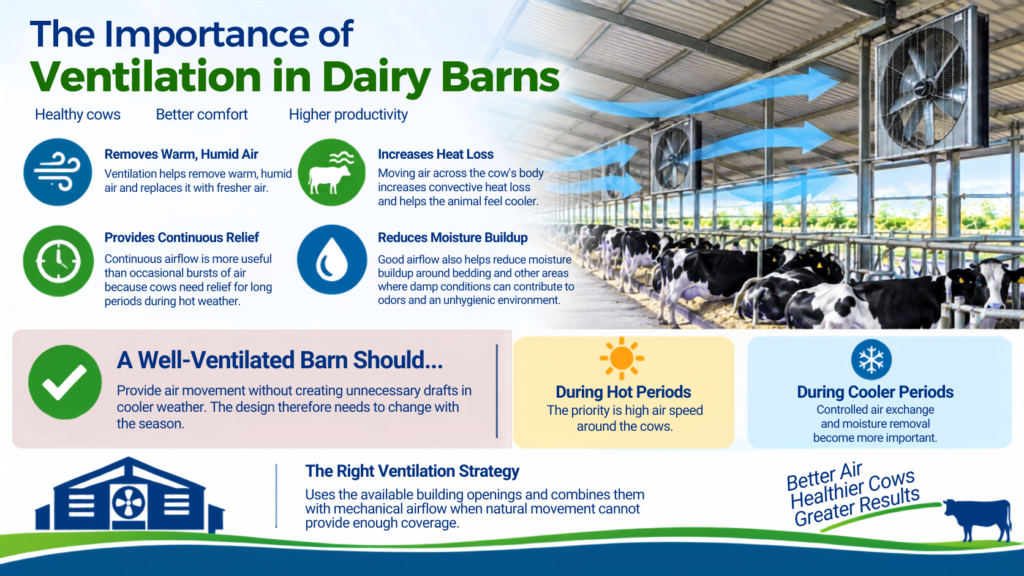
Cows constantly produce body heat, moisture from breathing and other processes, and manure, urine, feed, and bedding can add to the amount of moisture and odor in the barn. If the warm, moist air is not constantly moved away from the animals area it can often lead to an uncomfortable housing environment.
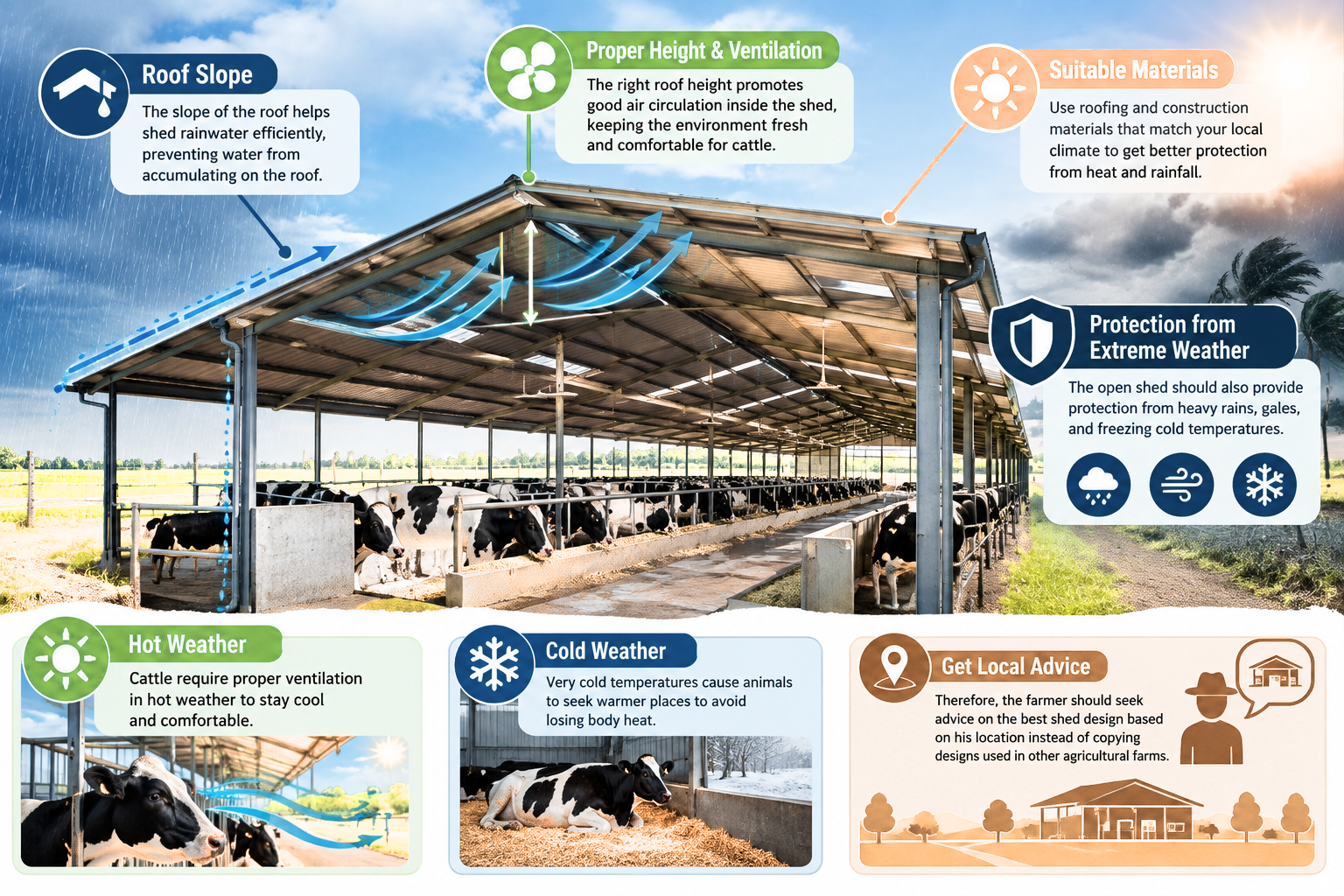
On milder days, natural convection through sidelights, doors, curtains, and the ridge can be enough to ventilate a barn. But on hotter days, or when natural ventilation is minimal, mechanical ventilation becomes increasingly important.
The goal is to remove stale indoor air and replace it with fresh air from outside, and on hot days fans are also needed to provide adequate air movement around the animals in order to remove body heat. This can often have a significant effect on the comfort of your herd as the moving air aids in evaporative cooling.
Poor ventilation can lead to a variety of issues: cows are often less willing to rest, spend less time at the feed bunk, and heat stress can occur. High humidity can increase the effect of a hot day, and make natural cooling methods such as evaporative cooling inefficient.
A proper ventilation system addresses both the exchange of indoor and outdoor air, and the cooling needs of the animals. Just installing larger fans is not a solution, proper installation and building design must take into account air inlets, exhaust locations, and the internal layout of the structure.
Understanding Dairy Farm Fans
Dairy Farm Fans are mechanical devices that move or exhaust air from a dairy facility or farm. Based on the fan type, they can offer general circulation, heat removal, fresh air exchange, or cooling functions.
What works for one barn may not work for another. Large freestall barns, small dairy facilities, holding areas, and milking parlors all have different needs.
Proper fan selection is based on several factors such as airflow capacity, diameter, motor efficiency, speed, noise, maintenance needs, and installation location. The amount of energy a fan uses is also an important factor as they may be required to run for long periods of time when the weather demands.
The application should always be considered when purchasing equipment. If your goal is to cool cows at a feeding area, it may require a different set up than exhausting hot air away from the building.
Proper fan design focuses on achieving useful air movement at cow level rather than pushing air around the top of the structure. Moving air at animal eye level can be much more beneficial to the comfort of a cow than trying to push large amounts of air around the ceiling.
The Role of Dairy Barn Fans
Dairy Barn Fans are commonly used in livestock facilities for increased air movement. They are an effective way to avoid heat buildup and stale air pockets in the barn.
Even if a building has great natural ventilation through sidelights, areas of the barn can often have poor airflow. Air movement throughout the building can be very uneven with some areas experiencing little airflow while others have greater movement. Fans can help balance out the air movement throughout a structure.
Horizontal circulation fans are often used to move greater distances of air horizontally across the animal area. They are commonly used in barns that keep cows in a freestall or along a feed aisle for large periods of time.
Exhaust fans are another popular option for removing hot, stale air from a building. They are often used in conjunction with naturally ventilated structures that require additional cooling or power to increase air exchange rates.
Installation location also has a significant impact on performance. Mounting a fan too high can cause it to push air around the top of the structure when what is needed is increased movement across the animals. Incorrect fan angles can result in airflow being pushed into a non-critical area of the building
Building airflow balance is an important consideration in fan installation as the fan needs to achieve proper flow rates at a specific angle in order to impact the critical areas of a building such as feeding areas, crowding zones, or the freestall rest areas. Airflow entering the building through air inlets, or natural openings should ideally move across the animal area and then exit the structure via exhaust fans, or other natural openings.
Cow Cooling Fans and Heat Stress
One of the most important applications of modern day ventilation is combating heat stress. Cow Cooling Fans can help by providing a cooling airflow directly over the animals. They can be especially beneficial during hot and humid conditions.
Cows are often negatively impacted by high temperatures due to their natural body heat production. High producing dairy cows can often be the most susceptible to heat stress on the farm. When a cow is unable to effectively cool itself, its body temperature can rise and impact feeding and behavior patterns.
Heat stressed cows often display increased breathing rates, standing more than normal, less feed intake, crowding at waterers, and changes in normal behavior Continued heat can often impact the performance of the herd.
Air movement over the cow is beneficial as it can aid in heat transfer from the cow’s body to the surrounding air. When applied with water and other cooling methods, moving air can be an efficient part of a comprehensive heat stress management strategy.
Fans can be especially beneficial in holding areas as cows can often spend significant time there waiting to be milked. Crowding can also increase heat and humidity in these areas.
Feeding areas can also be targeted with fans to ensure cows are as comfortable as possible. Cows often spend a good amount of time in these areas and maintaining comfort can be key to achieving feeding time goals. Resting areas are another area of the barn that can benefit from increased airflow. Proper cooling fans can aid in maintaining cow comfort in rest areas and encourage cows to stay and rest.
Farm Ventilation Fans for Better Air Movement
Farm Ventilation Fans can be used in several ways and serve a variety of purposes depending on the location and installation. However, it is important to consider the overall ventilation plan as fans are just one part of a total ventilation strategy. Simply adding a larger fan to a system will not necessarily improve performance if it does not match up with the requirements of the building.
Air movement in a building should be measured in terms of airflow volume and efficiency. Airflow is the amount of air being moved while efficiency is a measure of how much electricity is being used to move that air.
Variable speed fans are often a great option for ventilation as cooling and air exchange requirements can vary greatly throughout the day and year. On mild days a smaller fan speed may be all that is required while hotter temperatures demand higher speeds. Automatic controls can aid in this process as they are able to sense when a fan needs to be turned on or off based on temperature, humidity, or other requirements.
Automation should not be the only method of control however, as conditions can often change rapidly and manual adjustments may be necessary. Fans can also be impacted by building structure changes, new doors or curtains, or changes in animal density within the facility. Manual fan checks should always take place to ensure proper operation and airflow rates.
Seven Important Benefits of Dairy Farm Fans
Proper ventilation can provide a variety of advantages for the modern day dairy farm.
- Increased Cow Comfort
Bilkul. Main “Dairy Barn Fans” keyword ko natural way mein add kar raha hoon, taa-ke keyword stuffing na lage aur SEO bhi maintain rahe. Aapka existing content zyada change nahi karunga.
Optimized Version
Air movement can often make hot conditions much more acceptable for cows. Comfortable cows are likely to follow proper feeding, resting, and exercise patterns. Dairy Barn Fans can play an important role in maintaining comfortable conditions by improving airflow around the animals.
Dairy Farm Fans are mechanical devices that move or exhaust air from a dairy facility or farm. Based on the fan type, they can offer general circulation, heat removal, fresh air exchange, or cooling functions.
What works for one barn may not work for another. Large freestall barns, small dairy facilities, holding areas, and milking parlors all have different needs. Choosing the right Dairy Barn Fans for each area can help provide more effective airflow and improve overall ventilation.
Proper fan selection is based on several factors such as airflow capacity, diameter, motor efficiency, speed, noise, maintenance needs, and installation location. The amount of energy a fan uses is also an important factor as they may be required to run for long periods of time when the weather demands.
The application should always be considered when purchasing equipment. If your goal is to cool cows at a feeding area, it may require a different set up than exhausting hot air away from the building.
Proper fan design focuses on achieving useful air movement at cow level rather than pushing air around the top of the structure. Moving air at animal eye level can be much more beneficial to the comfort of a cow than trying to push large amounts of air around the ceiling.
The Role of Dairy Barn Fans
Dairy Barn Fans are commonly used in livestock facilities to increase air movement. They are an effective way to avoid heat buildup and stale air pockets in the barn.
Cow Cooling Fans Even if a building has great natural ventilation through sidelights, areas of the barn can often have poor airflow. Air movement throughout the building can be very uneven, with some areas experiencing little airflow while others have greater movement. Dairy Barn Fans can help balance airflow throughout the structure and improve ventilation in areas where natural airflow is limited.
Cow Cooling Fans Horizontal circulation fans are often used to move greater distances of air horizontally across the animal area. They are commonly used in barns that keep cows in a freestall or along a feed aisle for large periods of time. These types of Dairy Barn Fans can help maintain consistent air movement across areas where cows spend significant amounts of time.
Cow Cooling Fans Exhaust fans are another popular option for removing hot, stale air from a building. They are often used in conjunction with naturally ventilated structures that require additional cooling or power to increase air exchange rates.
Cow Cooling Fans Installation location also has a significant impact on performance. Mounting a fan too high can cause it to push air around the top of the structure when what is needed is increased movement across the animals. Incorrect fan angles can result in airflow being pushed into a non-critical area of the building.
Building airflow balance is an important consideration in fan installation as the fan needs to achieve proper flow rates at a specific angle in order to impact the critical areas of a building such as feeding areas, crowding zones, or the freestall rest areas. Airflow entering the building through air inlets or natural openings should ideally move across the animal area and then exit the structure via exhaust fans or other natural openings.
Cow Cooling Fans and Heat Stress
Cow Cooling Fans One of the most important applications of modern-day ventilation is combating heat stress. Cow Cooling Fans can help by providing a cooling airflow directly over the animals. Dairy Barn Fans are particularly useful for improving air movement around cows and can be especially beneficial during hot and humid conditions.
Cows are often negatively impacted by high temperatures due to their natural body heat production. High producing dairy cows can often be the most susceptible to heat stress on the farm. When a cow is unable to effectively cool itself, its body temperature can rise and impact feeding and behavior patterns.
Heat stressed cows often display increased breathing rates, standing more than normal, less feed intake, crowding at waterers, and changes in normal behavior Continued heat can often impact the performance of the herd.
Air movement over the cow is beneficial as it can aid in heat transfer from the cow’s body to the surrounding air. When applied with water and other cooling methods, moving air can be an efficient part of a comprehensive heat stress management strategy.
Fans can be especially beneficial in holding areas as cows can often spend significant time there waiting to be milked. Crowding can also increase heat and humidity in these areas.
Feeding areas can also be targeted with fans to ensure cows are as comfortable as possible. Cows often spend a good amount of time in these areas and maintaining comfort can be key to achieving feeding time goals. Resting areas are another area of the barn that can benefit from increased airflow. Proper cooling fans can aid in maintaining cow comfort in rest areas and encourage cows to stay and rest.
Farm Ventilation Fans for Better Air Movement
Farm Ventilation Fans can be used in several ways and serve a variety of purposes depending on the location and installation. However, it is important to consider the overall ventilation plan as fans are just one part of a total ventilation strategy. Simply adding a larger fan to a system will not necessarily improve performance if it does not match up with the requirements of the building.
Air movement in a building should be measured in terms of airflow volume and efficiency. Airflow is the amount of air being moved while efficiency is a measure of how much electricity is being used to move that air.
Cow Cooling Fans Variable speed fans are often a great option for ventilation as cooling and air exchange requirements can vary greatly throughout the day and year. On mild days a smaller fan speed may be all that is required while hotter temperatures demand higher speeds. Automatic controls can aid in this process as they are able to sense when a fan needs to be turned on or off based on temperature, humidity, or other requirements.
Cow Cooling Fans Automation should not be the only method of control however, as conditions can often change rapidly and manual adjustments may be necessary. Fans can also be impacted by building structure changes, new doors or curtains, or changes in animal density within the facility. Manual fan checks should always take place to ensure proper operation and airflow rates.
Seven Important Benefits of Dairy Farm Fans
Cow Cooling Fans Proper ventilation can provide a variety of advantages for the modern day dairy farm.
- Increased Cow Comfort
Air movement can often make hot conditions much more acceptable for cows. Comfortable cows are likely to follow proper feeding, resting, and exercise patterns.