
Introduction
Starting a dairy farm business can be a chance for people who want to build a long – term farming venture. Milk is used every day. There is usually a steady market for fresh dairy products. Running a dairy farm is not as simple as buying a few cows or buffaloes and selling their milk. It needs planning, investment, animal care, feeding, hygiene, marketing , and good financial management.
Many new farmers think the key is to buy animals. In truth , the success of a dairy farm depends on how well the animals are managed. Healthy animals, nutrition, clean housing, good – quality milk, and controlled expenses can make a big difference to the farm income.
A small dairy farm can also become successful if it is run carefully. You do not have to start with a large herd. Beginning at a smaller level lets you learn your local market, manage animals, control costs, and build a loyal customer base before you grow.
This guide explains the areas you should think about before starting a dairy farm. It also covers nine steps in a dairy farm business plan: market research, farm setup, animal selection, feeding, health management, milk production, marketing , and financial planning.
Understanding the Dairy Farm Business
A Dairy Farm Business is a business where animals are raised mainly for milk production. Cows and buffaloes are common in parts of the world , and goats and other dairy animals also play an important role in some markets.
The basic idea seems simple: raise animals , care for them, they produce milk, and sell that milk to customers. Behind this simple idea is a daily system that must run well. Animals need food and clean water every day. Their health must be monitored , and their housing must be cleaned often. Milk must be collected and handled hygienically.
The Dairy Farm Business also has a financial side. The Dairy Farm Business must pay for feed, labor, veterinary care, electricity, transportation , equipment, and other costs. If these costs are not kept low, high milk production alone may not bring a profit.
This is why dairy farming must be seen as a business, not just an agricultural activity.
Before starting , ask yourself some questions. Where will you sell the milk? How much will the animals cost? What will you feed them? How much will the farm cost to run each month? Who will care for the animals? What will happen if an animal becomes sick, or if milk prices change?
Answering these questions early can save you from mistakes later.
Why Dairy Farm Business Can Be a Good Business Opportunity
One of the attractions of a dairy farming business is the regular nature of milk production. Unlike some businesses that depend on harvesting a crop once or twice a year, dairy farms can generate income on a more continuous basis.
demand for milk can also come from different types of customers. Some farmers sell directly to families in communities, while others supply milk to shops, restaurants, hotels, milk collectors, or dairy processing companies.
Another advantage is that a dairy farm can potentially have more than one source of income. Besides milk, farmers may earn from calves, breeding animals, manure, and other dairy products. The importance of these sources depends on the size and type of the farm.
There is also room for growth. A farmer may start with a number of productive animals and increase the herd as experience and finances improve. This approach can be easier to manage than investing a large amount of money in a big farm from the beginning.
However , dairy farming is not a business where income is guaranteed. Feed prices, animal health, milk prices, weather, and market conditions can all affect profitability. Good planning is therefore essential.
9 Essential Dairy Farm Business Plan Steps for Success
A successful farm normally starts with a plan. The following nine steps can help you organize your idea before putting your money into the business.
- Research the Local Dairy Market
Market research should be the first step because there is little value in producing milk without having a reliable way to sell it.
Before buying animals , visit the market and talk to potential customers and milk buyers. Find out what type of milk is in demand and how much buyers are currently paying. Prices can vary from one area to another. It is better to use local information instead of relying on general estimates from the internet.You should also look at dairy farms in the area. This does not mean you need to copy them. Instead , learn how they operate and identify opportunities that they may not be serving.
For example , some farms may sell milk to collectors, while another farmer might find an opportunity in delivery to households. Restaurants and small food businesses may also need a milk supply.Your target customer will influence every other part of your business. If you want to sell to families , you may need better packaging and delivery arrangements. If you plan to sell to a buyer, you may need to meet specific quality and volume requirements.
A little market research before starting can prevent problems after the animals have already been purchased.
2. Prepare a Realistic Dairy Farm Business Plan
The next step is to turn your idea into a dairy farm business plan .
Your plan does not have to be complicated. It should simply explain how the farm will run and where the money will come from and go.
Begin by estimating the amount of money you can invest. Then calculate the costs of animals, land, housing, equipment, feed, labor, transportation, and other startup needs.
A common mistake is to spend most of the capital on animals and leave too little money for feed and daily expenses. Animals are the beginning. Once they are on your farm , they need to be fed and cared for every day, whether milk prices are high or low.
Your business plan should , therefore, include working capital. This is the money you keep available for operations and unexpected expenses.
You should also estimate your expected milk production. Be more realistic than using the highest production figure you hear from an animal seller. Actual production depends on breed, age, health, nutrition, stage of lactation, environment, and management.
For example , if your animals produce a certain amount of milk each day, calculate your expected monthly sales, and then subtract the expected operating costs. This gives you a clearer picture of the possible profit.
A good business plan should also include a plan for various situations. What will you do if feed becomes more expensive? What if an animal becomes sick? What if your main customer stops buying your milk? Thinking about these possibilities in advance strengthens the business.
3.Choose a Location
The location of a dairy farm can have a long – term effect on its expenses and efficiency.
A suitable location should provide access to clean water, animal feed, electricity, roads, labor , and veterinary services. It should also be reasonably close to your customers or the milk collection point.
Water is particularly important. Dairy animals need access to water , and water requirements can increase during hot weather and periods of high milk production. Before choosing land, make sure the water supply is reliable rather than assuming it will always be available.
Road access is another consideration. Feed has to come onto the farm while milk and other products need to leave the farm. Poor roads can increase transportation costs and create problems during bad weather.
The surroundings should also be considered. A Dairy Farm Business located close to a heavily populated area may create problems related to smell, waste, noise , or local regulations. At the same time, a farm that is extremely far from customers can face higher transportation costs.
The best location is usually one that balances land costs, animal requirements, transportation, market access , and future expansion.
Planning Your Dairy Farm Business Setup
A well – designed dairy farm setup makes daily work easier and helps maintain animal health and milk hygiene.
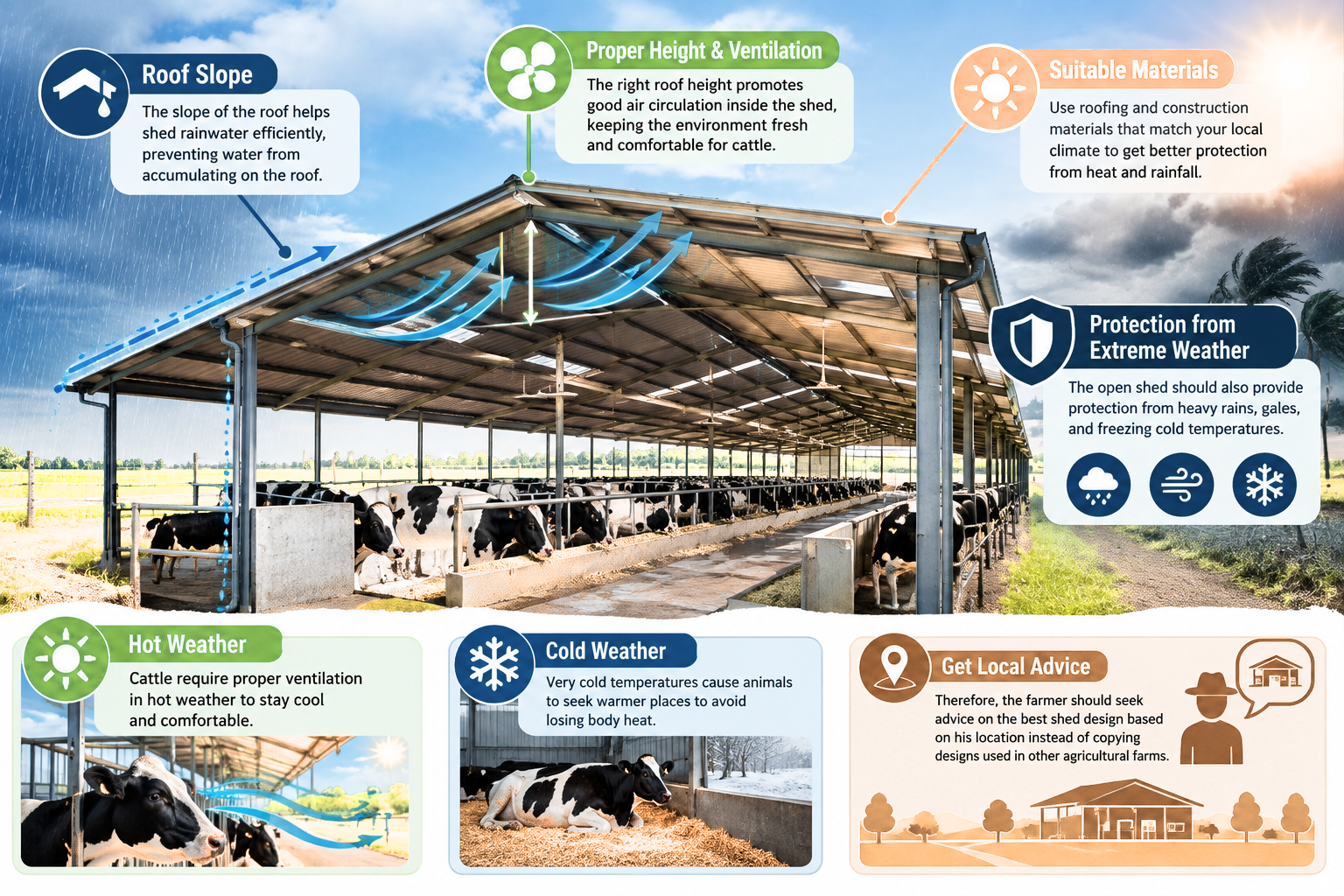
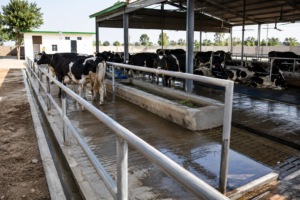
You do not necessarily need a building when starting a small farm. What matters most is that the housing provides space, proper drainage, ventilation, shade , and protection from extreme weather.
Animals should have a place to rest and enough room to move naturally. Floors should reduce slipping and allow water and waste to drain properly.
Poor drainage can create dirty conditions, which may increase hygiene and animal health problems. Regular cleaning becomes much easier when the farm has been designed with drainage in mind from the beginning.
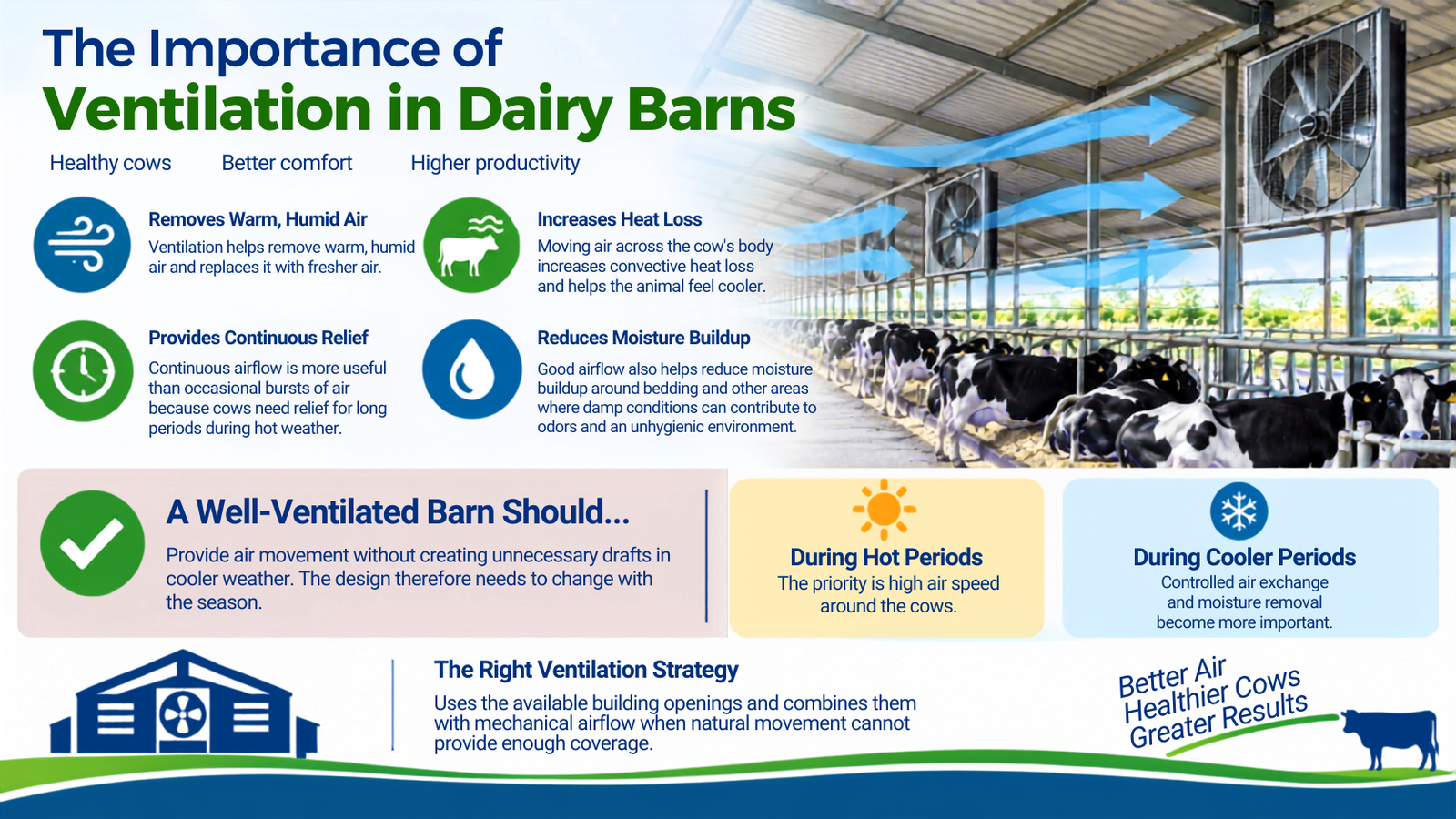
Ventilation is also important. Dairy animals produce body heat , and a ventilated building can become uncomfortable, particularly in hot weather. Fresh air should be able to move through the building without creating drafts.
The feeding and watering areas should be positioned so that animals can access them easily. The milking area should be kept as clean as possible and separated from areas where manure accumulates.
Feed storage is another area that is sometimes overlooked. Feed needs to be protected from rain,
moisture, pests , and contamination. Wasted feed is wasted money. Proper storage can directly affect the financial performance of the farm.
As the farm grows , you may need areas for calves, pregnant animals, sick animals, equipment , and manure management.
Good design does not necessarily mean elaborate design. It means creating a system that works efficiently for the animals and the people who care for them.
- Select Healthy and Suitable Dairy Animals
Choosing the animals is a very important decision in a dairy business.
A healthy animal with production potential can serve the farm for many years , but a poorly chosen animal can cause repeated health, reproductive, and financial problems.
Do not buy animals only because they look large or attractive. Look at the animals’ health, age, body condition, previous production, reproductive history, and physical condition.
If production records are available , study the records carefully. Records can give you an idea of what an animal has actually produced rather than relying only on what a seller says.
The udder deserves attention because it directly affects milk production and milking efficiency. Check animals’ udders for swelling, injuries, abnormalities , or other signs of problems.
The legs and hooves of animals are also important. Dairy animals need to stand and walk comfortably in systems where they move regularly between housing, feeding, and milking areas.
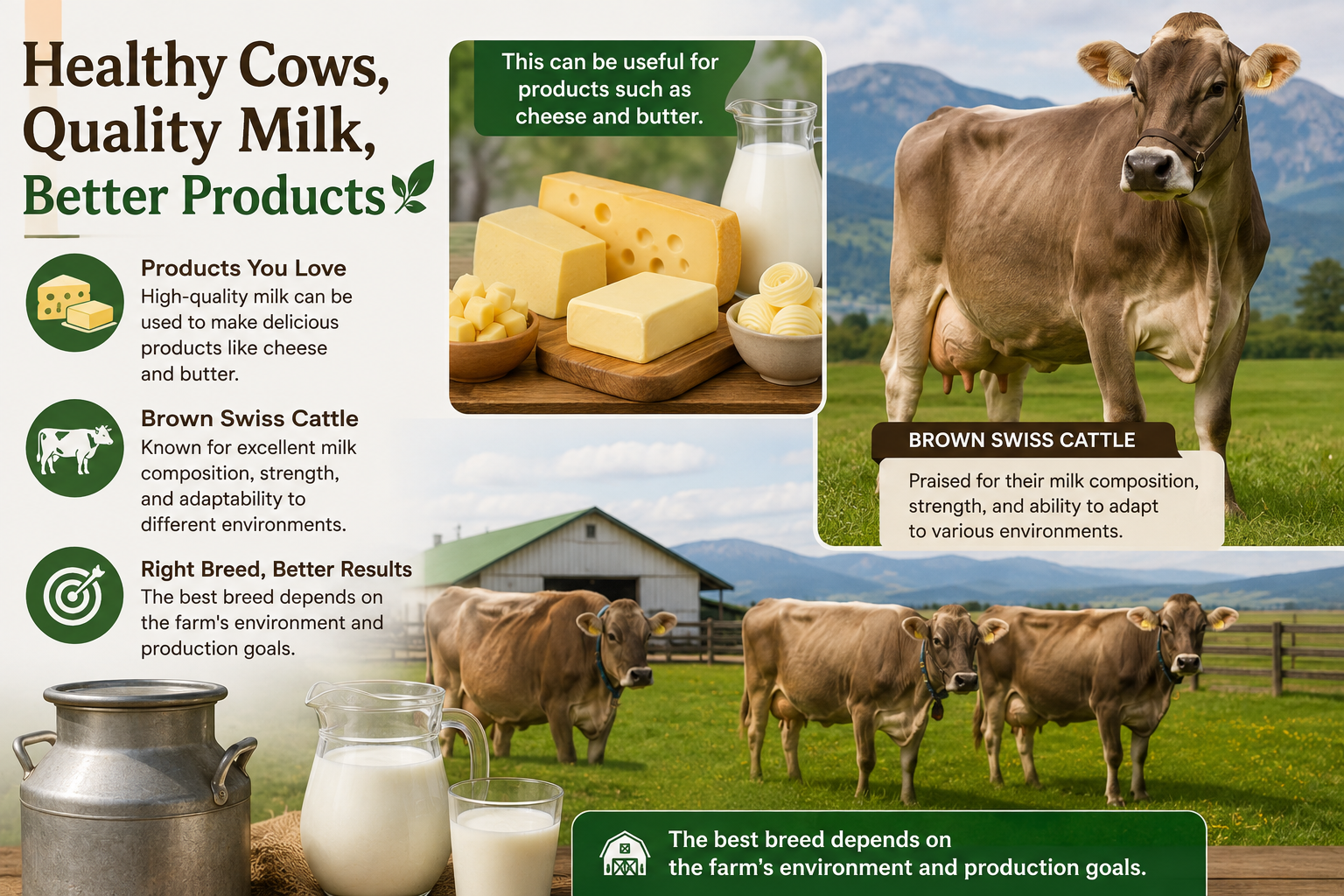
Breed selection should be based on farm conditions rather than popularity alone. A breed that performs well in one environment may not perform as well in another.
Consider climate, feed availability, water supply, disease conditions, management system , and milk market before choosing a breed.
When making an investment , it is wise to have a qualified veterinarian or experienced dairy professional assist in assessing the animals before purchase.
- Build a Proper Feeding and Nutrition System
Feed is one of the important parts of dairy production. An animal cannot maintain health and produce milk efficiently without proper animal nutrition.
The feeding program should provide animals with the nutrients needed for maintenance, growth, reproduction, and milk production. The exact ration will vary with the animal’s age, size, milk yield, pregnancy status, and available feed.
Dairy diets commonly include forage, green fodder, dry roughage, concentrates, minerals, salt , and plenty of water.
Green fodder can provide nutrients and fiber. If land and water are available, growing some fodder on the farm can reduce dependence on purchased feed. However, farmers should calculate the cost of growing, harvesting, and storing the crop before assuming it will always be cheaper.
Dry roughage is also important because adequate fiber supports digestion.
Concentrate feed can provide nutrients for animals with higher production needs. More concentrate is not automatically better ; feeding should be balanced according to animals’ needs and managed carefully.
Feed quality matters as much as quantity. Moldy, spoiled, contaminated , or improperly stored feed can create health problems and financial losses.
Water should always be easily accessible. A dairy animal producing milk has water requirements , and hot weather can increase those needs.
One way to lose money on a dairy farm is through feed wastage. If feed is spilled, spoiled , or given in excessive quantities, the farmer may be paying for nutrients that never benefit the animals.
Regularly reviewing the feeding system can therefore improve both animal performance and farm profitability.
- Make Animal Health a Daily Priority
Good Dairy Farm Business management begins with animals. It is much better to spot health problems early than to wait until an animal becomes seriously ill. Farmers and workers should observe the animals every day and become familiar with their normal behavior.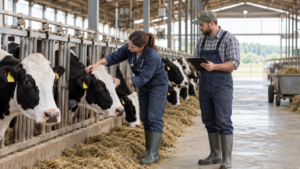
Changes in appetite, movement, milk production, appearance , or behavior may indicate that something is wrong.
A proper preventive healthcare program should be developed with support. It may include vaccinations, parasite control, reproductive care, hoof care , and regular health checks depending on conditions.
Keeping animals separated from healthy animals when appropriate can help reduce the risk of disease spreading through the herd.
Clean housing also plays a role in health. Manure should be removed regularly , bedding should be kept in good condition, and wet areas should be addressed.
The same principle applies to milking equipment. Dirty equipment can contribute to milk contamination and udder health problems.
Farm workers should also understand hygiene and safe animal-handling practices. Rough or careless handling can create stress and increase the risk of injuries.
Reproductive Management and Calf Care
Reproduction is closely connected to the long – term productivity of a dairy farm.
A farm needs a system for recording breeding, pregnancy , and calving. Without records, it becomes difficult to know which animals are pregnant, when they are expected to calve, or whether reproductive problems are occurring.
Heat detection and breeding should be managed carefully. Veterinary support can be valuable when animals experience reproductive difficulties.
Pregnant animals need nutrition and observation as calving approaches. A clean , comfortable calving area should be available.
After birth , the newborn calf requires appropriate care. Colostrum is particularly important during this period of life, and proper hygiene can reduce the risk of infection.
Calf management is not just about the current generation of animals. Good calf care helps develop replacement animals for the future.
- Maintain Clean Milk Production
Producing milk is half of the job ; the milk must also be handled properly.
Customers expect milk to be clean, fresh , and safe. Poor hygiene can damage a farm’s reputation and may lead to rejected milk.
The milking area should be clean before milking begins. The udder should be prepared appropriately , and the person doing the milking should maintain good personal hygiene.
Containers and milking equipment need to be cleaned . Milk should not be allowed to come into contact with surfaces, manure, dust, or contaminated water.
After milking , the milk should be stored according to appropriate food – safety practices. Where refrigeration is available and appropriate, rapid cooling can help preserve quality.
Hygiene becomes more important if the farm sells directly to consumers. When customers purchase milk directly from a farm , they are trusting the farm to provide a properly handled product.
A strong reputation for cleanliness can become an advantage in a competitive local market.
- Create a Reliable Milk Marketing Strategy
A Dairy Farm Business needs customers as much as it needs healthy animals.
Before your farm reaches production , you should already have an idea of where the milk will go.
Direct selling can provide an opportunity to build relationships with customers. Families may prefer buying from a farm that they trust and that provides a consistent supply.
However , direct sales also require work. You may need to manage orders, customer communication, delivery, packaging, and payments.
Another option is selling to milk collectors or larger buyers. This can make distribution easier because you may be able to sell a quantity at once. The disadvantage is that the price may be lower than what you could receive through direct sales. Restaurants, hotels, cafes, and food businesses may also become customers if you can provide quality and supply. Your marketing approach should match your farm’s capacity. A small farm does not need a marketing system if it can build a strong local customer base. Social media can also be useful for building awareness.
A Dairy Farm Business can share information about its farm, animals, production process, product availability, and customer service. The goal should be to build trust rather than make exaggerated claims. If you later produce packaged dairy products, branding can become more important. Packaging should be professional and follow applicable food – labeling and safety requirements.
9. Control Finances and Track Farm Performance
Financial management is one of the important parts of a successful dairy business. Many farmers know how much milk they sell but do not know exactly how much it costs them to produce that milk. Without this information, it is difficult to understand whether the business is actually profitable. Keep a record of all income and expenses. Milk sales are the obvious source of income, but other income may come from animals, calves, manure, breeding services, or processed dairy products. Expenses may include animal feed, labor, veterinary services, medicines, electricity, water, transportation, equipment maintenance, breeding costs, repairs, and packaging. At the end of each month, compare income with total expenses.
The basic formula is:Net Profit = Total Revenue – Total Expenses
It is also useful to calculate the cost of producing milk. If your milk revenue is increasing but feed and other expenses are increasing faster , the farm may not actually be becoming more profitable. Records can also help you compare animals. Some animals may consistently produce milk while others may have repeated health or reproductive problems. Good records allow you to make decisions based on facts rather than guesswork.
How Much Does a Dairy Farm Business Cost to Start?
There is no startup cost that applies to every dairy farm business . The investment can vary depending on the number of animals, breed, land situation, housing system, equipment, labor, feed availability, and local prices. The biggest initial expense for farms is the purchase of animals. Other expenses can become equally important. You may need money for land or a lease, construction, water facilities, fencing, feed storage, milking equipment, electricity, transportation, and initial feed. It is also important to keep money for operating expenses after the farm begins.
Milk income may not immediately cover every expense during the early stages. A useful approach is to prepare two budgets. The first is the startup budget, which covers the cost of establishing the farm. The second is the operating budget, which estimates what the farm will cost to run each month. This separation helps you understand how much capital is required not only to build the farm but also to keep it running.
How to Calculate Potential Dairy Farm Profit
Before we start Dairy Farm Business, we should make a financial model. Suppose, for example, that a farm has 20 animals and each animal can sell about 10 liters of milk each day. That means the farm would produce 200 liters of milk each day. If the milk sells for 180 currency units per liter, the farm’s daily gross milk revenue would be: 200 × 180 = 36,000 currency units. Over a month of 30 days, this would be: 36,000 × 30 = 1,080,000 currency units.
That number is the farm’s gross revenue. The farm’s actual profit will be lower once we pay for feed, labor, veterinary care, utilities, transport, repairs, breeding, equipment, and other costs. That is why farmers should not decide on milk sales solely. A better calculation is to estimate the farm’s cost of producing milk and then compare that cost with the selling price. If the Dairy Farm Business cost of producing one liter of milk is close to or higher than the selling price, the farm’s business model needs improvement before expanding.
Managing Feed Costs
Feed can impact farm profitability. The goal should not be only to find the feed. The better goal is to provide animals with the nutrition they need at a fair cost. Cheap feed that does not meet animal nutrition needs may lower milk production and cause health problems. At the same time, feed that is too expensive can cut farm profit even if milk production is good.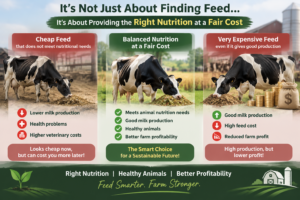
Farmers should keep track of how much feed the farm buys, how much the farm uses, and how much feed the farm wastes. If the farm has land, growing some fodder on the farm can be useful. The farm should evaluate that plan based on land costs, irrigation, labor, seed, fertilizer, harvesting , and storage. Proper feed storage on the farm is also important. Protecting feed from moisture and pests can prevent losses.
Dealing With Common Dairy Farm Business Challenges
Dairy farming has challenges, and smart farmers prepare for them instead of assuming everything stays the same. One common challenge is the change in feed prices. When feed becomes more expensive, the cost of producing milk for the farm can rise quickly. Keeping records helps the farm see the effect before it becomes a significant financial problem. Animal disease is another issue. A sick animal may produce less milk, need treatment, and may spread risk to other animals.
Preventive healthcare and good hygiene can reduce these risks for the farm. Weather can also affect the farm. Heat stress is especially hard on animals in certain climates. Shade, ventilation, clean water, and good management can help animals on the farm cope with high temperatures. Milk prices may also change. A farmer who depends on one buyer may be more vulnerable if that buyer lowers the price or stops buying. Having relationships with possible customers can give the farm more flexibility.
Using Technology in a Modern Dairy Farm Business
Technology is becoming more useful in dairy farming, but it should be added to the farm according to the farm’s needs and budget. A small farm may benefit from digital records instead of expensive automated machines. For example, a spreadsheet can be used to record milk production, animal health, breeding, expenses, and sales for the farm. Over time, these records can reveal patterns that are hard to see when everything is written down randomly.
Larger farms may use animal identification, automated milking systems, feed management software, temperature monitoring, milk cooling equipment, and other technologies. The purpose of technology on the farm should always be to solve a problem. If a digital system helps the farm cut paperwork and understand costs, it can be useful. If an expensive machine does not significantly improve the farm operation, it may not be worth the investment.
Manure Management and Sustainability
A Dairy Farm Business produces more than milk. Manure is another resource that the farm can manage properly. Instead of letting manure pile up around animal housing, the farm can create a system for collecting and storing manure. Depending on conditions, the farm can use manure as fertilizer or turn it into compost. Some farms may also explore biogas systems. Proper manure management can improve farm cleanliness and reduce unpleasant odors.
It can also help stop manure from reaching water sources. Water should be managed carefully on the farm. Cleaning, watering , and other farm activities can use a lot of water. Sustainable practices do not always need technology. Simple improvements, such as reducing feed waste, keeping equipment in shape, using resources efficiently, and managing manure properly can make a difference for the farm.
Starting a Dairy Farm Business
If you are new to dairy farming starting on a manageable scale can be a smart approach. A smaller Dairy Farm Business herd lets you learn how much feed animals use, how to run milk production, how to spot health issues, and how customers respond to your product on the farm. Once you understand the farm business and have cash flow, you can think about expanding.
The important thing is not to mix size with success. A large herd can produce milk but can also create much higher costs and management demands for the farm. A well – run small farm can be a better business than a large farm that has poor cost control. Start with a budget, set up your market, buy healthy animals, and focus on building reliable daily systems for the farm.
How to Make a Dairy Farm Business More Profitable
Increasing the number of animals is not the way to increase income. Sometimes profitability can improve simply by reducing waste and improving management. For example, if a large amount of feed is being wasted every day, reducing that waste can lower costs. Similarly, preventing health problems can reduce expenses and protect milk production.
Animal comfort also matters. Animals exposed to heat, poor ventilation, overcrowding, or uncomfortable flooring may not perform as well as animals kept under better conditions. Milk quality is another area where small improvements can have an impact.
Clean equipment, milking practices, proper storage, and reliable handling can help maintain customer confidence. Farmers should also review their customer base regularly. If direct customers are willing to pay more for service and quality, the farm may consider increasing direct sales. If managing small customers becomes too time – consuming, selling part of the production to a larger buyer may make more sense. The right strategy of Dairy Farm Business depends on the farm.
Common Mistakes New Dairy Farm Business Should Avoid
Many dairy farming problems come from planning rather than a lack of hard work. One common mistake is purchasing many animals at the beginning. A large herd immediately creates feed, housing, labor, and healthcare requirements. Another mistake is buying animals without checking their health and production history. A lower purchase price does not necessarily mean a good investment. Some farmers also underestimate working capital. They may have money to build the farm and purchase animals but not enough money to pay operating expenses during difficult months.
Ignoring record keeping is another problem. Without records, it is difficult to identify which animals are performing well or where money is being lost. Farmers should also avoid expanding simply because milk production is increasing. Expansion should happen when the existing operation is financially stable and the market can absorb additional production.
Building a Long – Term Dairy Farm Business
A Dairy Farm Business should be viewed as a long – term business. The first stage is usually about establishing systems. You need animals, regular customers, appropriate feeding, good hygiene, and accurate financial records. The next stage can focus on improving efficiency. This might involve feed management, improved animal selection, stronger customer relationships, or better equipment.
Once the farm has stable operations, expansion may become possible Dairy Farm Business. Expansion could mean increasing the herd, producing fodder, improving the milking system, developing a delivery network, or introducing value – added dairy products. However, every expansion decision should be based on numbers. Ask whether the additional investment will produce additional income to justify the extra costs. This approach helps prevent over-expansion and keeps the business financially healthy.
Opportunities Beyond Selling Fresh Milk
Milk is normally the primary product of a dairy farm, but it does not have to be the only opportunity. As the business develops, some farmers may explore products such as yogurt, butter, cream, cheese, or other dairy products. Value – added products can potentially provide revenue per unit of milk, but they also require additional investment and responsibility.
Food safety becomes particularly important when processing and packaging dairy products. Equipment, storage, labeling, quality control , and applicable regulations must all be considered.
Another opportunity can come from selling calves or breeding animals , depending on the farm’s breeding strategy.
Manure can also have value if there is a market for fertilizer or compost.
These additional opportunities should be introduced gradually. It is better to operate one part of the business before adding several complicated activities at once.
The Importance of Customer Trust
A dairy farm’s reputation can be one of its valuable assets.
Customers who buy milk regularly want to know that they can depend on the farm. They expect quality, reasonable communication , and reliable delivery.
If a farm claims to provide a type or quality of milk , it should be able to support that claim.
Being honest with customers is especially important for a farm because local reputation spreads quickly.
A customer who trusts your farm may continue buying from you for years and may recommend you to other families.
For this reason , customer service should be treated as part of the business rather than an afterthought.
Frequently Asked Questions About Dairy Farm Business
Is Dairy Farm Business profitable?
A Dairy Farm Business can be profitable when milk production, selling prices, feed expenses, animal health, labor , and other costs are managed effectively. Profitability is different for every farm. It is important to calculate your local costs instead of relying on general figures.
How much money is required to start a dairy farm?
The Dairy Farm Business required investment depends on herd size, animal prices, land, housing, equipment, feed, labor , and location. A small farm can require less capital than a large commercial operation. Preparing a startup and operating budget is the best way to estimate the required investment.
Is dairy farming suitable for beginners?
It can be , provided the beginner understands that Dairy Farm Business requires work and careful management. Starting with a herd can allow a new farmer to gain experience before expanding.
What is the important part of dairy farming?
There is no single factor. Animal health, nutrition, clean housing, milk quality, market access, and financial management all work together. Ignoring one area can affect the entire business.
How can I reduce Dairy Farm Business expenses?
Start by monitoring your expenses, particularly feed and labor. Reducing feed waste and maintaining animal health are essential. Health, storing feed properly, and keeping financial records can help control costs.
How should I select dairy animals?
Look at health, age, body condition, milk production history, reproductive history, udder condition, legs, and overall suitability for your environment. Professional veterinary assistance can be valuable when making purchases.
How important is a Dairy Farm Business Plan?
A business plan helps you understand how much you need to invest , how the farm will generate revenue, what the operating expenses may be, and what risks you need to prepare for. It can also help you decide whether your planned herd size is realistic.
Can a small Dairy Farm Business become successful?
Yes. A small farm can be successful when it has animals, good management, controlled costs, reliable customers , and consistent milk quality. Growth can happen gradually as the business becomes more stable.
Can I earn money besides selling milk?
Potential additional income may come from calves, breeding animals, manure, compost , and processed dairy products. The best opportunities depend on your market and the scale of your operation.
Conclusion
Starting a Dairy Farm Business requires more than buying animals and waiting for milk to come. It needs a system where animal health, food, home, cleanliness, selling, and money all work together.
The best farms usually start with thinking. Before putting in money, learn about the milk market in your area and find out who your customers will be.
Make a Dairy Farm Business Plan that has both the money needed to start and the money needed to keep going.
Your Dairy Farm setup should have water, good airflow , the right drainage, enough space, and nice conditions for the animals. When you pick animals, look at their health and how much milk they can give, not just how they look.
Feeding is a part of the business. Good food helps milk production , having babies, and staying healthy, while extra food that gets wasted can lower profits fast.
Good Dairy Farm Business Management is just as important. Checking animals every day , keeping them healthy, tracking when they have babies , keeping their home clean, milking the right way, and keeping good money records can help a farm make money instead of just making milk.
Selling should also be planned before the farm is full. Whether you sell to families, restaurants, stores, people who collect milk , or places that process it, having customers you can trust is key.
Most of all , don’t try to grow fast. Start with a size you can handle, learn from each step, watch what happens, and put money back carefully.
A good dairy farm is built over time.
With planning, taking care of animals the right way, making good milk, keeping costs under control, and building a strong connection with customers , a small farm can turn into a steady and growing farming business.