Introduction
A well-planned dairy farm shed design is essential for successful dairy farming. Not only is it a shelter for the cattle, but it is their home away from home, where they spend a good amount of their time walking around, resting, feeding, and drinking. Thus, the design should be focused on animal comfort, cleanliness, ventilation and drainage, safety, and ease of operation and management.
Modern dairy farming is not just about the expansion of the herd. More and more often, dairy farmers are forced to optimize all processes, including those related to the housing of animals, keeping them in good condition, and maintaining comfort and safety. Thus, a good dairy farm shed design will help to organize farm work, speed up cleaning, and provide proper care for animals in terms of feeding, watering, and protecting them from the elements.
Above all, attention should be paid to the size and layout of the dairy farm shed in relation to the size of the farm and the number of animals. Although it might seem that there are universal standards for constructing such a structure, in reality, everything is relative. A small dairy farm will have different requirements than a large commercial farm. The design should fall under the specific needs of the cattle and provide enough space for feeding, resting, milking, and storage. Separate partitions for animals, storage rooms, and composting pits should also be taken into consideration.
The seven ideas below are key points and guidelines for designing a functional and comfortable dairy farm shed for cows or other animals. From simple structures or open-air constructions to more modern and well-equipped ones, every farmer can find something for them or their business.
Modern Dairy Farm Shed Design
A Contemporary Farm Building Plan for Animal Research Paper
A contemporary farmer’s design for a building to house animals is primarily focused on two things: making the cows comfortable and enabling the farmer to complete their daily tasks with ease. These tasks typically include feeding, cleaning, watering, and other cow-care duties.
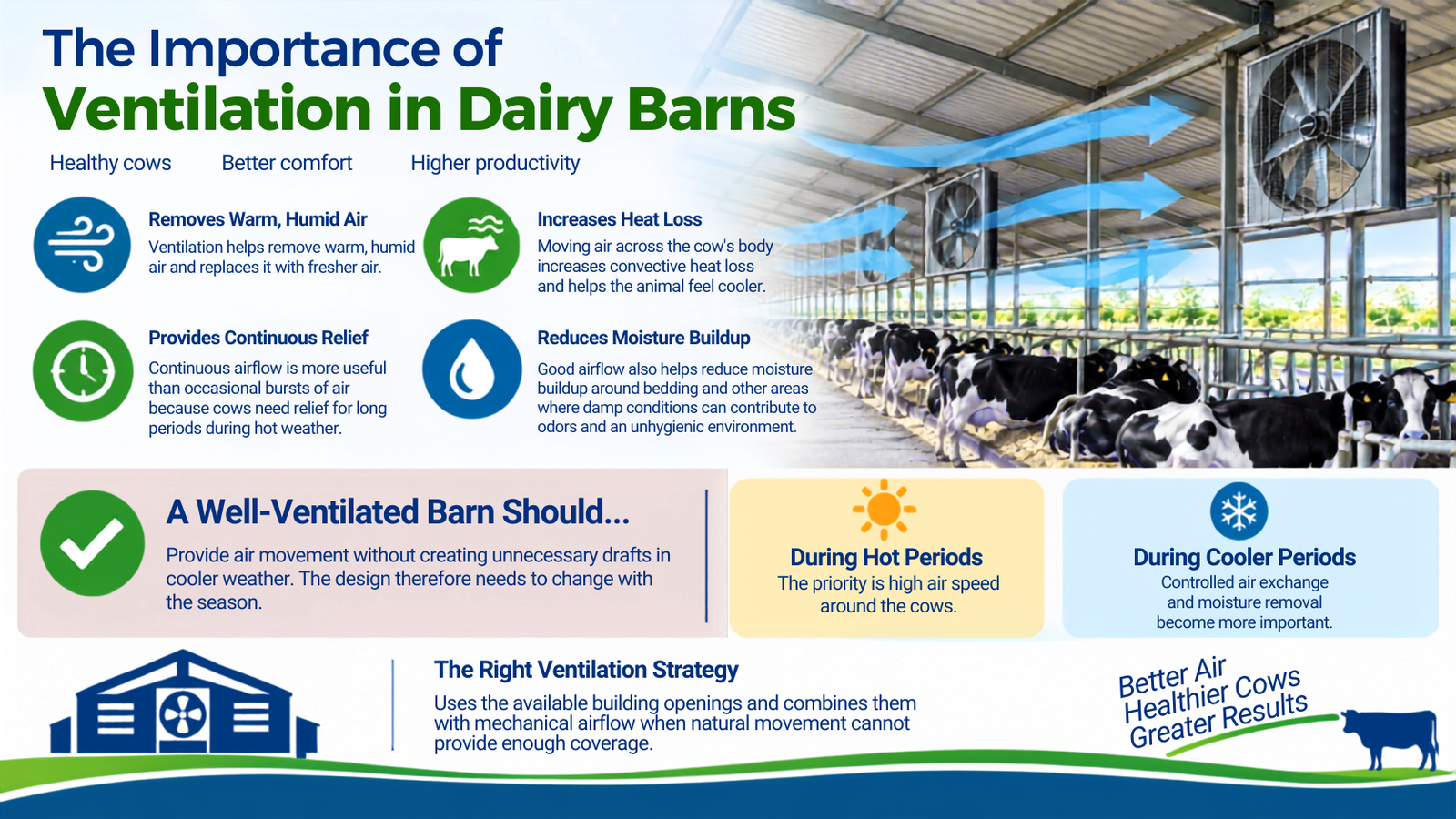
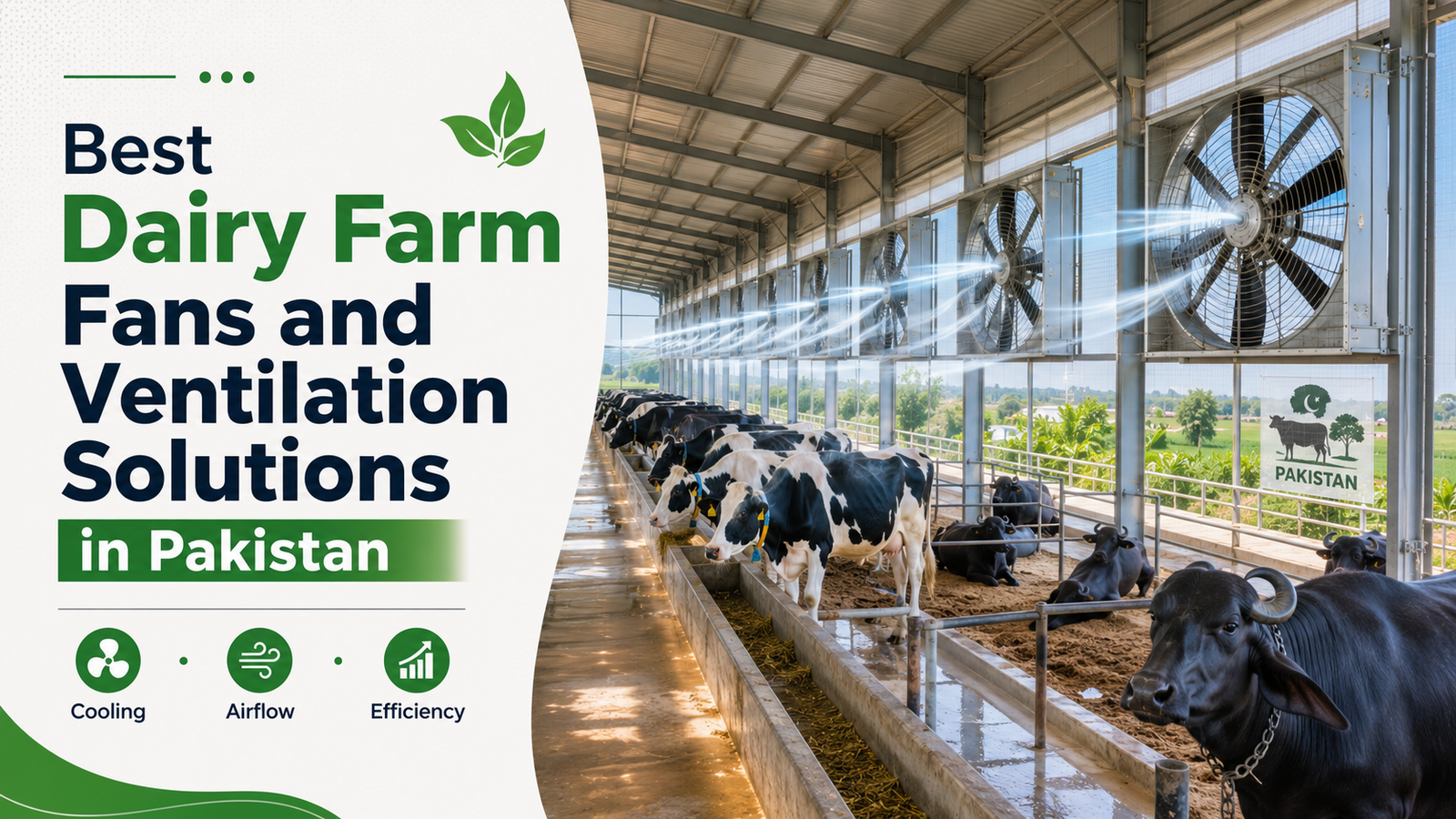
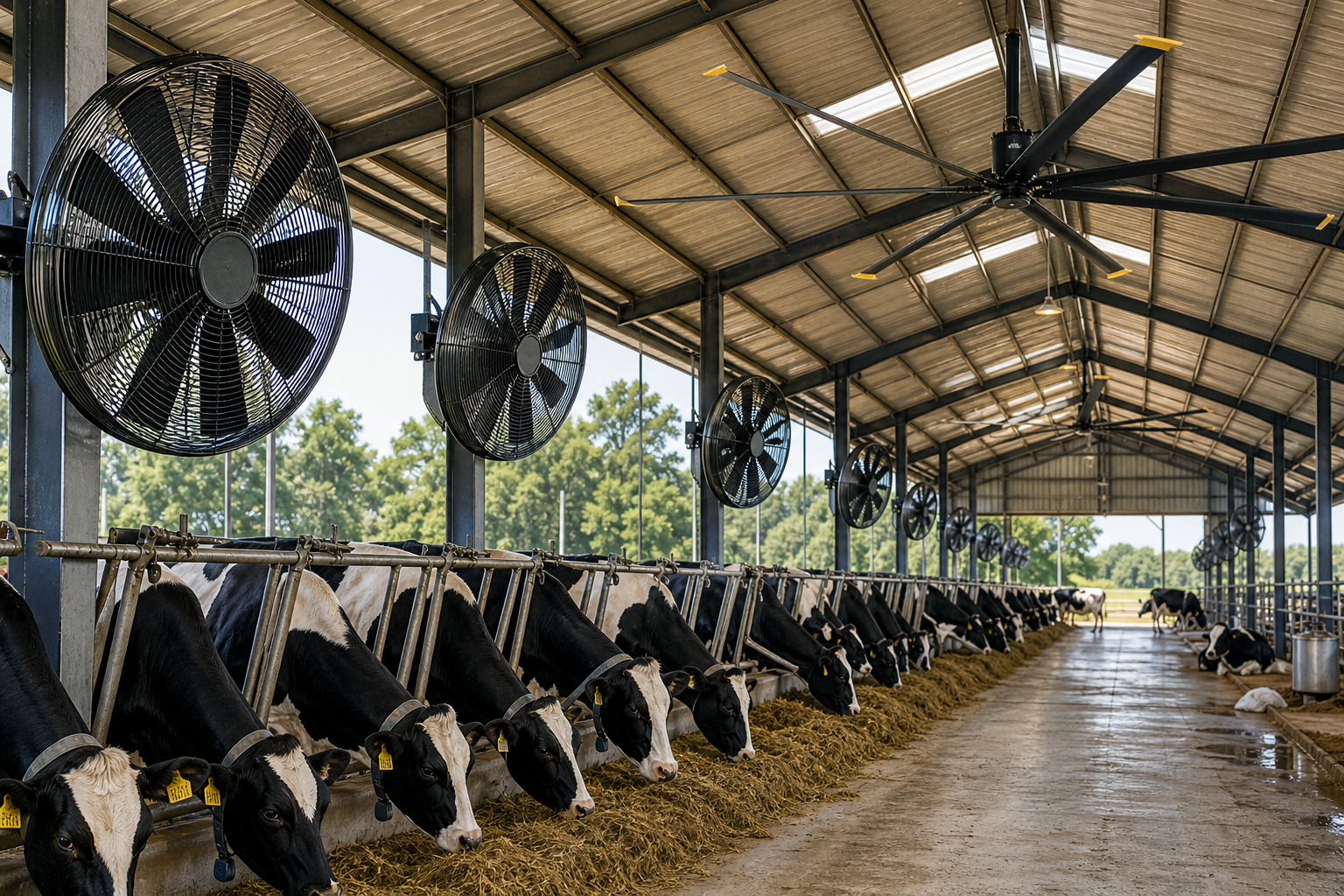
Ventilation is the first priority when it comes to the modern cow shed. The air needs to circulate on its own and make the building comfortable for the cows to be in. It can get quite hot inside the building, especially during the summer months because of the lack of proper airflow. The simplest way to ventilate the cows’ shed is to have it open at certain points and have windows as well as raised roof ends, so the warm air can escape.
It is also important that your building has access to natural lighting, but make sure that the cows are not exposed to direct sunlight, as it can make them uncomfortable. You can achieve this by having the roof of the building high enough, as well as openings in its structure.
Space is another critical factor when building a cow shed. The animals need the space to stand and lie down comfortably, as well as eat and drink. It is also vital to leave enough space so you can clean the cow sheds without any difficulty. Crowding cows will make them uncomfortable and stressed and subsequently result in lower yield.
Flooring is also a significant aspect of building a contemporary cow shed. It needs to be durable, non-slippery, sturdy enough, and resistant to cow dung and water. Contemporary farmers can build a functional cow shed using simple architectural design and materials. Above all, a farmer should prioritize making the cow comfortable in the enclosure, as well as making it easier to maintain, clean, and provide access to food, water, and light.
Open Dairy Farm Shed Design
An open dairy farm shed design can be ideal for farms located in regions where natural ventilation is critical. The open design allows for free circulation of air through the structure, thus reducing heat buildup inside the shed.
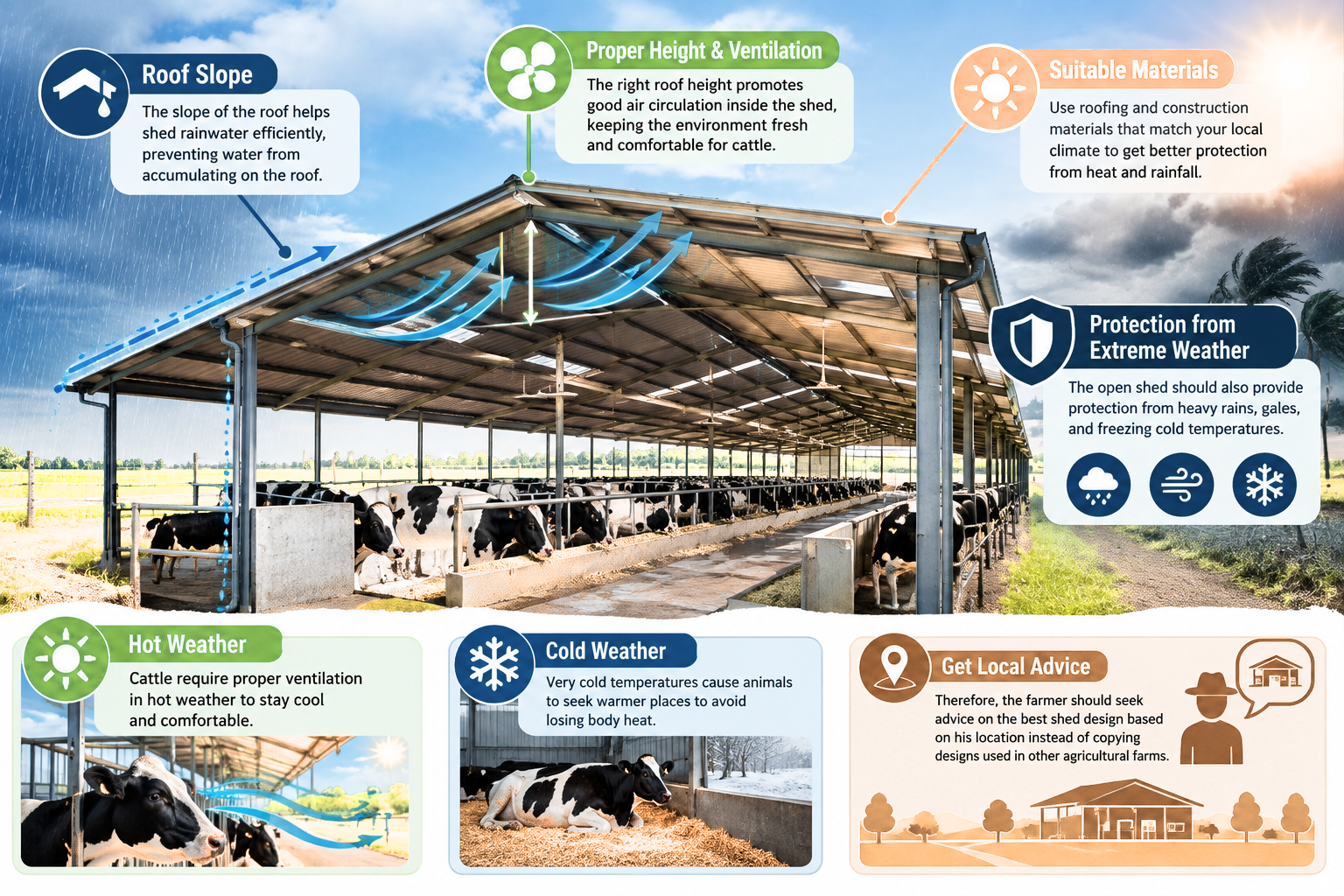
A well-planned roof design can protect animals from sunlight and rain while allowing free circulation of air inside the structure.
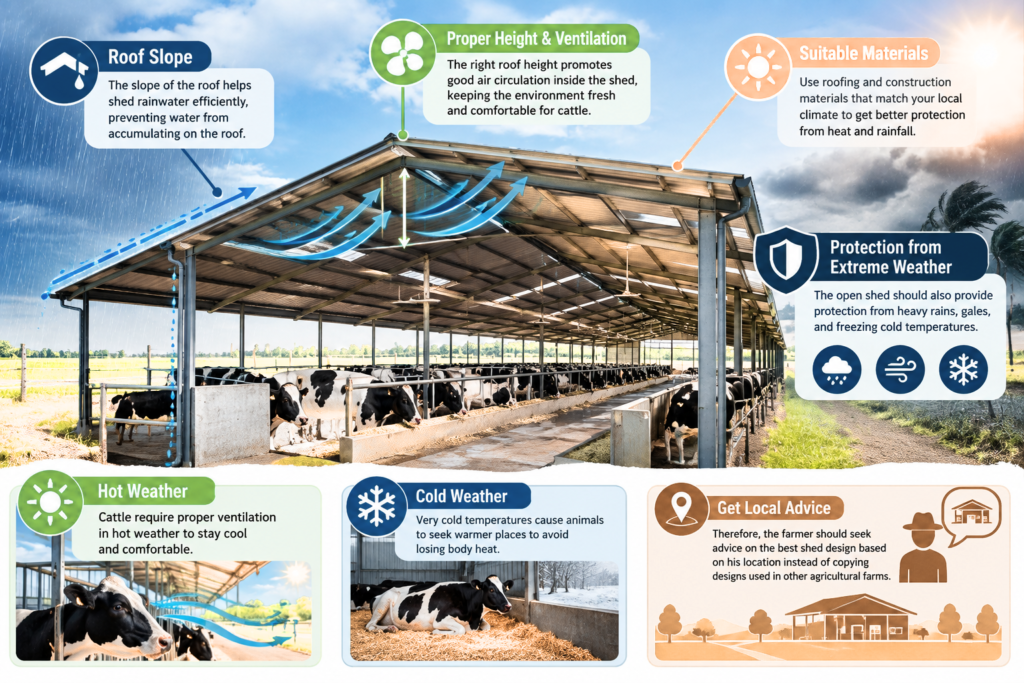
The slope of the roof can aid in shedding off rainwater, while its height can offer good air circulation. Farmers can use materials that are suitable for the local climatic conditions to offer better protection from heat and rainfall. The open shed should also provide protection from extreme weather conditions such as heavy rains, gales, and freezing cold temperatures. Cattle require proper ventilation in hot weather, while very cold temperatures cause animals to seek warmer places to avoid losing body heat. Therefore, the farmer should seek advice on the best shed design based on his location instead of copying designs used in other agricultural farms.
The location of water and feeding stations also plays an essential role in dairy farm design. The stations should be easily accessible to the animals and located in easily cleaned and reachable places.
Feeding and watering structures should also allow sufficient space for farmers to conduct their daily chores.
An open shed can provide a suitable link between the covered lying area and an open-air movement area that offers animals comfort while allowing them to move freely.
Low-Cost Dairy Farm Shed Design
Not all farmers have the financial capacity to construct a multi-level building. Low-cost dairy farm shed design can be a great option for small and medium-sized dairy enterprises. The primary objective of low-cost construction should not be to sacrifice the quality of the structure for the sake of reducing expenditures. The main idea is to optimize the inputs and spend the least amount of money possible for reliable construction without compromising the comfort of animals.
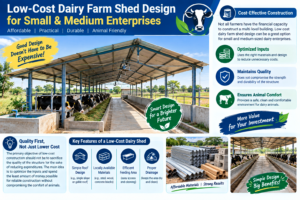
The process of designing a low-cost farm should begin with the establishment of priorities. The number of cows directly impacts the size of the farm. Thus, it is of paramount importance to define how many cows the farmer will be able to accommodate within the structure. In addition, it is essential for farmers to plan the location of the feeding area, the placement of the manure pit, the drainage system, and the additional structures that will be built on the territory. Construction costs can balloon if new adjustments need to be made in the process of building. These amendments are expensive, so it is better to create a reliable drawing before the commencement of work.
It is also advised to use local materials to reduce expenditures on construction. The choice of the material will depend on the building’s purpose, the peculiarities of the local climate, and the architectural solution. It is worth considering that some materials are more cost-effective while still being of high quality.
It is also advisable to adopt a less complex architectural solution for the dairy farming structure. A rectangular shape is the most common and usually the least expensive option that provides enough comfort for animals. It is necessary to ensure the right temperature and humidity, as animals can only be healthy and productive in the proper environment. The roof should also be constructed in such a way that the hot sun will not overheat the interior during summer. At the same time, the roof should protect the cows from the cold and the rain.
Finally, when designing a low-cost dairy farm shed, it is important to remember future expansions. Sometimes entrepreneurs underestimate the importance of having a structure that can be modified when their business needs to scale. The key to low-cost dairy construction is the ability to expand the existing buildings instead of creating new ones from scratch. As a result, farmers will be able to avoid additional expenditures on new construction.
Dairy Farm Shed Design Plans
Good dairy farm shed design plans enable the farmer to understand what the whole structure will look like even before it is built. It should be clearly described how different elements are placed within the structure and how animals and people should move around.
The resting place should be comfortable enough and have adequate space so that the cattle can lie down and relax. The feeding place should be located in a way that animals can reach it without difficulty. The feeding area should also be organized so that it does not create congestion.
The watering place should also be located in an easy-to-reach place. Remember that water is one of the most important needs of a cow, so it should be clean, and the area should suit cattle’s personal hygiene.
Drainage is another essential part of the construction that should be taken into consideration even before building the farm shed. Remember that all the dirty water from the animals’ area should have a way to get out. Otherwise, it will make the floor dirty and uncomfortable for the cattle.
Doors, passageways, storage rooms, and areas for cleaning should also be placed considering the movement of the people who will take care of the cows. They should not disturb animals by moving right through their area. Some farms are large and host different groups of animals. In that case, farmers should also consider separating the groups depending on their weight, age, and health indicators.
A good plan will prevent architectural mistakes that can happen during the building process. It will also reduce the pressure on the farmer since he will clearly understand what and how much he needs to build the farm shed. Cattle Shed Design for Dairy Farm.
A cattle shed design for a dairy farm should always be based on the cattle’s needs. They require a clean environment that enables them to rest, move around, feed, and drink.
First and foremost, the floor is a vital component that should be put into consideration. A slippery floor can cause the cow to slip, whereas a rough floor can make it difficult for the animal to walk on. Thus, it is pertinent to have a smooth floor that provides good traction and is easy to clean. Moreover, drainage is another important aspect that should be considered when designing a cattle shed. It is essential to have proper drainage to avoid dampness and odor around the animals’ resting places and feeding stations. Having a good drainage system will save time and effort during cleaning.
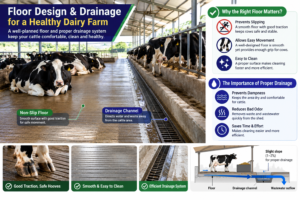
In addition, the shed roof should be constructed in a way that it will offer protection to the cattle from the sun and rainwater. Roofs in hot climates should be constructed in a manner that will reduce heat retention inside the shed. The roof should also be at a sufficient height to allow for adequate air circulation, thus providing a cool environment inside the shed. Feeding places should also be considered during the design process. It is vital to have easily accessible feeding places for the animal and, at the same time, they should be easy to clean and serve.
Furthermore, safety should be considered during the design process. Cattle shed design should also be constructed with care to ensure there are no sharp objects, insecure structures, bumpy ground, exposed electrical wires, or overcrowding of animals. Partitions and gates should be firm enough and resistant to erosion to last long. Finally, cleanliness plays a significant role in cattle shed design. A good design will ensure ease in getting rid of waste, mopping the floor, and cleaning the feeding places for the animals, hence disease control.
In conclusion, a good design does not mean a costly design, but it means a design that will take into consideration the comfort of the cattle in terms of providing a safe and healthy environment for them and at the same time enabling the farmer to tend to the herd in a more efficient manner.
Dairy Farm Shed Construction
After choosing the right layout, the next step is to construct dairy farm sheds. But construction should start only after much thought and consideration of the site, layout, materials, drainage, ventilation, and space.
The location of the shed plays an equally critical role. There must be enough space to allow for proper drainage, construction, cattle movement, cleaning, and future expansion.
The foundation and structure should be of good quality and suitable for the environmental conditions in which they will be placed. The roof should be well secured, and all parts should be properly assembled.
Provision for ventilators must also be made during the building process. The building should be well-ventilated but still protected from rain and strong winds.
In addition, farmers must give serious consideration to floor construction. Farmers should use good quality, durable, and easily cleaned materials. Installers must also consider installing drains that can carry away surplus water from the cowshed.
The material to be used in the construction process must also be considered. Farmers should choose materials that are durable, easily available, economical, and appropriate for the local climate. Sometimes, it might be tempting to use cheap materials for construction, but it will end up being more expensive in the long run.
Farmers should also inspect the newly constructed shed to ensure that everything is in order. It is advisable to check all the gates, roof, floor, and drainage systems before allowing the cattle to occupy the new shed.
Proper construction of a dairy farm shed can provide farmers with a reliable structure for many years. Farmers should take the time to lay the foundation stone for their farm project because it will save them a lot of trouble later on.
Smart Features for a Modern Dairy Farm Shed
Modern dairy farms can also involve various practical features that would simplify day-to-day operations. Technology can be an essential utility in farming, but it has to be used wisely and not overestimated in terms of capacity and scale.
A modern farm facility should also include a reliable water supply system that would provide a continuous flow of water for cattle use. The system can be designed in a way that would allow animal access to water points most conveniently for the owner’s dairy farm shed design.
The same goes for a system that would collect and remove animal waste from the farm. It should be much easier to get rid of it and maintain hygiene in and around the facility. Herdsmen should be able to monitor the animals’ welfare regularly and inspect the interior of the dairy building without any difficulties. Thus, ventilation should be controlled by strategically placed openings and, possibly, a mechanical ventilator that would not require high maintenance in the dairy farm shed design.
Finally, if there is insufficient daylight in the farm area, lights should be rigged to prov
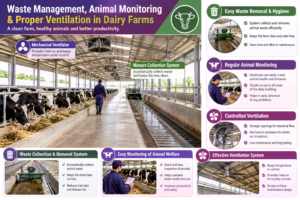
ide a constant power supply and support eye-friendly illumination. In turn, for large-scale operations, it might be worth considering investing in a semi-automatic or automatic feeder. Though it requires a decent amount of money and regular technical procedures, it would significantly reduce the workload on the owner in terms of rationing and maintaining the cattle dairy farm shed design.
Overall, all the above-mentioned technologies and utilities should be viewed as optional, yet beneficial additions to a farm. It is essential to stick to the standard design and not attempt to exceed its capabilities. A sophisticated set of instruments will not be able to offset the absence of a reliable ventilation system, for example, or replace the safety inspection procedures in dairy farm shed design.
Maintenance and Hygiene
Regular maintenance is essential for every dairy farm shed design. Even a well-constructed shed can become unsuitable if it is not properly cleaned and maintained.
Floors need to be cleaned regularly. Manure, remaining feed, and water should not be left on the floor. Feeding and watering places need to be inspected regularly.
Drainage channels should also be free of any blockages. Otherwise, wastewater can stagnate in the channels and create a bad odor that can be harmful to animals.
The roof and other parts of the structure should be inspected for possible damage. If any holes, broken plates, or broken fittings are present, they should be repaired as soon as possible. In addition, farmers should also ensure that ventilation openings are not blocked by dust, cobwebs, materials, or other objects.
Farmers should also keep an eye on the floor condition. Loose or slippery floors should be addressed right away.
Conclusion
A successful dairy farm shed design should prioritize comfort, safety, ventilation, cleanliness, space management, and construction. A good dairy farm shed design is not about having the largest or even most expensive structure. Instead, a good dairy farm shed design is about making sure that animals have everything they need while also helping farmers to be able to complete their daily tasks more easily.
With a successful modern dairy farm shed design, it will be possible to create a better environment for animals as they are kept in a structure that prioritizes natural light, ventilation, organized feeding, and more space. At the same time, farmers can take advantage of a low-cost dairy farm shed design and construct a needed building without spending too much money.
A properly completed dairy farm shed design will help to make construction easier and avoid issues in the future. In turn, a suitable cattle shed design for a dairy farm will help to make sure that farmers address the most important concerns, such as the floor, drainage, feeding areas, water, safety, and more. Finally, proper dairy farm shed construction and maintenance will play a major role in keeping the building suitable for many years.
Through better planning, farmers can avoid unnecessary expenses and complete a project on time. By taking animals’ needs and farmers’ requirements into account, it will be possible to build a productive dairy shed that will be beneficial for years after its construction.